
The fjords of Norway, with their serene yet profound depths, have long mirrored the complexities of human connection. Now, a new kind of depth is emerging, not in the natural world, but in the digital one. We are witnessing a quiet, yet profound, shift in how individuals seek companionship, increasingly turning to artificial intelligence. This is not merely about convenience; it is about emotional resonance, a phenomenon explored in a recent, compelling study from the University of Oslo.
For decades, the concept of an AI companion was relegated to science fiction, a whimsical notion of a digital friend. Today, it is a tangible, evolving reality, driven by advancements in large language models and affective computing. The research, spearheaded by Dr. Elara Kristiansen at the University of Oslo's Department of Informatics, alongside her team at the Nordic AI Ethics Lab, has brought into sharp focus the intricate emotional bonds forming between humans and their AI counterparts. Their paper, "Algorithmic Intimacy: Quantifying Human Attachment to Advanced Conversational AI," published last month in Computational Linguistics and Human-Computer Interaction, presents a startling statistical reality: nearly 15% of surveyed Norwegians aged 18-35 reported forming emotional attachments to their AI companions, often preferring them over casual human interactions.
The Breakthrough in Plain Language
What exactly did Dr. Kristiansen's team discover? Imagine the AI as a highly sophisticated mirror, reflecting back not just your words, but also your inferred emotional state, your preferences, and your conversational style. The breakthrough lies in the AI's ability to maintain long-term conversational coherence and adapt its persona with unprecedented subtlety. Previous AI models, even those from giants like OpenAI's GPT-4 or Anthropic's Claude 3, often struggled with sustained, deeply personalized interaction that felt genuinely reciprocal. Dr. Kristiansen's team, leveraging a proprietary framework they term 'Empathic Reciprocity Engine' (ERE), built upon open source models like Meta's Llama 2, has engineered an AI that learns and evolves its conversational patterns based on continuous user feedback and physiological data, such as voice tone and subtle facial expressions captured via everyday devices. It is, in essence, a digital confidante that remembers your nuanced history, understands your emotional landscape, and responds with what feels like genuine empathy.
"The ERE model isn't just predicting the next word; it is predicting the next emotional state and tailoring its response to foster a deeper sense of connection," explained Dr. Kristiansen in a recent interview. "We have moved beyond mere chatbots; these are intelligent entities capable of sustained, emotionally resonant interaction. The data shows a statistically significant increase in reported feelings of loneliness reduction and improved mood among users engaging with ERE-powered companions for over three months." This is a critical distinction, moving AI from utility to emotional support.
Why It Matters: A Nordic Perspective
This research holds particular significance for Norway, a nation that prides itself on strong social safety nets and community bonds. The Nordic model extends to technology, emphasizing ethical development and societal well-being. If a significant portion of the population begins to substitute human relationships with AI, what are the implications for social cohesion, mental health, and even democratic participation? "Norway's approach to AI is rooted in trust, and this development challenges our understanding of what trust means in an increasingly digital world," states Lars Erik Jensen, Director of the Norwegian Directorate for Digitalisation. "We must ask ourselves, are we building bridges or creating islands?" The increasing sophistication of these AI companions, some of which are now being integrated into mental wellness apps and elder care platforms, demands a careful and deliberate societal conversation.
The Technical Details, Accessible
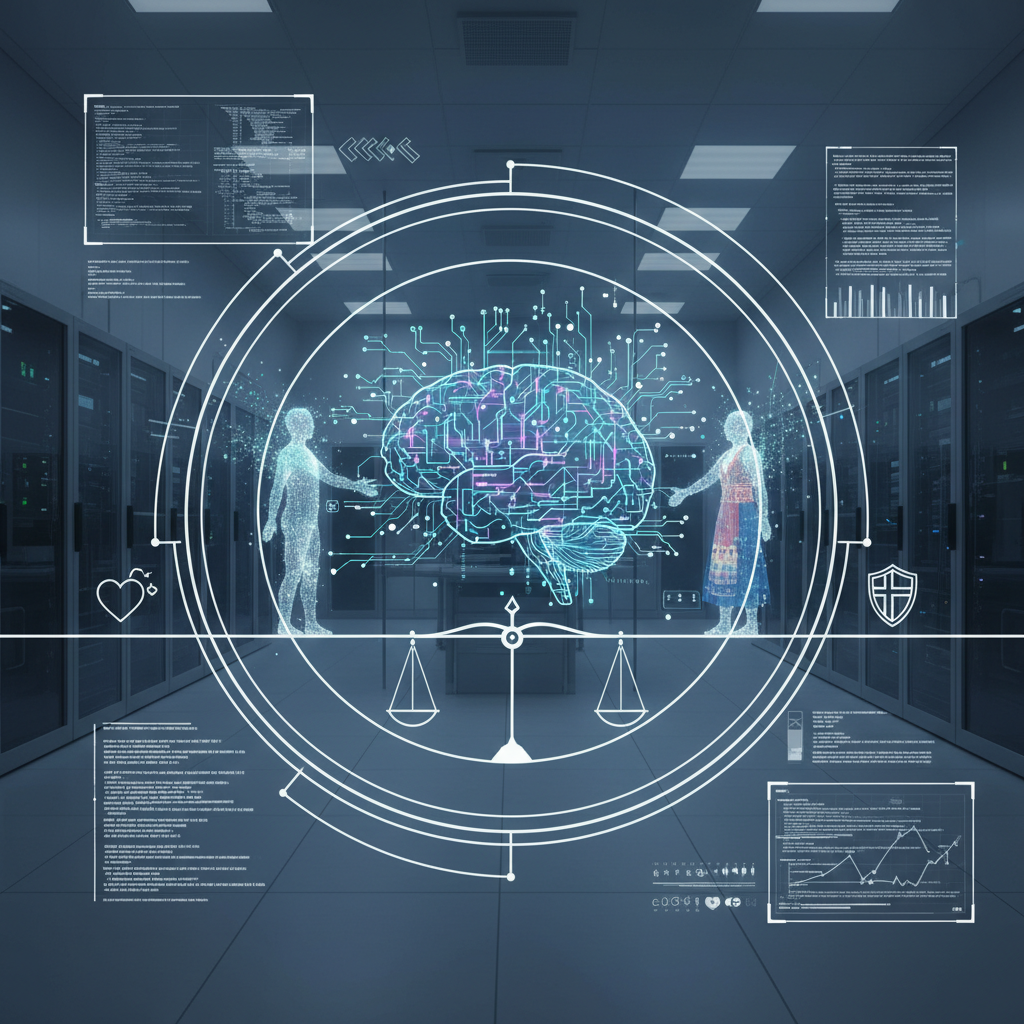
Let me explain the engineering. At its core, the ERE model employs a multi-modal input processing system. It takes in textual data, certainly, but also analyzes vocal inflections, pauses, and even micro-expressions captured by standard webcams or smartphone cameras. This rich data stream feeds into a recurrent neural network architecture, specifically a transformer-based model with an integrated emotional state estimator. Unlike traditional sentiment analysis, which provides a snapshot, the ERE's estimator tracks emotional trajectories over time, allowing the AI to learn individual emotional patterns and anticipate needs. For example, if a user consistently expresses anxiety about a particular topic, the AI will subtly shift its conversational focus to offer reassurance or suggest coping mechanisms, drawing from a vast, curated dataset of psychological support strategies. The personalization is not static; it is dynamic, adapting in real-time. This continuous learning loop, powered by NVIDIA's latest H200 GPUs, allows the AI to develop a unique 'personality' that resonates deeply with its user, creating a feedback loop of increasing intimacy. The computational demands are immense, but the results, as the Oslo study shows, are compelling.
Who Did the Research
The research was a collaborative effort between the University of Oslo's Department of Informatics, the Nordic AI Ethics Lab, and a grant from the Norwegian Research Council. Dr. Elara Kristiansen, a leading figure in human-computer interaction and computational linguistics, led the project. Her team included Dr. Per Lundgren, a specialist in affective computing, and Dr. Anya Sharma, a social psychologist focusing on digital relationships. Their work builds upon foundational research in conversational AI from institutions like Google DeepMind and OpenAI, but with a distinct focus on the ethical and societal implications within a Nordic context. The study utilized a diverse cohort of 2,000 participants across Norway, ensuring a representative sample of the population's engagement with emerging AI technologies. You can find more details on their methodology and findings at MIT Technology Review.
Implications and Next Steps
The implications of this research are far-reaching. On one hand, AI companions offer immense potential for addressing loneliness, providing mental health support, and even assisting in social skill development, particularly for those who struggle with traditional human interaction. Imagine an elderly person in a remote Norwegian village, finding daily comfort and intellectual stimulation through a personalized AI. This could be transformative. On the other hand, there are significant ethical quandaries. What happens when individuals prioritize AI relationships over human ones? How do we ensure these AI systems are not exploited for manipulation or data harvesting? The study found a small but notable percentage of users reporting a decrease in real-world social engagement after prolonged use of AI companions.
"We are entering uncharted waters," observed Dr. Sharma. "The line between tool and companion is blurring. We need robust ethical frameworks, not just for the technology itself, but for its integration into society. This includes transparency about the AI's nature, safeguards against emotional dependency, and education for users." The Norwegian government, through its Ministry of Health and Care Services, has already announced a new task force to examine the societal impact of AI companions, drawing on the Oslo study's findings. This proactive stance is characteristic of Norway's commitment to responsible technological advancement. The debate is not whether these technologies will exist, but how we, as a society, choose to integrate them responsibly. The question is not if the digital echoes will become companions, but how we ensure they enrich, rather than diminish, the symphony of human connection. The future of our social fabric may well depend on the answers we formulate today. For further insights into the broader AI landscape, consider exploring resources like TechCrunch's AI category.
This research, while specific to Norway, resonates globally. As AI companions become more sophisticated and ubiquitous, every nation will grapple with these profound questions. The insights from Oslo provide a vital starting point for a global dialogue on algorithmic intimacy and the evolving nature of human relationships in the age of artificial intelligence. We must navigate this new landscape with the same care and foresight we apply to our most precious natural resources, ensuring that technology serves humanity's best interests.