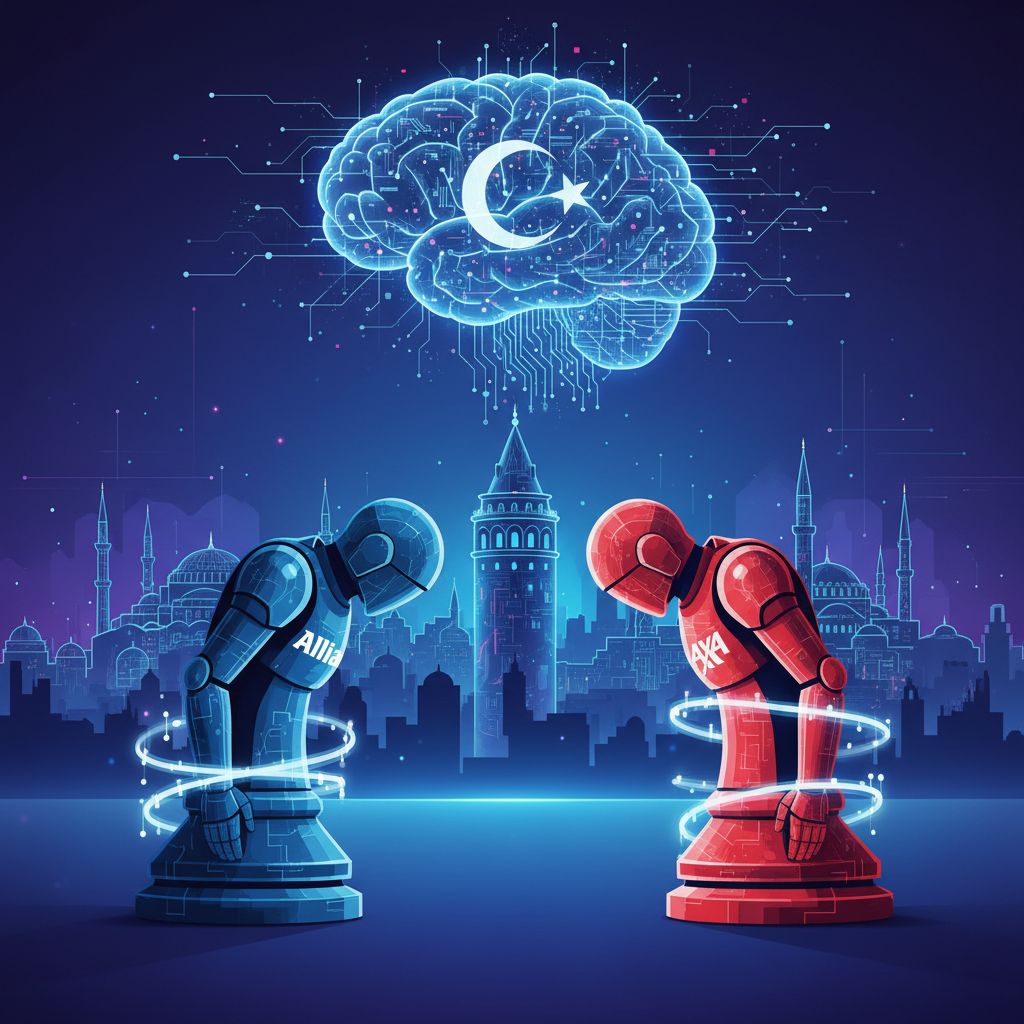
The old guard of insurance, those venerable institutions like Allianz and AXA, they see AI as a tool, a sophisticated calculator to optimize their existing models. They talk about incremental gains, about reducing operational costs by a few percentage points. I see something far more disruptive, a seismic shift that will redefine the very nature of risk and trust. From my vantage point here in Istanbul, I can tell you, Turkey is building the future at the crossroads, and the global insurance industry, whether they realize it yet or not, will be forced to follow our lead.
My bold assertion is this: the traditional, human-centric model of insurance is not just inefficient, it is fundamentally flawed in an age of ubiquitous data and predictive AI. The future belongs to those who can leverage artificial intelligence to automate claims processing with near-instantaneous speed, detect fraud with an almost prescient accuracy, and price risk with a granularity that makes today's actuarial tables look like ancient scrolls. And it is here, in places like Turkey, where the agility, the ambition, and frankly, the necessity to innovate are driving this transformation at a pace the legacy players simply cannot match.
Consider automated claims processing. For decades, it has been a bureaucratic nightmare, a paper trail of delays and frustrations. A car accident, a burst pipe, a medical emergency, each requiring human intervention, assessment, and approval. This is not just slow, it is expensive. But what if an AI, fed with real-time sensor data, visual evidence from drones, and even natural language processing of incident reports, could validate a claim and initiate payment within minutes, not weeks? We are not talking about some distant sci-fi fantasy. Turkish startups, often working in stealth mode, are already deploying systems that can process simple property claims with over 90 percent automation, reducing processing times by 70 percent and cutting costs by half. Imagine the competitive advantage. Imagine the customer satisfaction.
Then there is fraud detection, the bane of every insurer's existence, costing the industry billions globally. The human eye, no matter how experienced, is limited. It sees patterns in the past. AI, particularly advanced machine learning models like those developed by Google DeepMind or even smaller, specialized Turkish firms, can identify anomalies, correlate seemingly unrelated data points, and flag suspicious activity with a precision that was once unimaginable. These systems learn and adapt, making them far more resilient to new fraud schemes. One major Turkish insurer, for example, reported a 35 percent increase in fraud detection rates within the first year of implementing an AI-powered system, saving them an estimated 150 million Turkish Lira annually. This is not just about catching criminals; it is about protecting the honest policyholders from bearing the cost of deceit.
And risk pricing, the very heart of the insurance business. Historically, this has been based on broad demographic data, historical trends, and statistical averages. But what if AI could analyze individual behavior, real-time environmental factors, genetic predispositions, and even social media sentiment to create hyper-personalized risk profiles? Imagine a world where your car insurance premium adjusts daily based on your driving habits, traffic conditions, and even the weather forecast. Or health insurance that incentivizes healthy living through real-time data from wearables. This is not just fairer, it is more accurate, leading to more sustainable pricing models and a healthier risk pool. The Ottoman approach to AI empire-building, if you will, is not about conquest, but about building sophisticated, interconnected systems that optimize every facet of an industry.
Now, I can hear the murmurs from the established players. They will say,