
¡Hola, mis amigos! Mariànnà Sanchèz here, bubbling with excitement from the heart of Ecuador, where the future is unfolding faster than a hummingbird's wings. We often talk about AI transforming industries, from healthcare to conservation, and you know how much I adore seeing Ecuador's biodiversity meet AI and it's magical. But today, we're diving into a realm where the stakes are incredibly high, a place where algorithms are not just optimizing processes but are touching the very core of human freedom and justice: our criminal justice system.
Globally, the conversation around artificial intelligence in law enforcement and judicial processes has reached a fever pitch. From predictive policing models that aim to anticipate crime hotspots to sentencing algorithms that assist judges in making decisions, the promise is efficiency, objectivity, and a reduction in human bias. Yet, here in Ecuador, a nation rich in diversity and deeply rooted in community values, we're asking a crucial question: Can these powerful tools truly serve justice, or do they risk perpetuating old biases in new, digital forms?
Consider the bustling streets of Quito, or the vibrant energy of Guayaquil. Imagine a system that could, theoretically, predict where a crime might occur, allowing police to intervene proactively. This isn't science fiction anymore; it's a reality being tested in cities across the globe. Companies like Palantir, for instance, have been deploying their data analysis platforms to law enforcement agencies, promising to connect disparate data points to identify patterns and potential threats. The allure is undeniable: a safer society, a more efficient justice system. But what data are these systems fed? Are they learning from historical records that might reflect systemic inequalities, socioeconomic disparities, or even racial profiling? If so, then the algorithms, no matter how sophisticated, will simply amplify these existing problems.
"The potential for AI to streamline justice is immense, but so is the risk of embedding and scaling societal biases," warns Dr. Ruha Benjamin, a renowned professor of African American Studies at Princeton University, whose work often highlights the social and ethical implications of new technologies. "We must critically examine the data these systems are trained on and ensure robust oversight mechanisms are in place." Her words resonate deeply here, where our history, like many nations, carries its own complexities.
In Ecuador, we are still in the nascent stages of adopting AI in our criminal justice system, but the discussions are vibrant and urgent. Our Ministry of Justice and Human Rights, along with academic institutions like the Universidad San Francisco de Quito, are actively exploring these ethical quandaries. There's a palpable sense of caution, a desire to learn from the experiences, and sometimes missteps, of other nations. We want to harness the power of AI, yes, but not at the expense of our fundamental rights and the dignity of our people.
One of the most contentious areas globally is predictive policing. These systems analyze vast datasets, including crime reports, demographic information, and even social media activity, to forecast where and when crimes are likely to happen. While proponents argue this allows for more strategic deployment of resources, critics, myself included, worry about the creation of self-fulfilling prophecies. If algorithms direct police to certain neighborhoods more frequently, those areas will inevitably see more arrests, not necessarily because more crime is occurring, but because more policing is happening. This can lead to over-policing of marginalized communities, eroding trust and exacerbating social tensions. It's a delicate balance, like walking a tightrope over the Amazon rainforest, where one wrong step can have cascading effects.
Then there are sentencing algorithms. Imagine a judge, faced with a complex case, consulting an AI system that suggests a sentence based on the defendant's profile, past criminal history, and other factors. Sounds efficient, right? But what if that algorithm disproportionately recommends harsher sentences for individuals from certain socioeconomic backgrounds, or those who live in particular areas? Studies in the United States, for example, have shown that some widely used risk assessment tools, like Compas, exhibit racial bias, predicting higher recidivism rates for Black defendants than for white defendants, even when controlling for similar factors. This is a chilling thought, particularly in a country as diverse as Ecuador, with its rich tapestry of Indigenous cultures, Afro-Ecuadorian communities, and mestizo populations. Justice, after all, must be blind, not biased by lines of code.
Our own legal experts are keenly aware of these challenges. Dr. Juan Pablo Morales, a constitutional law professor at the Pontificia Universidad Católica del Ecuador, recently emphasized this point in a public forum. "The principle of due process and the right to a fair trial are cornerstones of our legal system," he stated. "Any technological tool introduced must enhance, not undermine, these fundamental rights. Transparency in how these algorithms operate, and accountability for their outcomes, is non-negotiable." His words echo a growing global consensus that algorithmic transparency is paramount.
This isn't to say we should shy away from innovation. Far from it! We are a nation of innovators, of dreamers. But our approach must be uniquely Ecuadorian, reflecting our values of community, fairness, and respect for human dignity. This means developing AI solutions with a human-centric approach, ensuring that safeguards are built in from the very beginning. It means involving ethicists, sociologists, and community leaders in the design and deployment of these systems, not just technologists.
One promising avenue is the development of explainable AI, or XAI. This field focuses on creating AI models whose decisions can be understood and interpreted by humans, rather than operating as opaque "black boxes." Imagine a sentencing algorithm that not only suggests a recommendation but also explains why it arrived at that conclusion, highlighting the specific factors it considered. This would allow judges to critically evaluate the AI's reasoning, rather than blindly accepting its output. This kind of transparency is vital for maintaining public trust and ensuring accountability within the justice system.
Furthermore, the focus should shift from solely punitive measures to restorative justice and crime prevention through social development. Can AI help us identify communities most at risk of social exclusion, allowing for targeted interventions in education, healthcare, and economic opportunities? That, to me, is a truly exciting prospect, a way for AI to contribute to a more just and equitable society, rather than merely policing its symptoms. It’s about using technology to uplift, to empower, to build a future where everyone has a chance to thrive.
We also need to look at the data itself. If we are to use AI in criminal justice, we must ensure that the data sets used for training are clean, representative, and free from historical biases. This means investing in data governance, auditing existing databases, and actively working to collect more equitable and comprehensive data. It's a massive undertaking, but a necessary one if we truly want AI to serve justice fairly.
This Ecuadorian startup just, and I mean just, launched a pilot program with a local municipality to use AI not for predictive policing, but for optimizing public services in underserved areas, aiming to reduce socioeconomic factors that often contribute to crime. They are using anonymized, aggregated data to identify gaps in infrastructure, education, and health access, allowing the municipality to allocate resources more effectively. This is the kind of proactive, community-focused AI innovation that truly excites me, a testament to our ingenuity and our commitment to social good. You can read more about such initiatives and the broader ethical debates on platforms like Wired and MIT Technology Review.
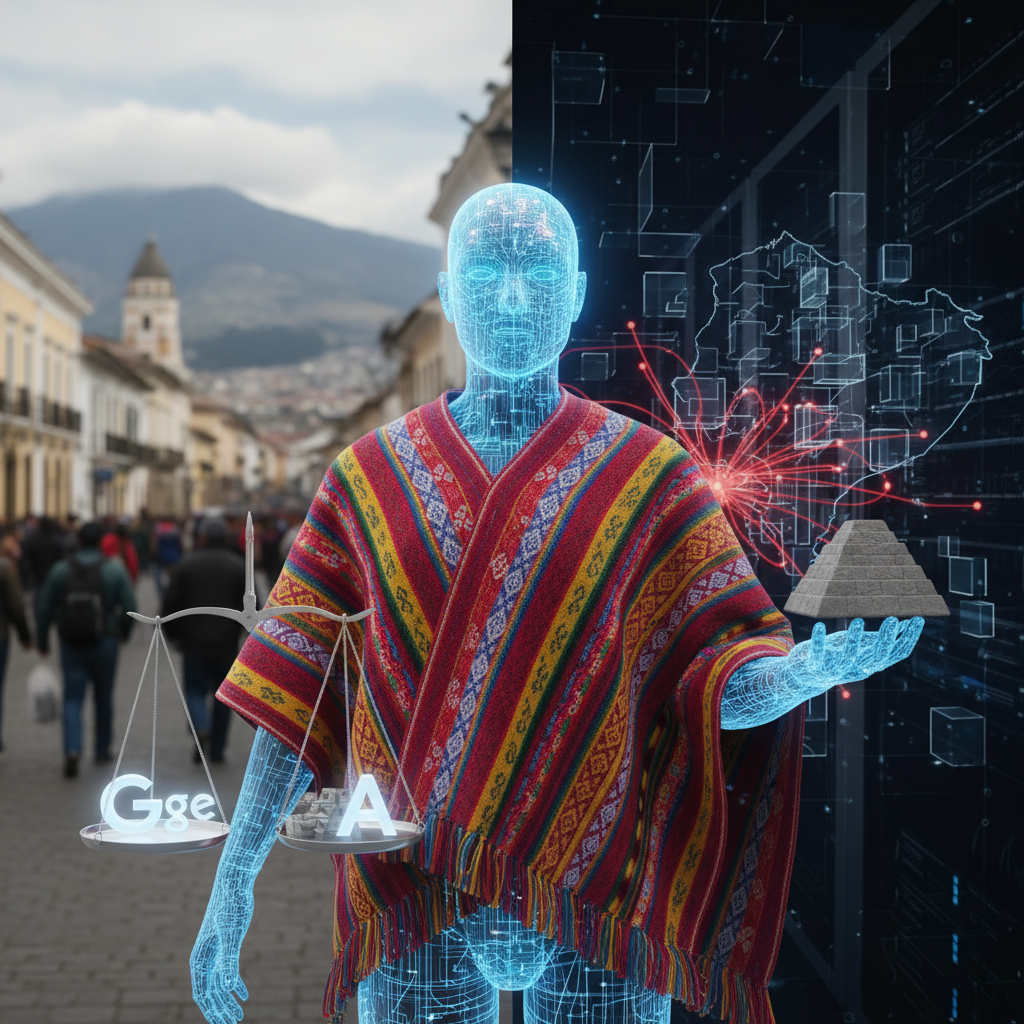
The road ahead is long, and the ethical considerations are complex, but I remain an optimist. With careful consideration, robust regulatory frameworks, and a deep commitment to human rights, Ecuador can indeed navigate this new frontier. We can ensure that when algorithms wear the 'poncho' of justice, they do so with integrity, fairness, and a profound respect for every individual. The Galápagos of technology awaits, and we are ready to explore it responsibly, with our hearts and minds open to a future where innovation truly serves humanity. After all, isn't that the dream we all share? A world where technology uplifts, empowers, and brings us closer to true justice for all, from the Amazon to the Pacific coast.