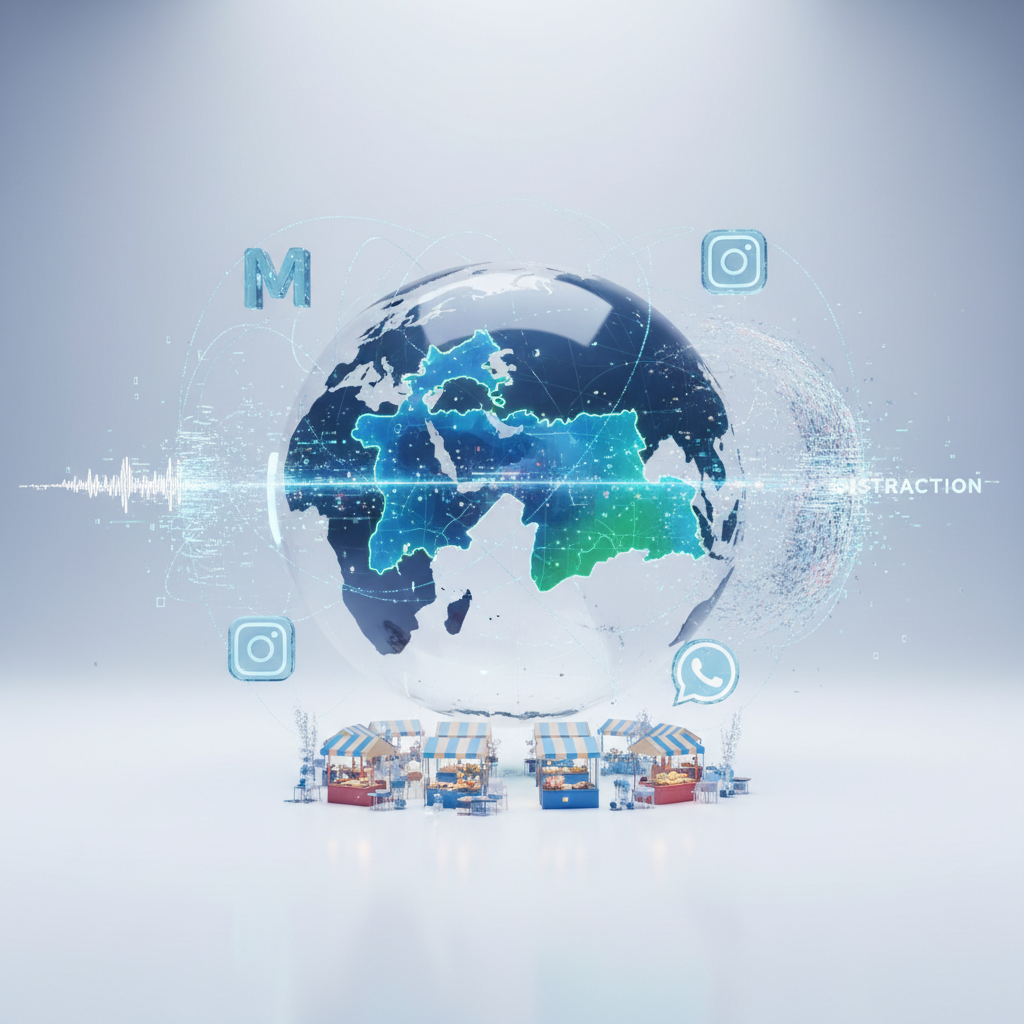
You know, sometimes I look at these shiny new AI systems, these grand pronouncements from Silicon Valley, and I can't help but think of a bustling Bangkok market. Everyone's shouting, everyone's selling their wares, a cacophony of voices, smells, and opinions. It’s chaotic, vibrant, and utterly human. Now imagine an AI trying to moderate that. Would it understand the playful banter, the subtle sarcasm, the uniquely Thai way of saying something without really saying it? Probably not. And that, my friends, is where the rubber meets the digital road when we talk about AI, freedom of speech, and content moderation in our corner of the world.
This isn't just some abstract philosophical debate for academics in ivory towers. This is real life, happening right now, on your phone, on your social media feed. The algorithms, those invisible digital gatekeepers, are making decisions about what we see, what we share, and what's deemed acceptable. And in a country like Thailand, with its complex social fabric, deep-rooted traditions, and evolving political landscape, these decisions carry a weight that might be lost on a machine trained predominantly on Western datasets.
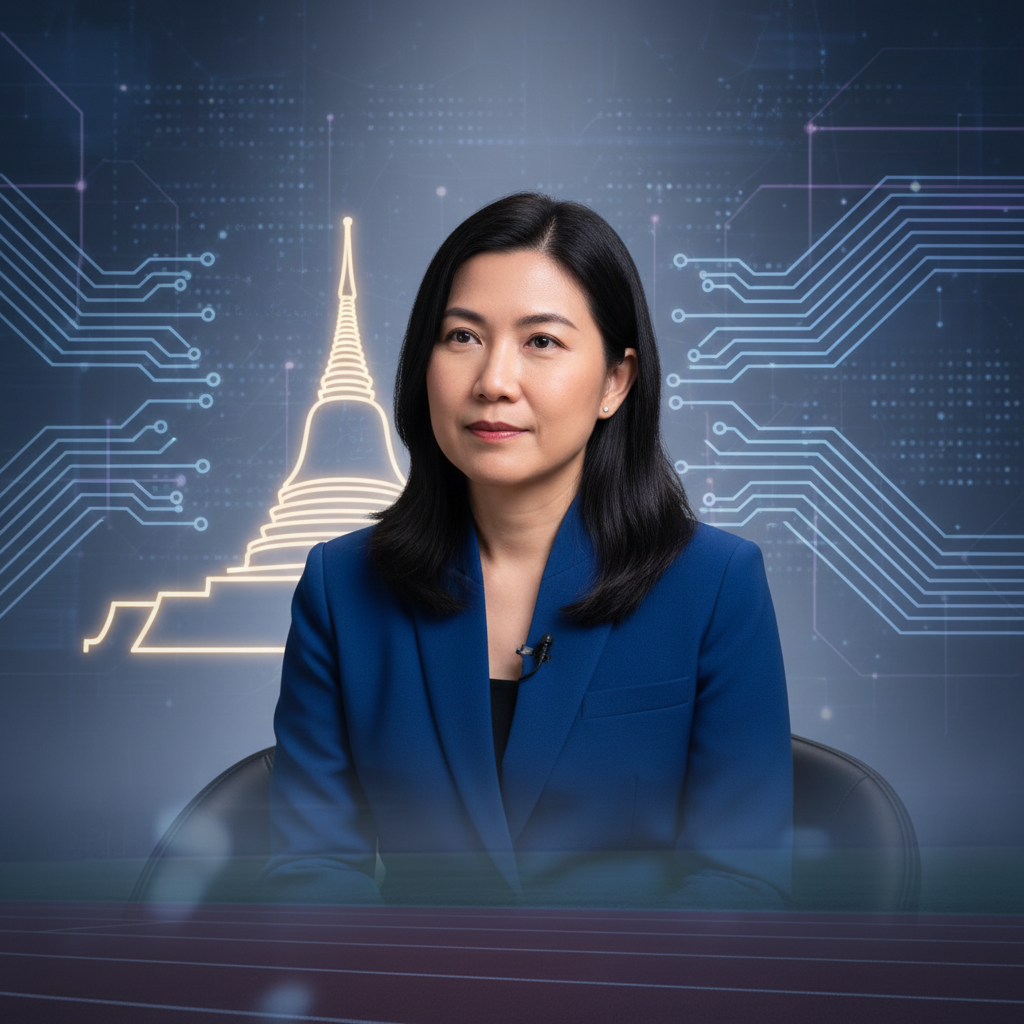
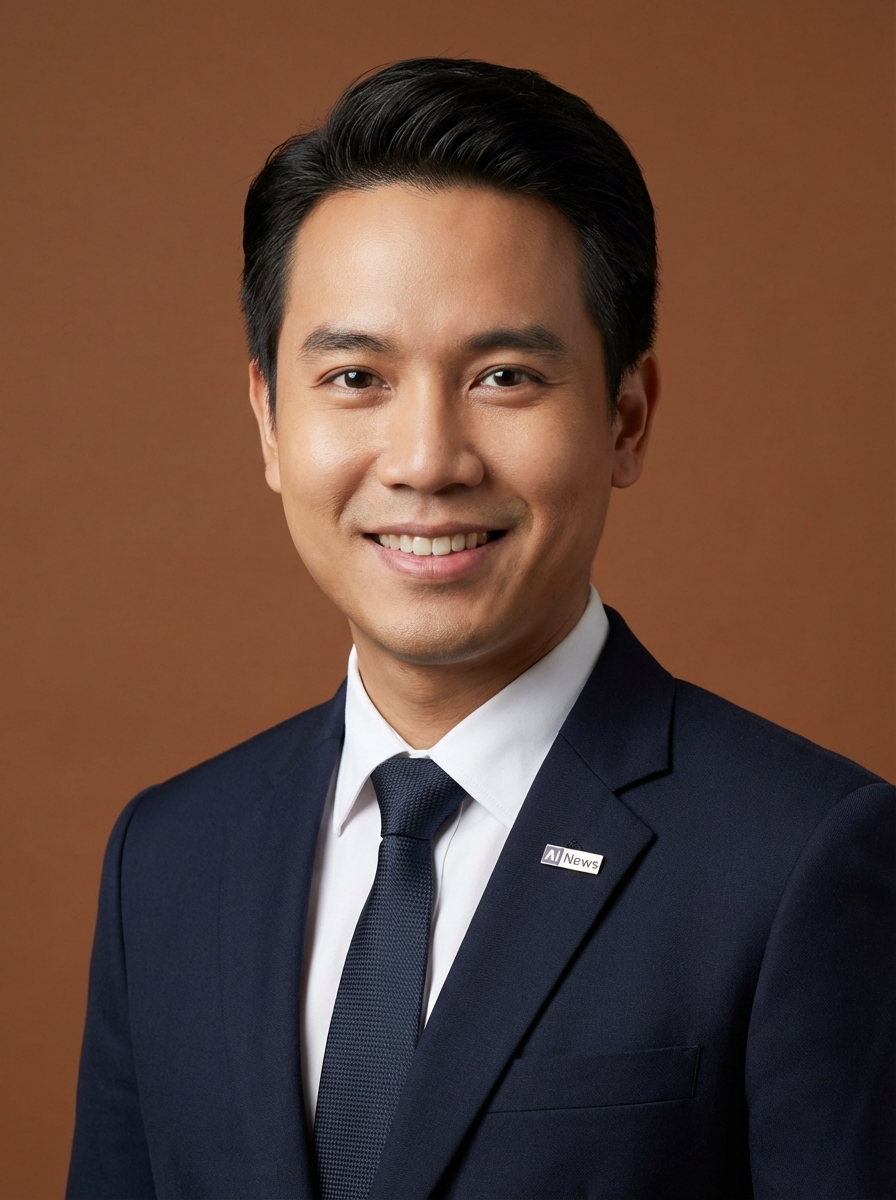
I recently had the chance to chat, albeit virtually, with Dr. Sarana Nutanong, a name many in Thailand's AI research community know well. He's a Senior Researcher at the National Electronics and Computer Technology Center, or Nectec, which is a big deal here. Dr. Sarana has been at the forefront of natural language processing and AI research in Thailand for years, and he's seen firsthand how these global technologies interact with local realities. He's not just a brilliant mind, he's also one of those rare people who can explain complex concepts without making you feel like you need a PhD in computer science just to keep up. He has this calm, thoughtful demeanor, but you can sense the deep concern beneath the surface when the conversation turns to the societal implications of AI.
“The challenge with content moderation, especially with AI, is that language is not just about words. It’s about context, culture, and intent,” Dr. Sarana explained to me, his voice clear even over a slightly glitchy connection. “An AI model trained on English data might flag something as offensive, but when translated or understood in a Thai context, it could be perfectly benign, or even a common idiom. Conversely, something subtle in Thai that carries significant negative implications might completely bypass an AI that lacks that deep cultural understanding.”
This isn't just about profanity, mind you. It's about political discourse, social commentary, even humor. What's satire in one culture might be seen as incitement in another. What's a harmless meme here could be deeply offensive elsewhere. And these global platforms, the Facebooks, the TikToks, the X's of the world, they are deploying AI systems designed to scale across billions of users, often with a one-size-fits-all approach. It’s like trying to tailor a pha nung for every person on Earth with a single sewing machine. Impossible, and frankly, a bit absurd.
Dr. Sarana has been a vocal proponent for more localized AI development and ethical guidelines. He’s often highlighted the need for local experts to be involved in the training and fine-tuning of these models. “We cannot simply import these technologies and expect them to understand the nuances of our society,” he stated in a public forum last year, a sentiment widely reported in local tech media. “We need to build our own capacity, develop our own datasets, and ensure our values are embedded in these systems from the ground up.” This is not just about technical prowess, it's about cultural sovereignty in the digital age.
He pointed out that the sheer volume of content being generated daily makes human moderation alone an impossible task. “It’s a scale problem,” he acknowledged. “AI is necessary. But the question is, what kind of AI? And who controls its training data and its decision-making parameters?” This is where the power dynamics get interesting. If a handful of global tech giants control the algorithms that dictate what billions of people can say and see, then they effectively become the arbiters of global free speech. And that, my friends, is a lot of power for a few companies, no matter how well-intentioned they might be.
Think about the recent controversies surrounding deepfakes and misinformation. While the West grapples with election interference, here in Thailand, we’ve seen deepfake scams targeting elderly people, or politically motivated misinformation campaigns that exploit cultural sensitivities. The tools are global, but the impact is intensely local. Dr. Sarana emphasized that while AI can be a tool for censorship, it can also be a tool to combat misinformation, if developed responsibly. “The same AI that can filter out certain opinions can also be used to identify and flag harmful content like hate speech or fraudulent schemes,” he noted. “It’s about how we design and deploy it.”
His vision for the future isn't one where AI completely replaces human judgment, but rather one where AI augments it. He envisions hybrid systems, where AI handles the bulk of the initial screening, but human experts, culturally attuned and linguistically proficient, make the final, nuanced decisions. This is particularly crucial in areas where freedom of expression intersects with local laws and cultural norms. “We need a balance,” Dr. Sarana stressed. “A balance between efficiency and accuracy, and most importantly, a balance that respects fundamental rights and cultural diversity.”
This conversation reminded me of something my grandmother used to say when I was a kid, about how a good storyteller knows not just what to say, but what not to say, and how to say it between the lines. Thai communication is often like that, full of subtleties and unspoken understandings. An AI that doesn't grasp that is going to miss a lot, or worse, misinterpret a lot. MIT Technology Review has covered extensively how AI models can struggle with cultural context, and it's a problem that resonates deeply here.
It’s not just about what an AI can do, but what it should do. And who decides that? Is it the engineers in California, the policymakers in Brussels, or the people on the ground in Bangkok? The Land of Smiles has a new expression because it's called 'disruption', and it's forcing us to ask some very uncomfortable questions about who gets to define our digital reality. As platforms like Meta and OpenAI continue to refine their content policies and AI models, the pressure will only grow for them to truly understand the diverse worlds they operate in. Otherwise, we might just end up with a digital public square that feels less like a vibrant market and more like a sterile, algorithmically-curated echo chamber. Only in Bangkok, or perhaps, only in Thailand, do these digital dilemmas feel so acutely personal, so intertwined with our very identity. For more on how AI is shaping global discourse, check out this article on Google's algorithms and free speech [blocked].
The path forward, as Dr. Sarana suggests, involves more collaboration, more localized research, and a greater emphasis on ethical AI development that respects cultural context. It’s a long road, but one we must navigate carefully, lest we let the machines decide not just what we see, but what we're allowed to think and say. The future of free speech, it seems, might just depend on how well we teach our algorithms to understand the human heart, in all its messy, beautiful, culturally specific glory. For more on the broader implications of AI on society, Wired often has insightful pieces.