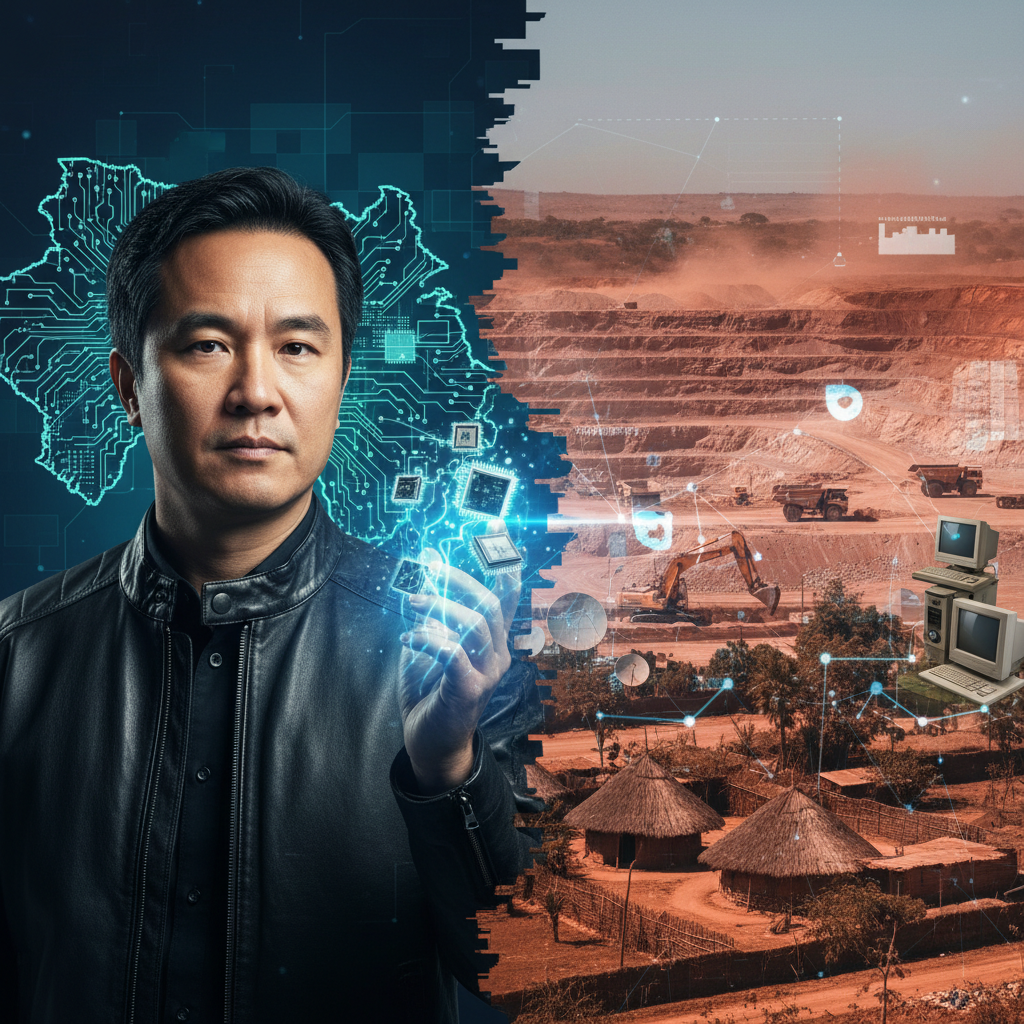

Let me tell you something, my people. In this digital age, where every other person is talking about AI, it is easy to get lost in the noise. You hear about ChatGPT, you hear about Gemini, and you think you have seen it all. But beneath the surface, away from the flashy consumer applications, a quiet revolution is brewing, one that promises to reshape the very bedrock of our digital world: how software is built. And when I say quiet, I mean it in the way a storm gathers on the horizon, ready to unleash its full force. Poolside AI, a company you might not have heard much about on the streets of Lagos, just raised a whopping $500 million to build what they call coding-specific foundation models. Mark my words, this is not just another tech headline; it is a signpost pointing to where the future of work, innovation, and economic power will reside.
What Exactly Are Coding Foundation Models?
So, what are these mystical coding foundation models, you ask? Think of them as the grandmasters of code, the seasoned elders in the village square who know every proverb and every story, but specifically for programming languages. A foundation model, in general terms, is a very large AI model, trained on a vast amount of data, that can be adapted to a wide range of downstream tasks. When we add the 'coding-specific' tag, we are talking about models trained predominantly, if not exclusively, on code, code documentation, software repositories, and all the intricacies that make up the universe of software development. They are not just good at writing prose; they are masters of Python, Java, JavaScript, Rust, and every other language you can name, understanding their syntax, semantics, and common patterns like a seasoned developer who has spent decades in the trenches.
Unlike general purpose large language models, which can write poems, answer questions, and also generate code, coding foundation models are hyper-specialized. Imagine a general medical doctor versus a neurosurgeon. Both are highly skilled, but one has a depth of knowledge and precision in a specific domain that the other cannot match. That is the difference. These models are designed from the ground up to understand, generate, debug, and optimize code with an unparalleled level of proficiency. They are not just predicting the next word; they are predicting the next logical line of code, the next function, the next architectural decision, based on billions of lines of existing software.
Why Should You Care? The Looming Software Tsunami
Now, why should this matter to you, whether you are a software engineer in Yaba, a startup founder in Abuja, or a policy maker in Aso Rock? Because software is eating the world, as Marc Andreessen famously said, and these models are about to supercharge that appetite. The demand for software is insatiable, yet the supply of skilled developers, while growing, cannot keep pace. From fintech apps that power our mobile money transfers to the complex systems running our national infrastructure, everything runs on code. The bottleneck has always been human capacity, the sheer time and effort it takes to write, test, and maintain robust software.
These coding foundation models promise to break that bottleneck. They are not just code assistants; they are potential co-pilots, even autonomous agents that can take a high-level instruction and translate it into functional, secure, and efficient code. This means faster development cycles, lower costs, and the ability to build far more complex systems than we ever thought possible. For a continent like Africa, where digital transformation is not just a buzzword but a necessity for development, this technology could be a game-changer. It could democratize access to software creation, allowing more people to build solutions for local problems without needing a decade of coding experience.
How Did We Get Here? A Brief History of Code and AI
The idea of AI writing code is not new. For decades, computer scientists have dreamed of automated programming. Early attempts were often rule-based systems, clunky and limited. Then came machine learning, and with it, a gradual improvement in code generation. Tools like GitHub Copilot, powered by OpenAI's Codex, were early pioneers, showing the world that AI could indeed write surprisingly functional code. They were trained on publicly available code repositories, learning patterns and best practices. These were the early apprentices, learning by observing the masters.
But the latest wave, exemplified by companies like Poolside AI, is different. They are moving beyond mere code completion or suggestion. They are building models specifically architected for the unique challenges of code. This involves training on even larger, more curated datasets of code, often incorporating formal verification methods, static analysis, and an understanding of software engineering principles. It is about moving from an apprentice to a master builder, one who not only lays bricks but designs the entire blueprint. As Dr. Timnit Gebru, a prominent AI researcher, once noted,