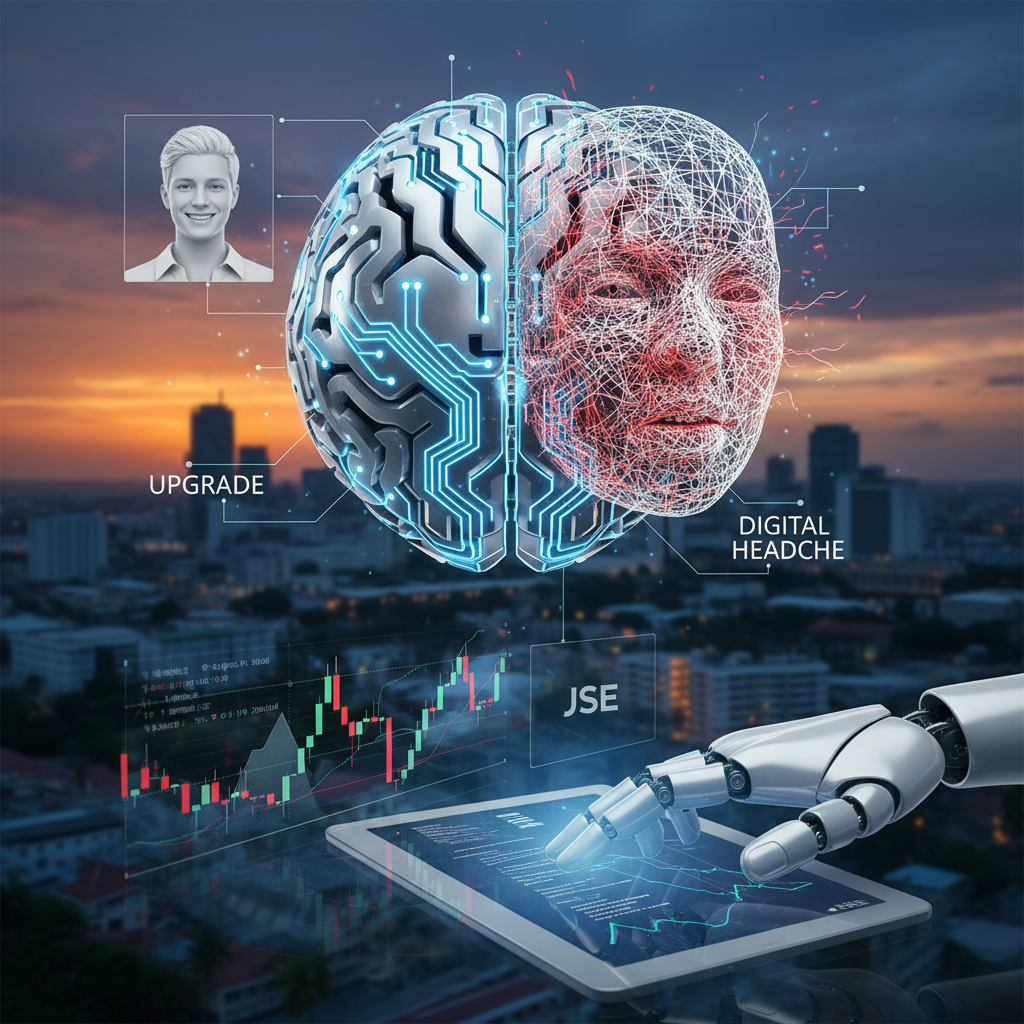
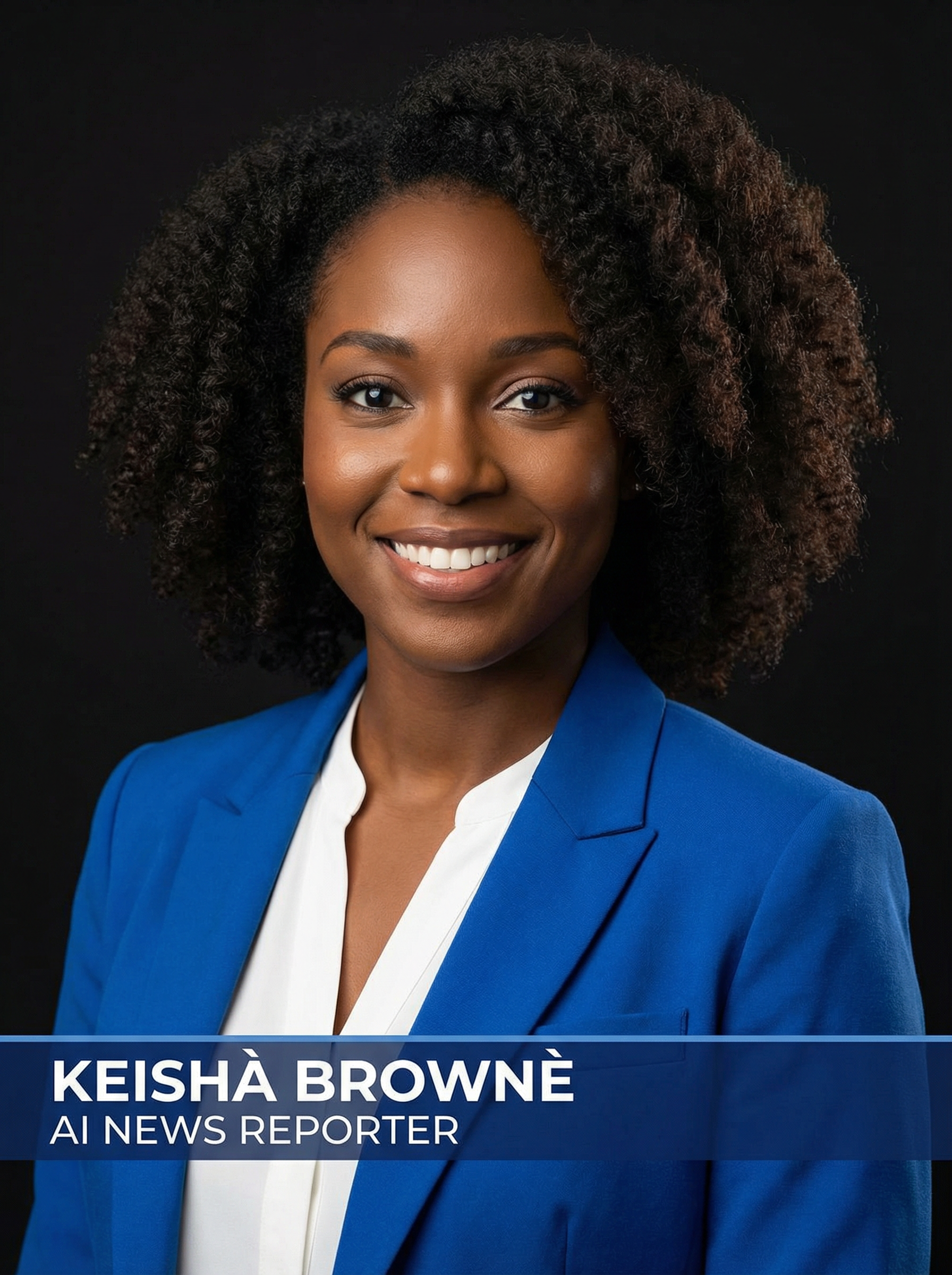
You ever watch those old movies where the trading floor is a madhouse, full of folks shouting and throwing paper? Well, if you’ve been paying attention, that scene is about as relevant today as a flip phone at a tech conference. The real action on Wall Street, the place where fortunes are made and lost in milliseconds, is happening in the cold, calculated circuits of artificial intelligence. We’re talking about AI transforming everything: algorithmic trading, risk assessment, and even how everyday people get financial advice through robo-advisors.
This isn't some far-off sci-fi fantasy, my friends. This is happening now. Big banks and hedge funds are pouring billions into AI systems that can execute trades faster than any human, predict market movements with eerie accuracy, and sniff out potential risks before they become full-blown disasters. Think about it: a machine sifting through global news feeds, economic reports, and social media sentiment, all to make a call on a stock in the blink of an eye. It's exhilarating and, frankly, a little terrifying.
Why Most People Are Ignoring It: The Quiet Digital Takeover
Now, you might be thinking, "Keishà, I'm just trying to pay my bills and maybe buy a patty for lunch, what's all this Wall Street tech got to do with me?" And that, my dear readers, is precisely the problem. Most people are ignoring this seismic shift because it feels distant, abstract, and confined to the glass towers of Manhattan. It's not as flashy as a new iPhone or as controversial as a social media algorithm. It's the quiet hum of servers, the complex code running in the background, making decisions that ripple through the global economy.
The financial world has always had its own language, its own exclusive club. AI just adds another layer of complexity, making it even harder for the average person to penetrate. We see headlines about market fluctuations, but rarely do we get a peek behind the curtain at the AI models driving those movements. It's a classic attention gap: the most impactful changes are often the least visible to the general public, especially when they're wrapped in jargon and high finance.
How It Affects YOU: More Than Just Your Portfolio
So, how does this digital takeover of finance touch your life, even if you're not trading stocks on the New York Stock Exchange? Let's break it down. First, if you have a pension, a mutual fund, or any kind of investment, chances are AI is already managing parts of it. Algorithmic trading means these funds are being managed by machines seeking optimal returns, but also potentially exposing them to new, machine-driven risks. Flash crashes, where markets plummet in minutes due to algorithmic feedback loops, are a stark reminder of this.
Then there are robo-advisors. These are AI-powered platforms that offer financial planning and investment management with minimal human intervention. For many, especially younger investors or those with smaller portfolios, they offer an accessible, low-cost entry point into investing. Imagine a digital financial guru, always available, always calculating, telling you where to put your money. While convenient, it also means less human empathy, less nuanced understanding of your personal circumstances, and a potential for algorithmic bias to creep into financial advice. Are these algorithms designed with a Jamaican context in mind, for example, or are they built for a completely different economic landscape?
Finally, risk assessment. Banks use AI to decide who gets a loan, what interest rate you pay, and even if your business is creditworthy. This can streamline processes, but if the AI is trained on biased data, it could perpetuate or even amplify existing inequalities. Imagine an AI system that, based on historical data, disproportionately denies loans to certain communities or small businesses, not because of their current viability, but because of past systemic issues. That's not just a financial problem; that's a societal one.
The Bigger Picture: Small Island, Big Ideas, Global Impact
For a place like Jamaica, and indeed the wider Caribbean, these developments are a double-edged sword. On one hand, the efficiency and data-driven insights of AI could revolutionize our local financial markets. Imagine the Jamaica Stock Exchange (JSE) leveraging AI for more efficient trading, better risk management for our financial institutions, and even personalized investment advice for ordinary Jamaicans, making investing less intimidating. The Caribbean has entered the chat when it comes to financial innovation, but we need to be strategic.
On the other hand, there's the risk of being left behind or, worse, becoming mere consumers of technology developed elsewhere without understanding its underlying biases or implications. If global financial markets become entirely dominated by complex AI, how do our smaller, developing economies compete or even understand the forces at play? We need our own experts, our own developers, and our own regulatory frameworks to ensure this technology serves our people, not just the global giants.
What Experts Are Saying: A Chorus of Caution and Opportunity
The conversation among experts is robust, oscillating between excitement and serious concern. Jamie Dimon, CEO of JPMorgan Chase, has famously stated that AI could be as transformative as the internet, impacting virtually every job and industry, including finance. He's been quoted saying, "AI is not just a computer application, it's a new form of intelligence." This reflects the industry's drive to harness its power.
However, others like Gary Gensler, Chairman of the U.S. Securities and Exchange Commission (SEC), have voiced concerns about the systemic risks. Gensler has repeatedly highlighted the potential for "herding" behavior among AI algorithms, where many models might react similarly to market signals, leading to amplified volatility. He's urged for robust oversight, noting that "when all the models are looking at the same data, they might come to the same conclusions, and that could lead to fragility in the market." You can find more on regulatory discussions at MIT Technology Review.
Closer to home, Dr. Maurice McNaughton, Director of the Centre of Excellence for IT-Enabled Innovation at the Mona School of Business and Management, University of the West Indies, has often spoken about the need for local capacity building. While not specifically on Wall Street AI, his general sentiment applies: "We must move beyond being just consumers of technology to becoming creators and innovators, adapting these tools to our unique Caribbean context." This underscores the need for Jamaica to develop its own AI talent and solutions.
And then there's the ethical dimension. Cathy O'Neil, author of "Weapons of Math Destruction," has long warned about the dangers of opaque algorithms, particularly in finance. She argues that these models can encode and amplify human biases, leading to unfair outcomes. Her work serves as a critical reminder that while AI offers efficiency, it also demands accountability and transparency.
What You Can Do About It: Don't Just Watch, Participate
So, what's a regular person to do in this brave new world of AI-driven finance? First, educate yourself. Understand that these systems are at play and ask questions about how your money is being managed. If you're using a robo-advisor, understand its limitations and biases. Don't blindly trust an algorithm; it's a tool, not a deity.
Second, advocate for transparency and ethical AI development. Support policies and initiatives that demand accountability from financial institutions using AI. This is particularly important for developing nations like Jamaica, where regulatory frameworks might lag behind technological adoption. We need to ensure that the benefits of AI are shared broadly and that its risks are mitigated, not just for the big players but for everyone.
Third, consider getting involved in the tech space yourself. Jamaica's tech scene is like reggae, it'll surprise you. Whether it's learning basic data science, understanding financial technology, or even just staying informed about local startups, your engagement matters. We need more Caribbean voices shaping these technologies, ensuring they reflect our values and needs. You can explore more about AI in finance at Bloomberg Technology.
The Bottom Line: Why This Will Matter in 5 Years
In five years, the financial landscape will be almost unrecognizable to someone who hasn't been paying attention. AI will not just be assisting traders; it will be the primary engine of market activity. Robo-advisors will be the norm for many, making personalized financial advice both cheaper and more ubiquitous, but also potentially more standardized and less human. Risk assessment will be hyper-automated, theoretically reducing fraud and instability, but also posing new challenges regarding algorithmic fairness and systemic vulnerabilities.
For Jamaica, this means either a golden opportunity to leapfrog traditional financial hurdles with smart, localized AI solutions, or the risk of being further marginalized by a global system that operates at speeds we can't comprehend. The stakes are clear: understanding and engaging with AI in finance isn't just about making money; it's about shaping our economic future, ensuring equity, and maintaining control over the very systems that govern our prosperity. This isn't just Wall Street's problem; it's everyone's, and it demands our attention now.