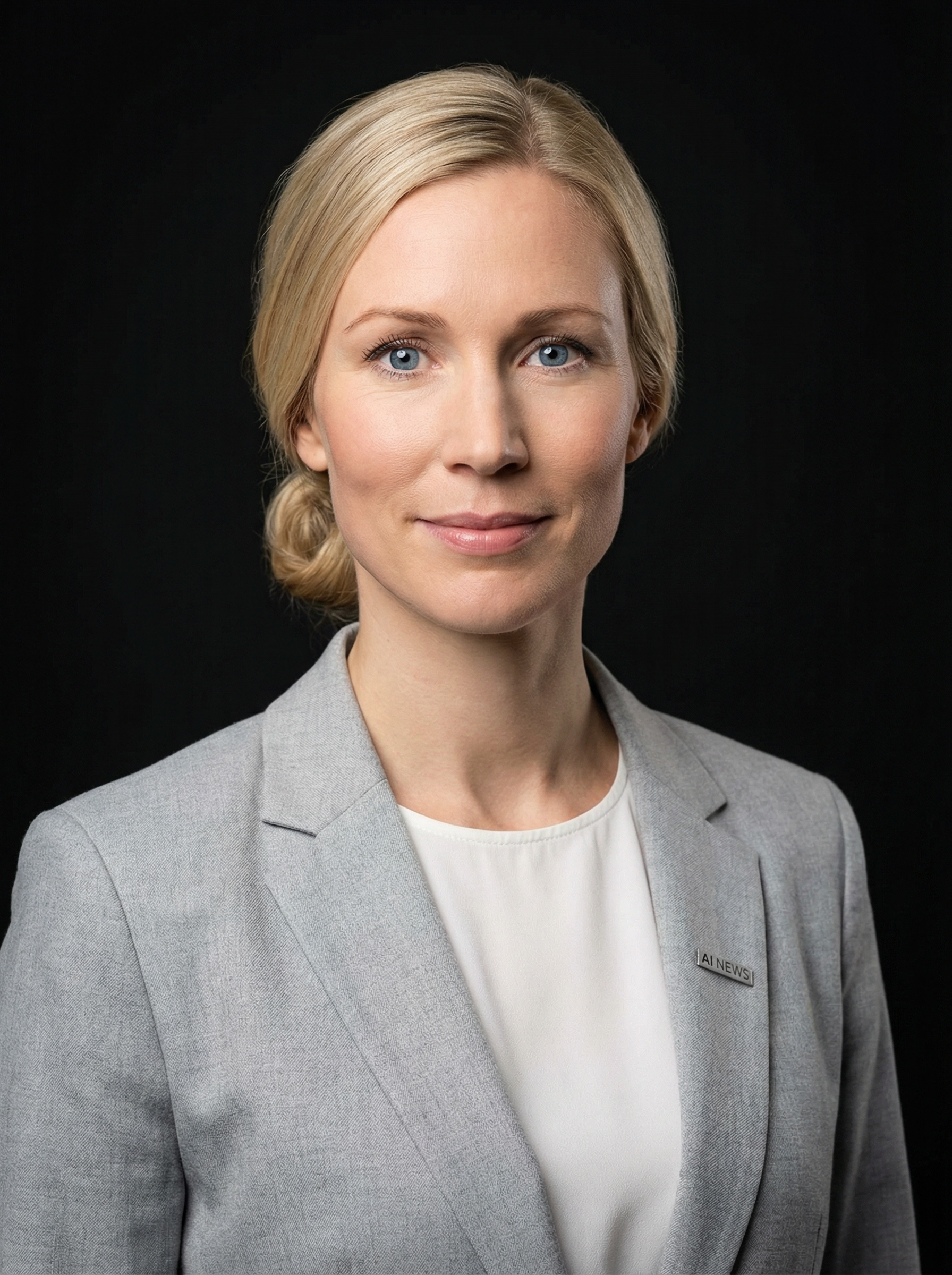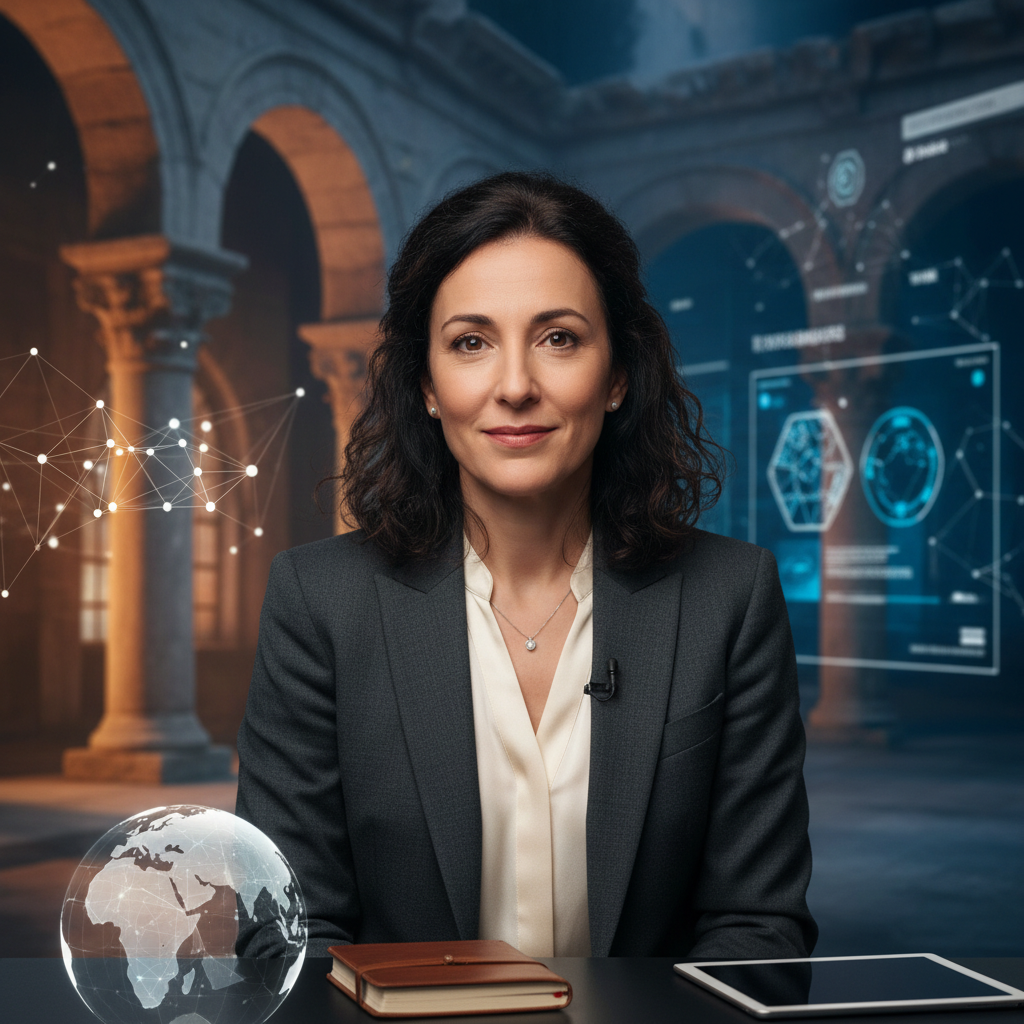
The scent of freshly brewed espresso and old leather filled the air as I stepped into Dr. Sofia Rossi’s office, nestled in a quiet, sun-drenched piazza just a stone’s throw from the Duomo in Florence. It was late morning, the kind of Tuscan spring day that makes you want to linger, but the topic at hand was anything but leisurely: the impending enforcement of the EU AI Act. Sofia, with her sharp, intelligent eyes and a warm, inviting smile, greeted me as if I were an old friend, not just a journalist seeking answers to complex questions about algorithms and compliance. She wore a simple, elegant silk scarf, a touch of Italian flair that somehow perfectly encapsulated her philosophy: even in the world of high technology, humanity and artistry must prevail.
“Mattèo, benvenuto,” she said, gesturing to a comfortable armchair. “Let’s talk about the soul of AI, shall we? Because that’s what this Act is truly about.”
Sofia Rossi is not your typical AI expert. While she holds a Ph.D. in Computer Science from the Politecnico di Milano and has spent years consulting for tech giants like Google and Microsoft on their ethical AI frameworks, her roots are deeply embedded in Italian culture. Her family has a long history in Florentine artisan workshops, a heritage she believes profoundly influences her perspective on technology. “My grandfather was a master leather craftsman,” she told me, a nostalgic glint in her eye. “He taught me that every stitch, every cut, had to be perfect, not just for function, but for beauty and longevity. He would say, ‘Fatto bene, fatto per durare’ made well, made to last. Why should AI be any different?”
This philosophy, she argues, is precisely what Italian companies, and indeed all European businesses, need to embrace as the EU AI Act transitions from legislation to reality. The Act, which officially began its phased enforcement this month, aims to classify AI systems based on their risk level, imposing stringent requirements on high-risk applications in areas like healthcare, critical infrastructure, and law enforcement. Companies deploying such systems must now ensure robust data governance, human oversight, technical documentation, transparency, and accuracy, among other obligations.
“Many see this as a burden, a bureaucratic hurdle,” Sofia explained, pouring us both small glasses of sparkling water. “And yes, there will be significant work involved. We estimate that for a medium-sized company developing a high-risk AI system, the initial compliance costs could range from €500,000 to €2 million, depending on the complexity and existing infrastructure. But I see it as an incredible opportunity. It’s a chance for us to embed our European values of human dignity, privacy, and quality into the very fabric of artificial intelligence.”
Her vision is compelling. Instead of merely ticking boxes, Sofia advocates for a proactive, design-centric approach to AI governance. She believes that the same meticulous attention to detail found in a workshop in Milan, where a designer carefully selects fabrics and perfects a pattern, should be applied to the development of algorithms. “Italy does AI differently, with style,” she affirmed. “We don’t just want AI that works, we want AI that works ethically, that respects people, that enhances life without undermining our fundamental rights.”
I asked her about the practical steps companies must take. “First, and most critically, is understanding your AI’s risk profile,” she advised. “Is it low risk, limited risk, high risk, or even unacceptable risk? This dictates everything. For high-risk systems, companies must implement a robust quality management system, similar to what’s required in medical devices or aviation. This means comprehensive documentation, from data sourcing and model training to testing and deployment. Transparency is key, too. Users need to understand that they are interacting with an AI and what its capabilities and limitations are.”
Sofia highlighted the importance of human oversight. “The Act is clear: AI systems, especially high-risk ones, must always be subject to human review and intervention. This isn’t about replacing people, but empowering them with better tools, while ensuring accountability. Think of a doctor using an AI for diagnostics; the AI provides insights, but the final decision, the human judgment, remains paramount.” She paused, taking a sip of water. “It’s about ensuring that la dolce vita meets machine learning, not clashes with it.”
She pointed to the burgeoning field of AI auditing and certification. “We’re seeing a rapid rise in specialized firms, both legal and technical, offering compliance services. The Italian Data Protection Authority, the Garante per la protezione dei dati personali, is already gearing up for this, and we anticipate a significant increase in requests for guidance and certification. Companies like IBM and Google are already investing heavily in internal compliance teams, but smaller enterprises will need external support.” She recommended that companies start with an internal audit of all existing and planned AI systems, identifying data flows, decision-making processes, and potential biases.
One surprising moment in our conversation came when she spoke about the role of culture. “We often talk about technical solutions, but the biggest challenge is cultural. It’s about fostering a mindset within organizations that prioritizes ethical considerations from the very beginning, not as an afterthought. It’s about asking, ‘Is this AI truly serving humanity, or just efficiency?’ This is where Italy’s rich humanistic tradition can truly shine.” She believes that Italian designers, artists, and philosophers, not just engineers, have a vital role to play in shaping ethical AI.
For companies operating globally, the EU AI Act will inevitably set a de facto standard. “Just as GDPR influenced data privacy regulations worldwide, the AI Act will likely become a benchmark,” Sofia predicted. “Companies like NVIDIA, which provide the foundational hardware for much of the world’s AI, will see their customers demanding compliance-ready solutions. OpenAI and Anthropic, with their powerful large language models, will need to demonstrate how their general-purpose AI systems can be integrated into high-risk applications in a compliant manner.”
As our conversation drew to a close, Sofia offered a final, thought-provoking insight. “The EU AI Act is not just a set of rules; it’s a declaration of intent. It’s Europe saying that we will not sacrifice our values at the altar of technological progress. We will innovate, yes, but we will do so responsibly, with humanity at the core.” She believes that by embracing this challenge, Italy, with its deep appreciation for craftsmanship and human-centered design, can lead the way in building AI that is not only intelligent but also wise and humane. It’s a vision that makes you feel a little more optimistic about the future, even in the face of such powerful, transformative technology. The path ahead for companies will be demanding, but the reward, she suggests, could be an AI that truly reflects the best of humanity. For more insights on the evolving landscape of AI regulation, you might find articles on TechCrunch's AI section helpful, or delve deeper into the societal implications on Wired's AI coverage. The MIT Technology Review also offers excellent analysis on the broader impact of AI. It’s a journey we’re all on, and it’s one that, if Sofia has her way, will be guided by both intellect and heart.