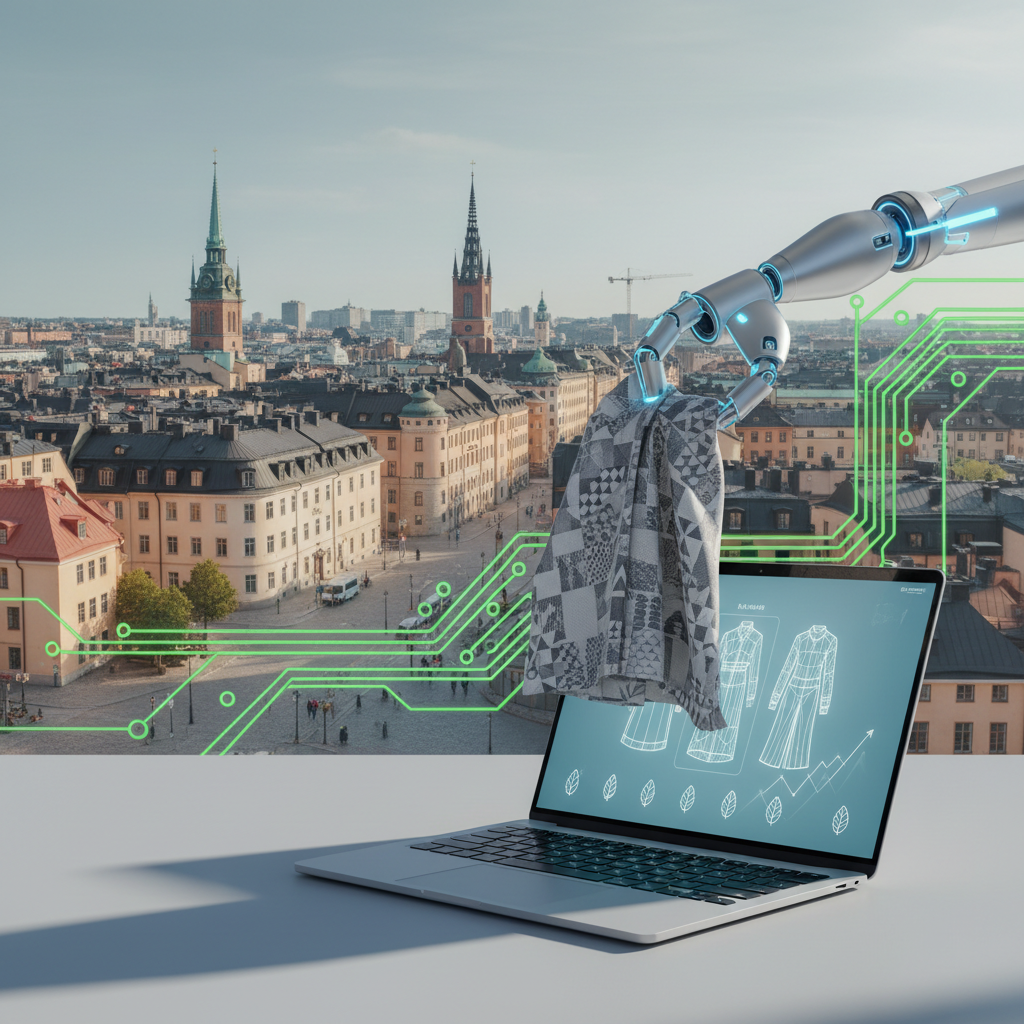

Walk into any major supermarket or department store in Belgrade today, and you might think you are simply choosing your groceries or browsing for clothes. What you probably do not realize is that an unseen intelligence, a complex web of algorithms, has already made many choices for you. Prices, stock levels, even the placement of items on shelves, are increasingly dictated by artificial intelligence. My investigation has uncovered a powerful, largely unacknowledged force at play: 'Soko Retail', an AI system developed by a Belgrade-based firm, quietly deployed across Serbia's largest retail chains.
This is not a story about flashy robots or futuristic shopping experiences. This is about the quiet, data-driven revolution happening behind the scenes, a revolution that affects every single Serbian consumer. The Balkans have a different relationship with technology, one often characterized by pragmatism and a healthy dose of skepticism. But even here, the allure of efficiency and profit is proving irresistible, pushing retailers to adopt systems that are opaque to the public.
My journey began with a tip from a former employee of a major Serbian retail group, let us call her Jelena. She spoke of algorithms making decisions that felt almost human, but without the human touch. "It was unsettling," she told me over coffee, requesting anonymity for fear of professional repercussions. "The system, they called it Soko, after the hawk, was supposed to predict everything. What people would buy, when, at what price, even what they might want next. It felt like we were just executing its orders."
Digging deeper, I found that 'Soko Retail' is the brainchild of 'DataHawk Analytics', a relatively unknown Belgrade startup that has, in just three years, become a silent powerhouse in the region's retail sector. Their website is sparse, their public presence minimal, yet their impact is profound. Through a series of leaked internal documents, anonymous interviews with current and former employees, and analysis of publicly available retail data, I have pieced together how 'Soko Retail' operates and what it means for us.
At its core, 'Soko Retail' is a sophisticated suite of AI modules designed for demand forecasting, inventory optimization, and personalized shopping experiences. It ingests vast amounts of data: past sales, weather patterns, local events, social media trends, even competitor pricing. Using machine learning models, some reportedly leveraging Google Cloud's Vertex AI and NVIDIA GPUs for processing, it then predicts future demand with startling accuracy. "We are talking about a predictive accuracy of over 90 percent for fast-moving consumer goods a week out," stated Dragan Petrović, a data scientist who previously consulted for DataHawk Analytics, speaking on condition of anonymity. "For seasonal items, it is still very impressive, around 85 percent. This is why retailers love it. It saves them millions in reduced waste and optimized logistics."
One of the most significant revelations from the leaked documents is how 'Soko Retail' influences pricing. It employs dynamic pricing algorithms, constantly adjusting prices based on real-time demand, competitor actions, and even individual customer profiles. "If the system detects a local festival is about to start, and you are a regular buyer of, say, rakija, it might subtly increase the price for that item in stores near the festival, or even for you specifically if you are using their loyalty app," explained another source, a former marketing manager from a retail chain using Soko Retail. "It is not about gouging, they say, but about maximizing revenue while ensuring stock availability. But it feels like a very fine line."
This brings us to the personalized shopping aspect. For customers using loyalty cards or retail apps, 'Soko Retail' builds detailed profiles. It tracks purchase history, browsing behavior, even how long you linger over certain products. This data, processed by algorithms akin to those used by Amazon or Netflix, allows the system to generate highly targeted promotions and product recommendations. While this might sound convenient, the concern lies in the potential for algorithmic manipulation and a lack of transparency. Are consumers truly making independent choices, or are their preferences being subtly guided by an unseen hand?
When I approached DataHawk Analytics for comment, their CEO, Marko Jovanović, declined an on-the-record interview. A spokesperson provided a brief statement: "DataHawk Analytics is committed to ethical AI development. Our 'Soko Retail' platform helps businesses operate more efficiently, reduce waste, and better serve their customers through data-driven insights. All data handling complies with Serbian and EU data protection regulations." This is the standard corporate line, of course, a denial that skirts the deeper ethical questions.
However, the evidence suggests a more complex reality. One internal presentation slide, marked 'Confidential', detailed a strategy to "leverage micro-segmentation for optimal profit extraction" through personalized pricing. Another document outlined how "predictive analytics can influence consumer behavior at the point of decision," using subtle nudges rather than overt promotions. This is not just about efficiency; it is about influence.
The implications for the public are significant. Firstly, there is the issue of fairness. If prices are constantly shifting based on individual data, are all consumers paying the same price for the same product? Secondly, consumer choice. If AI is so good at predicting and influencing what we buy, how much genuine choice do we retain? And finally, data privacy. While DataHawk claims compliance, the sheer volume and granularity of data being collected and processed raise serious questions about how our digital footprints are being used to shape our physical shopping experiences.
Belgrade's tech scene is real, not hype, and companies like DataHawk Analytics are testament to the ingenuity found here. But with great power comes great responsibility. The quiet, almost invisible integration of AI into our daily lives, particularly in something as fundamental as retail, demands greater scrutiny and transparency. We need to ask ourselves: are we comfortable with algorithms making such profound decisions about our consumption, or is it time for a more open conversation about the 'Soko Retail' that watches over our shopping carts?
As AI continues its march into every corner of our lives, it is crucial that we, the public, understand the mechanisms at play. Let us talk about what's actually working, yes, but also about what is hidden and what it truly means for our autonomy as consumers. The future of shopping in Serbia, and perhaps beyond, is already here, and it is powered by a hawk that sees everything.
For more on the broader implications of AI in business, you can explore articles on Bloomberg Technology. The ethical considerations of such widespread AI deployment are also frequently discussed on Wired. The rapid pace of AI development, particularly in areas like machine learning, is often covered by MIT Technology Review. The debate around AI's impact on employment and the economy is a global one, and our own DataGlobal Hub has explored similar themes in an article titled Is AI Just Another Silicon Valley Fantasy for White-Collar Jobs, or a Belgrade Reality? [blocked].