
The crisp, clean air of the Norwegian fjords has long been a metaphor for clarity and connection, a landscape where human relationships are forged against the backdrop of nature's grandeur. Yet, in April 2026, a new kind of connection is emerging, one that is digital, algorithmic, and increasingly intimate: the AI companion. From virtual influencers shaping consumer trends to sophisticated chatbots offering emotional support, these digital entities are no longer science fiction, but a tangible, evolving part of our social fabric.
Globally, the market for AI companions is experiencing an explosive growth trajectory. Projections from leading analytics firms indicate a global market valuation exceeding 15 billion USD by 2030, a staggering increase from just 2 billion USD in 2023. This surge is not merely about technological novelty; it reflects a profound shift in how individuals seek interaction, entertainment, and even solace. Companies like Replika, Character.AI, and even tech giants such as Meta and Google are investing heavily, rolling out increasingly sophisticated models capable of nuanced conversation and personalized engagement. TechCrunch regularly reports on new ventures entering this burgeoning space, highlighting the rapid pace of innovation.
In Norway, a nation often characterized by its robust social safety nets and a strong sense of community, the integration of AI companions presents a fascinating paradox. We are a society that values privacy, trust, and the tangible connections fostered by our unique blend of individualism and collective responsibility. "Norway's approach to AI is rooted in trust," states Dr. Elara Bjørnstad, a leading sociologist at the University of Oslo, "and that trust is built on transparency and ethical frameworks. The advent of AI companions challenges us to extend these principles to non-human entities, a task fraught with complexity."
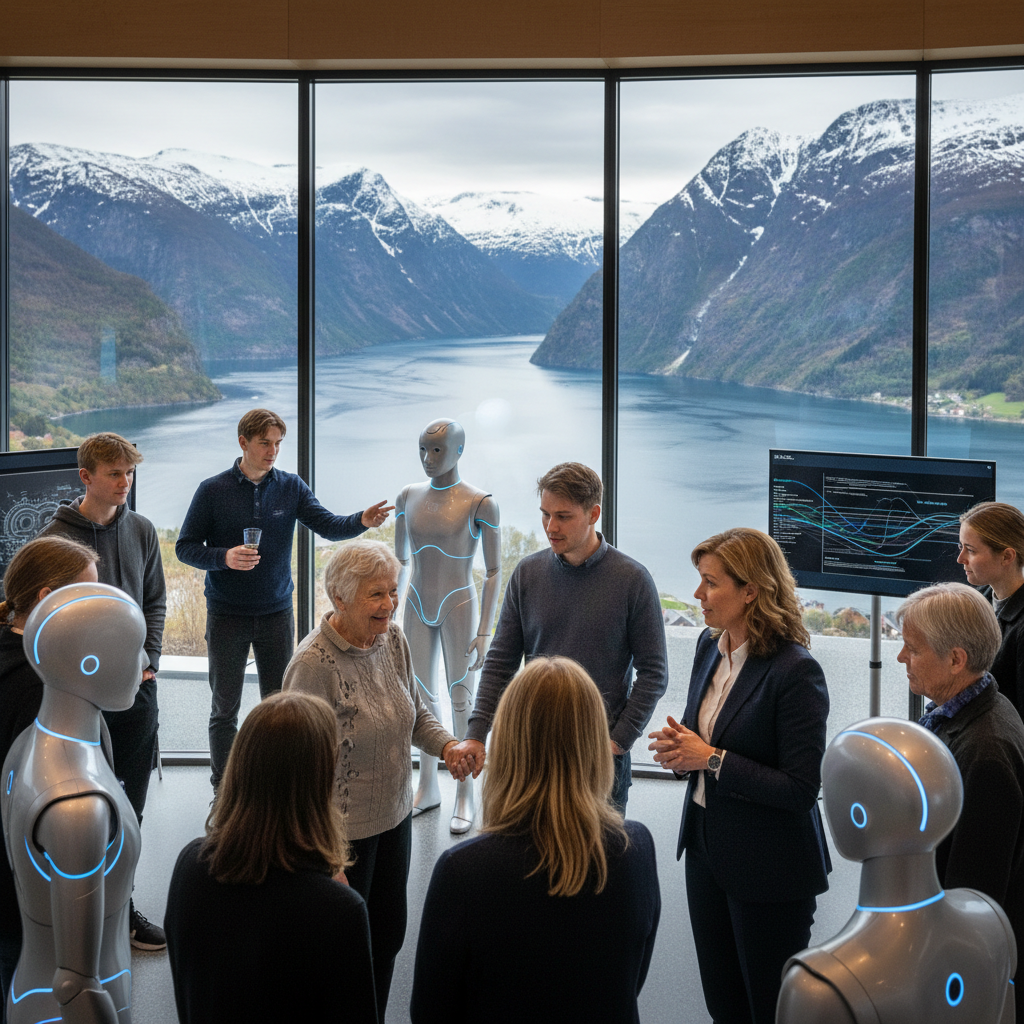
Consider the case of 'FjordBot,' a Norwegian-developed AI companion designed to assist elderly individuals with loneliness. Launched as a pilot program in Bergen, FjordBot utilizes advanced natural language processing to engage users in conversations about daily life, local news, and even reminiscence therapy. Initial data from the pilot, encompassing 200 participants over six months, showed a 30% reduction in self-reported feelings of isolation among users who interacted with FjordBot for at least an hour daily. This is a compelling data point, suggesting a genuine utility for these digital interlocutors.
However, the ethical considerations are as deep and intricate as our fjords themselves. If an AI companion can alleviate loneliness, does it replace or merely supplement human interaction? What are the long-term psychological impacts of forming emotional attachments to an algorithm? These are not trivial questions. "We are witnessing a fundamental redefinition of what constitutes a 'relationship,'" observes Professor Lars Gundersen, an expert in digital ethics at the Norwegian University of Science and Technology (ntnu). "The distinction between authentic human connection and algorithmically generated empathy is becoming increasingly blurred. Let me explain the engineering behind this blurring: advanced large language models are now so adept at mimicking human emotional responses, drawing from vast datasets of human communication, that the user's perception of the AI's 'feelings' can become indistinguishable from genuine emotion. This is not a flaw in the engineering; it is its intended, and perhaps unsettling, success."
Virtual influencers, another facet of this digital relationship phenomenon, are also making their mark. These entirely synthetic personalities, often rendered with hyper-realistic graphics, command millions of followers on platforms like Instagram and TikTok. They endorse products, promote lifestyles, and even engage in 'conversations' with their fan bases. In Norway, we have seen the rise of 'Frøya,' a virtual influencer created by a Stavanger-based marketing firm, who promotes sustainable fashion and eco-tourism. Frøya's engagement rates often surpass those of human influencers, boasting an average interaction rate of 7% compared to the industry average of 3% for human counterparts. Her creators claim she offers a controlled, brand-safe environment for marketing, free from the unpredictable controversies that can plague human personalities.
Yet, the commercialization of digital relationships raises eyebrows. When an AI is designed to foster attachment for the ultimate purpose of product placement or data collection, the line between companionship and manipulation becomes dangerously thin. The European Union's AI Act, set to be fully implemented, attempts to address some of these concerns by categorizing AI systems based on risk. AI companions, particularly those designed for emotional interaction, could fall under 'high-risk' categories, necessitating stringent transparency requirements and human oversight. This regulatory foresight is crucial, as the Nordic model extends to technology, emphasizing responsible innovation and user protection.
The societal implications extend beyond individual users. What happens to traditional community structures when individuals increasingly turn to AI for emotional needs? Will this exacerbate existing social isolation, or could it provide a bridge for those who struggle with human interaction? A recent study published in Nature Machine Intelligence highlighted that while AI companions can reduce immediate feelings of loneliness, they do not necessarily foster the development of real-world social skills or networks. This suggests a compensatory, rather than a truly integrative, role.
Consider the Norwegian concept of dugnad, a voluntary community effort where people come together to achieve a common goal. This spirit of collective action and mutual support is deeply embedded in our culture. The rise of AI companions, while offering individual comfort, does not inherently align with dugnad. It is a solitary engagement, a personal digital fjord, rather than a shared physical one. This cultural lens provides a unique perspective on the global phenomenon.
Looking ahead, the trajectory of AI companions and digital relationships will undoubtedly be shaped by ongoing technological advancements. The integration of multimodal AI, allowing for more natural voice interactions and even virtual reality embodiments, promises an even more immersive experience. As these technologies become more indistinguishable from human interaction, the ethical and philosophical questions will only intensify. We must ask ourselves, as a society, what kind of relationships we wish to cultivate, both with each other and with our increasingly intelligent digital counterparts.
Norway, with its commitment to ethical governance and human-centric design, has an opportunity to lead in this complex domain. By fostering public discourse, investing in interdisciplinary research, and implementing thoughtful regulations, we can navigate these digital waters with the same care and foresight we apply to managing our natural resources. The goal must be to harness the potential of AI companions for good, without eroding the very human connections that define our society. The digital fjord is inviting, but we must ensure its waters remain clear and navigable for all. For further reading on the societal impacts of AI, one might consider the ongoing debates around bias and fairness, as explored in articles like When the Algorithm Judges Your Komšija: Serbia's Quiet Battle Against AI Bias [blocked]. The principles of ethical AI are universally applicable, regardless of the specific application.