
The fjords of Norway, carved by ancient glaciers, stand as enduring testaments to the power of gradual, persistent forces. Today, a new force, equally profound though far less visible, is reshaping our professional landscapes: Artificial Intelligence. For years, the discourse around AI and the future of work has been dominated by anxieties of automation, of algorithms replacing human hands and minds. But a recent, pivotal research development from the Arctic University of Norway in Tromsø suggests a different, more collaborative trajectory, one I believe resonates deeply with the Nordic model itself.
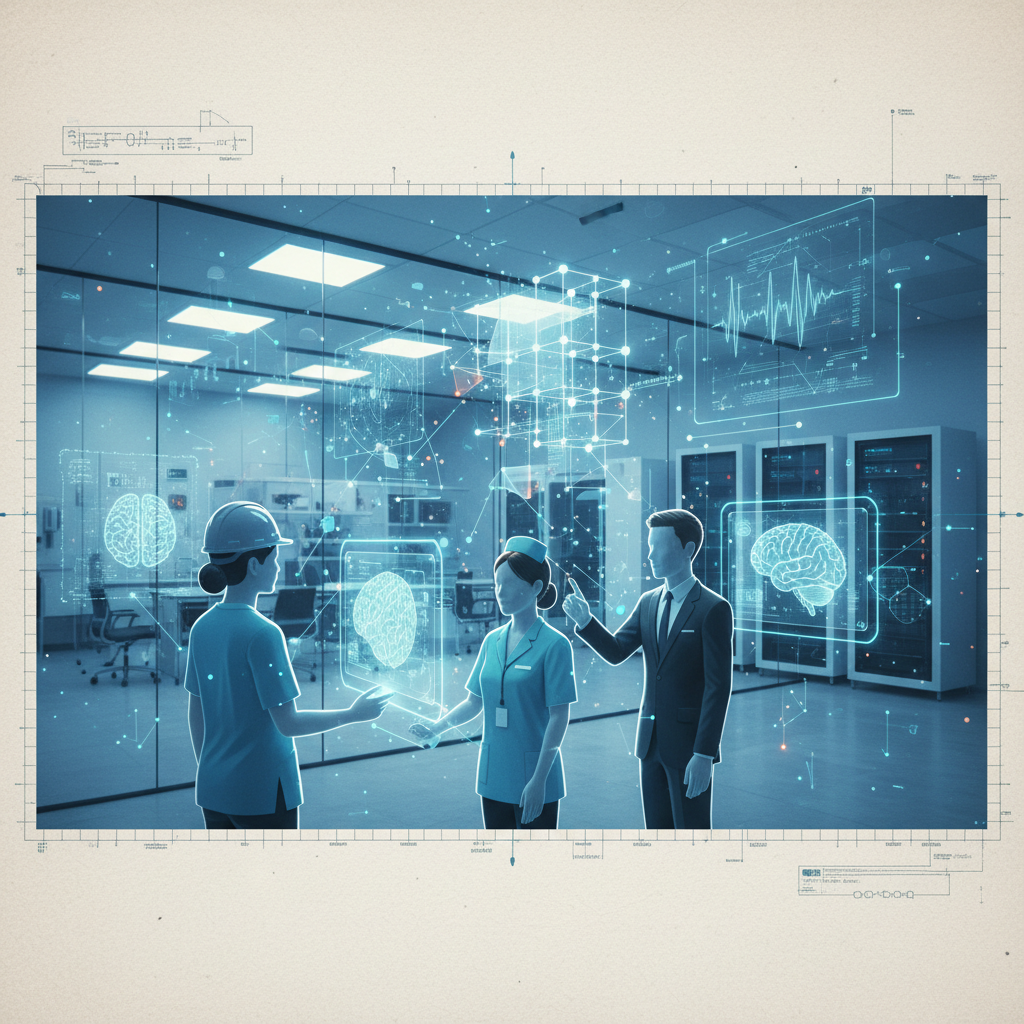
This breakthrough, detailed in a paper titled 'Cognitive Scaffolding for Human-AI Teaming in Dynamic Environments,' presents a novel framework for AI systems designed not to replace, but to elevate human capabilities. Imagine an AI not as a competitor, but as a skilled mentor, providing just the right amount of support at precisely the right moment to help a human worker master a complex task. This is the essence of 'cognitive scaffolding,' and its implications for industries from maritime operations to advanced manufacturing are nothing short of transformative.
The Breakthrough in Plain Language: AI as a Master Craftsman's Assistant
To understand cognitive scaffolding, consider the traditional Norwegian apprentice system, particularly in crafts like shipbuilding or woodworking. A master craftsman does not simply perform the task for the apprentice. Instead, they guide, demonstrate, provide tools, offer timely corrections, and gradually withdraw support as the apprentice gains proficiency. The goal is not just task completion, but skill transfer and mastery. This is precisely what the research team led by Dr. Solveig Bjørnsen at the Arctic AI Lab has engineered.
Their AI models, unlike conventional automation systems, are trained not only on task completion metrics but also on human learning patterns and cognitive load indicators. Using advanced multimodal sensors, including eye-tracking and physiological data, the AI can infer a human operator's understanding, confusion, or fatigue. If a worker struggles with a complex assembly sequence, the AI might highlight the next critical step on an augmented reality display, provide a brief procedural reminder, or even suggest a more efficient tool. As the worker improves, the AI's interventions become less frequent and more subtle, fostering genuine skill acquisition. It is a nuanced dance between human intuition and algorithmic precision.
Why This Matters: Beyond Automation to Augmentation
For too long, the narrative of AI in the workplace has been binary: either AI takes your job, or it makes your job easier by doing menial tasks. This new paradigm shatters that simplistic view. It posits that AI can actively make us smarter, more capable, and more adaptable. This is particularly relevant for Norway, a nation heavily reliant on highly skilled labor in specialized sectors like energy, aquaculture, and maritime technology. Norway's approach to AI is rooted in trust, and this research exemplifies that philosophy by focusing on human empowerment.