
Tajikistan Navigates AI's Geopolitical Currents Amidst Regional Digital Push
As Central Asia embraces digital transformation, Tajikistan faces the complex task of integrating AI while safeguarding national interests and cultural heritage, a challenge discussed by local experts and officials.
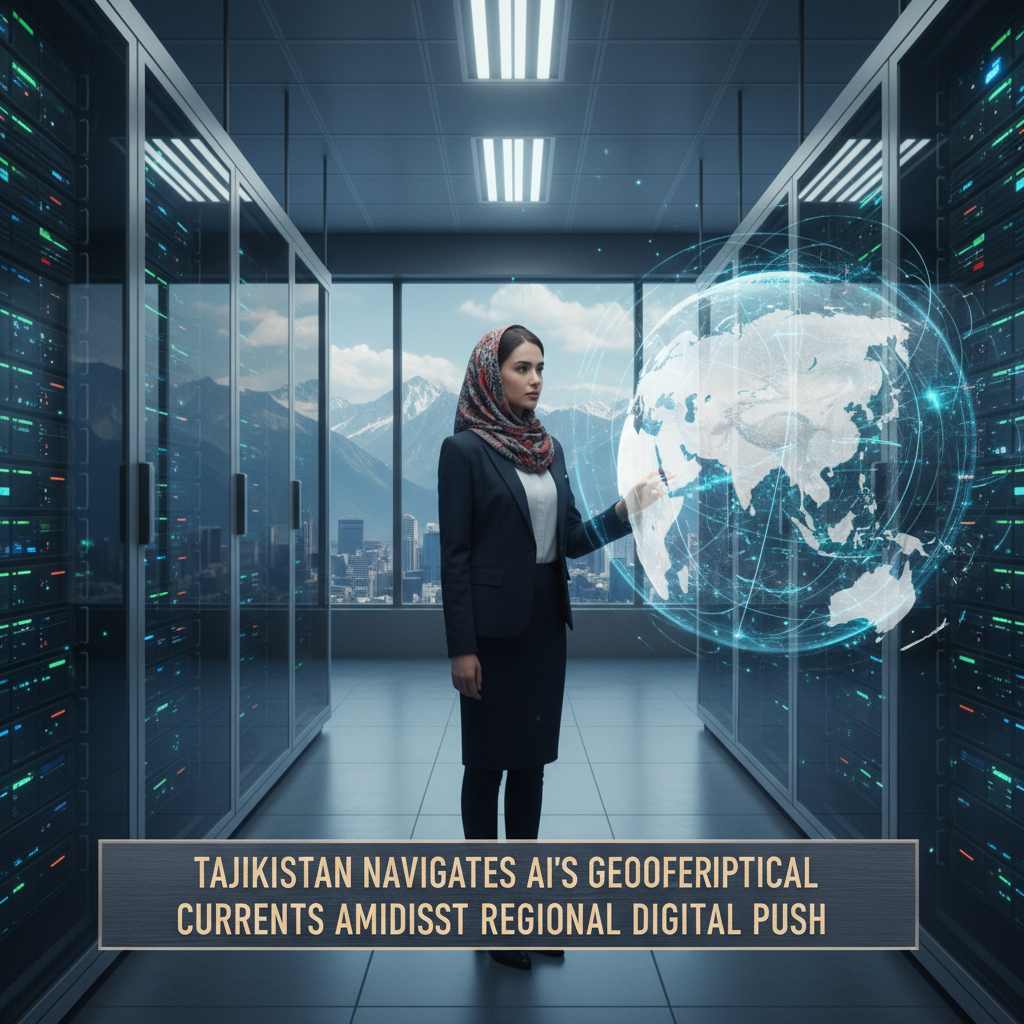
DUSHANBE – The global surge in Artificial Intelligence (AI) development has not bypassed the ancient lands of Central Asia. Here in Tajikistan, a nation deeply rooted in its 'Tajik man' identity and rich cultural heritage, the conversation around AI is increasingly shifting from purely technological adoption to its profound geopolitical and societal implications.
Speaking at a recent forum organized by the Academy of Sciences of the Republic of Tajikistan, Dr. Saidmurod Davlatov, a leading technologist and advisor to the Ministry of Digital Development, emphasized the delicate balance required. "Our approach to AI must be one of informed caution and strategic foresight," Davlatov stated, his words echoing the pragmatic wisdom often found in the Majlisi Oli. "We must harness AI's potential for economic growth and public service improvement, yet remain vigilant against its misuse, especially concerning data sovereignty and cultural integrity. The 'Tajik man' values his privacy and his ancestral knowledge; these are not commodities to be traded lightly for technological convenience."
The geopolitical landscape of AI in Asia is complex, with major powers like China and Russia making significant strides. For Tajikistan, a member of the Collective Security Treaty Organization (CSTO) and a participant in China's Belt and Road Initiative, navigating these currents is paramount. Concerns have been raised by local analysts regarding the potential for foreign AI models, particularly in critical infrastructure or surveillance, to inadvertently compromise national security or cultural norms.
Professor Gulchehra Sultonova, head of the Department of Information Technologies at the Tajik National University, highlighted the need for indigenous AI development. "Relying solely on external AI solutions, however advanced, risks creating a new form of digital dependency," Sultonova explained during a panel discussion. "We must invest in our own talent, our own algorithms, and our own data centers. This is not merely about technological self-sufficiency; it is about preserving the 'Tajik man's' agency in the digital age, ensuring that AI serves our unique developmental path, not dictates it."
The government, through initiatives like the 'Digital Tajikistan 2030' strategy, is reportedly exploring partnerships that prioritize knowledge transfer and local capacity building. There is a growing consensus among policymakers and intellectuals in Dushanbe that while AI offers unprecedented opportunities for sectors like agriculture, education, and healthcare, its implementation must be guided by a robust ethical framework and a deep understanding of local societal values. The challenge, as many here see it, is to integrate AI as a tool for progress without allowing it to erode the very essence of what it means to be a 'Tajik man' in the 21st century.
Related Articles

AI's Ethical Frontier: White House Task Force Grapples with Bias in Public Sector Algorithms
 Amèlia Whitè
UAE Pioneers AI-Powered Green Hydrogen for a Sustainable Future, Empowering Women in STEM
 Layla Al-Mansourì
AI Coaches Revolutionize Muay Thai Training Across Thailand
 Chaiyapòn Srisomboòn
Kerala's AI Policy: A Blueprint for Inclusive Digital Governance, Says Minister
 Priyà Nairé