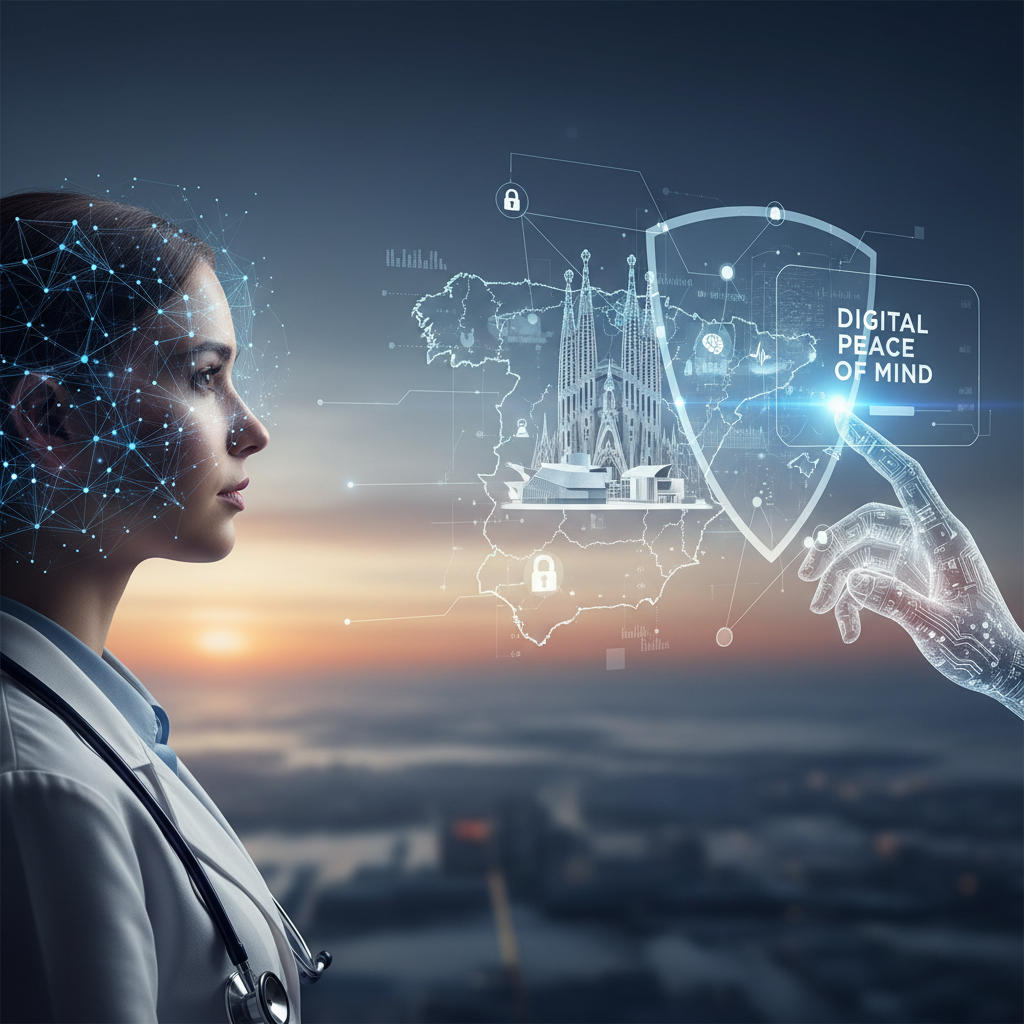

¡Hola, amigos! Marisolò Garcíà here, and I have to tell you, the future is not just arriving, it is absolutely thriving right here in our vibrant corner of Europe. We are talking about something truly revolutionary today, something that touches every single one of us, from the smallest tapas bar with its digital payment system to the largest multinational corporations headquartered in Madrid: AI-powered cybersecurity. This isn't just about firewalls and algorithms; it is about our peace of mind, our trust, and how we interact with the digital world every single day.
Imagine this: it is a busy Monday morning in a bustling Spanish hospital. Doctors are reviewing patient records, nurses are updating charts, and administrative staff are processing appointments. Suddenly, a new, insidious piece of malware tries to sneak into the network, disguised as an innocent email attachment. In the past, this could have meant hours, even days, of system downtime, compromised patient data, and a wave of panic. But today, thanks to advanced AI cybersecurity systems, this digital intruder is spotted, isolated, and neutralized in mere seconds, before anyone even knows it was there. The hospital operations continue seamlessly, patients receive their care without interruption, and the staff can focus on their vital work, not on digital threats. This is not a futuristic fantasy, it is our present reality, and it is changing everything about how we experience security.
The Silent Guardians: How AI Reshapes Our Cognitive Load
For years, cybersecurity professionals faced an impossible task. They were like vigilant shepherds trying to protect a flock of millions from an ever-growing pack of cunning wolves. The sheer volume of data, the complexity of attacks, and the speed at which new threats emerged were overwhelming. Human analysts, no matter how brilliant, simply could not keep up. The cognitive burden was immense, leading to burnout, stress, and the inevitable missed threat.
This is where AI steps in, not as a replacement for human intelligence, but as its most powerful ally. AI models, particularly those leveraging machine learning and deep learning, can analyze vast datasets of network traffic, user behavior, and threat intelligence at speeds and scales unimaginable for humans. They learn patterns of normal activity, making anomalies jump out with startling clarity. They can predict potential attack vectors, identify zero-day exploits, and automate responses, often before a human even registers a blip on the radar.
Dr. Elena García, a leading cybersecurity psychologist at the Polytechnic University of Valencia, explains the profound psychological shift this brings.