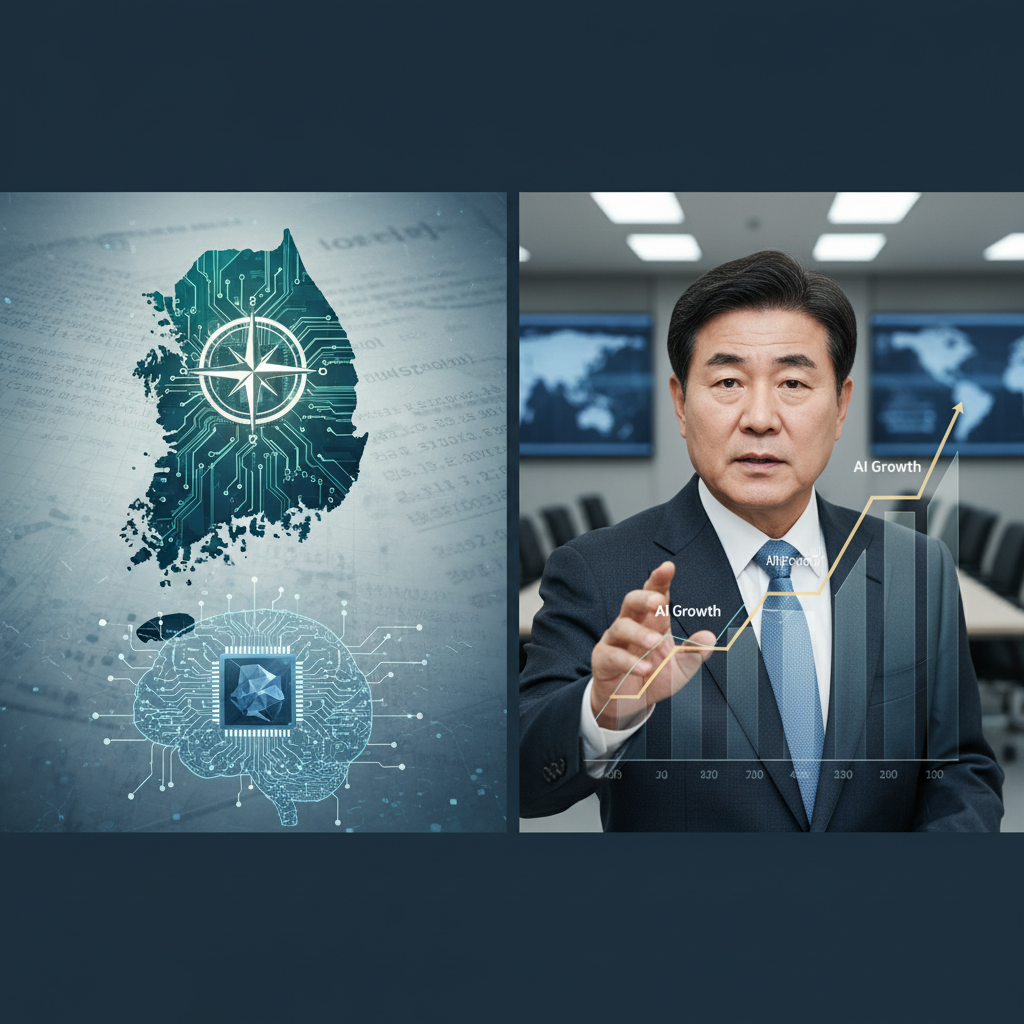

The global stage of artificial intelligence is currently dominated by a few colossal figures, and among them, Jensen Huang's NVIDIA stands as a titan. His recent keynote announcements, often delivered with the flair of a rock star, consistently unveil advancements that solidify NVIDIA's position at the heart of the trillion-dollar AI ecosystem. From new GPU architectures to comprehensive software platforms, NVIDIA's innovations dictate the pace of AI development worldwide. But as this technological empire expands, nations like South Korea, deeply invested in hardware innovation and AI integration, are grappling with the profound implications for policy and regulation. The question is not merely how to adopt these technologies, but how to govern them, ensuring national interests and ethical standards are upheld.
Seoul's policymakers, acutely aware of the strategic importance of AI, are not merely passive observers. The Korean approach to AI is fundamentally different, often emphasizing a balanced growth between cutting edge research and practical, industry specific applications. This philosophy extends to regulation, where the focus is on fostering innovation while mitigating risks. The recent discourse around AI governance in South Korea has been significantly shaped by the perceived dominance of foreign AI models and hardware, particularly NVIDIA's Cuda platform, which has become a de facto standard for AI training and inference. This technological dependency, while enabling rapid progress, also raises concerns about sovereignty and future competitiveness.
The Policy Move: A National AI Ethics and Trust Framework
In response to the accelerating pace of AI development and the growing influence of global tech giants, South Korea has been actively developing a comprehensive AI ethics and trust framework. This initiative, spearheaded by the Ministry of Science and ICT (msit) and the Presidential Committee on the Fourth Industrial Revolution, aims to establish clear guidelines for AI development and deployment. Unlike some Western regulatory approaches that lean heavily on strict legal prohibitions, the Korean framework initially adopted a more principles based, voluntary compliance model, reflecting a desire to avoid stifling innovation. However, discussions are intensifying to translate these principles into more concrete legal instruments, particularly concerning data privacy, algorithmic transparency, and accountability for AI driven decisions.
Behind this evolving policy is a recognition that AI is not just an economic engine but a societal transformer. The government understands that public trust is paramount for widespread AI adoption. "We cannot allow technological advancement to outpace our ethical considerations," stated Minister Lee Jong-ho of Msit in a recent press briefing. "Our goal is to create an environment where AI flourishes responsibly, ensuring it serves the well being of all citizens." This sentiment underscores a national commitment to a human centric AI future, a cornerstone of South Korean technological philosophy.
What It Means in Practice: Balancing Innovation and Oversight
In practice, this framework means that companies operating within South Korea, including those leveraging NVIDIA's powerful platforms, will eventually face clearer expectations regarding their AI systems. For instance, the guidelines emphasize the need for explainable AI, particularly in critical sectors such as healthcare and finance. This is where the rubber meets the road for developers using complex deep learning models, often trained on NVIDIA GPUs, where interpretability can be a significant challenge. The framework also pushes for robust data governance practices, aligning with Korea's stringent personal information protection laws. Companies will need to demonstrate due diligence in data collection, usage, and security, a task made more intricate with the vast datasets required for advanced AI models.
Furthermore, the government is investing heavily in domestic AI chip development and open source AI alternatives to diversify its technological reliance. Projects like the 'K AI Semiconductor' initiative are a direct response to the global chip shortage and the strategic implications of a single vendor's dominance. This is not about rejecting NVIDIA, but about building resilience. Samsung's latest move reveals a deeper strategy here, as the conglomerate is not only a major memory supplier to NVIDIA but is also aggressively pursuing its own AI chip designs, aiming for a more balanced domestic ecosystem.
Industry Reaction: A Mix of Caution and Adaptation
Korean industry leaders have largely expressed cautious support for the government's regulatory efforts. While acknowledging the necessity of ethical guidelines, there is a palpable concern about potential bureaucratic hurdles that could slow down development in a hyper competitive global market. Executives from major conglomerates like Samsung and LG, who are heavily investing in AI for everything from consumer electronics to autonomous vehicles, emphasize the need for agile and adaptive regulations. "We welcome clear guidelines, but they must be flexible enough to evolve with the technology," commented a senior AI researcher at Hyundai Motor Company, who requested anonymity due to ongoing policy discussions. "Overly prescriptive rules could inadvertently push innovation offshore, hindering our national competitiveness."
Smaller AI startups, often operating with limited resources, voice similar concerns. They fear that compliance costs could become prohibitive, creating barriers to entry and consolidating power among larger players. However, many also see an opportunity to differentiate themselves by building 'trustworthy AI' solutions from the ground up, potentially gaining a competitive edge in a market increasingly sensitive to ethical considerations. The discussion around an AI 'sandbox' approach, allowing for controlled experimentation with new AI technologies under regulatory supervision, has gained traction as a potential solution to balance innovation and oversight.
Civil Society Perspective: Demanding Transparency and Accountability
Civil society organizations in South Korea have been vocal advocates for strong AI governance, pushing for greater transparency, accountability, and public participation. Groups like the Korean Civil Society Network on AI Ethics have consistently highlighted issues such as algorithmic bias, potential job displacement, and the misuse of AI for surveillance. They argue that the current principles based approach, while a good start, lacks the teeth necessary to truly protect citizens' rights. "Voluntary guidelines are simply not enough when dealing with technologies that can profoundly impact our lives," stated Dr. Kim Min-jung, a leading advocate for digital rights. "We need legally binding regulations that empower individuals and hold corporations accountable for the societal impact of their AI systems." Wired has also covered similar sentiments globally, indicating a widespread demand for stronger ethical frameworks.
There is a particular focus on ensuring that AI systems do not exacerbate existing social inequalities or introduce new forms of discrimination. The use of facial recognition technology, for example, has been a contentious issue, leading to calls for stricter oversight and independent audits of AI systems deployed in public spaces. The debate often centers on how to balance national security concerns with individual privacy rights, a perennial challenge in any technologically advanced society.
Will It Work? The Path Ahead for Korean AI Governance
The effectiveness of South Korea's AI governance framework will ultimately depend on several factors: its ability to adapt to rapid technological change, the political will to enforce regulations, and the capacity for continuous dialogue between government, industry, and civil society. The current trajectory suggests a move towards a hybrid model, combining flexible principles with targeted, legally binding regulations in high risk areas. This nuanced approach, characteristic of Korea's pragmatic policy making, aims to strike a delicate balance.
The challenge is significant. NVIDIA's ecosystem, with its deep integration across hardware and software, presents a formidable force that shapes global AI development. For South Korea to chart its own course, it must continue to invest heavily in domestic AI capabilities, foster a vibrant open source community, and actively participate in international standard setting bodies. The goal is not isolation, but strategic autonomy. Here's the technical breakdown: developing robust domestic AI chips and alternative software stacks requires not just capital, but a sustained national commitment to cultivating top tier talent and research infrastructure. Without this, even the most well intentioned regulations risk becoming mere footnotes in a global narrative largely written by others. The journey towards a truly sovereign and ethically sound AI future for South Korea is a long one, filled with both immense opportunity and complex regulatory tightropes. It is a testament to the nation's foresight that these critical questions are being addressed now, before the currents of technological change become irreversible. For more on the broader implications of AI policy, Reuters offers extensive coverage.