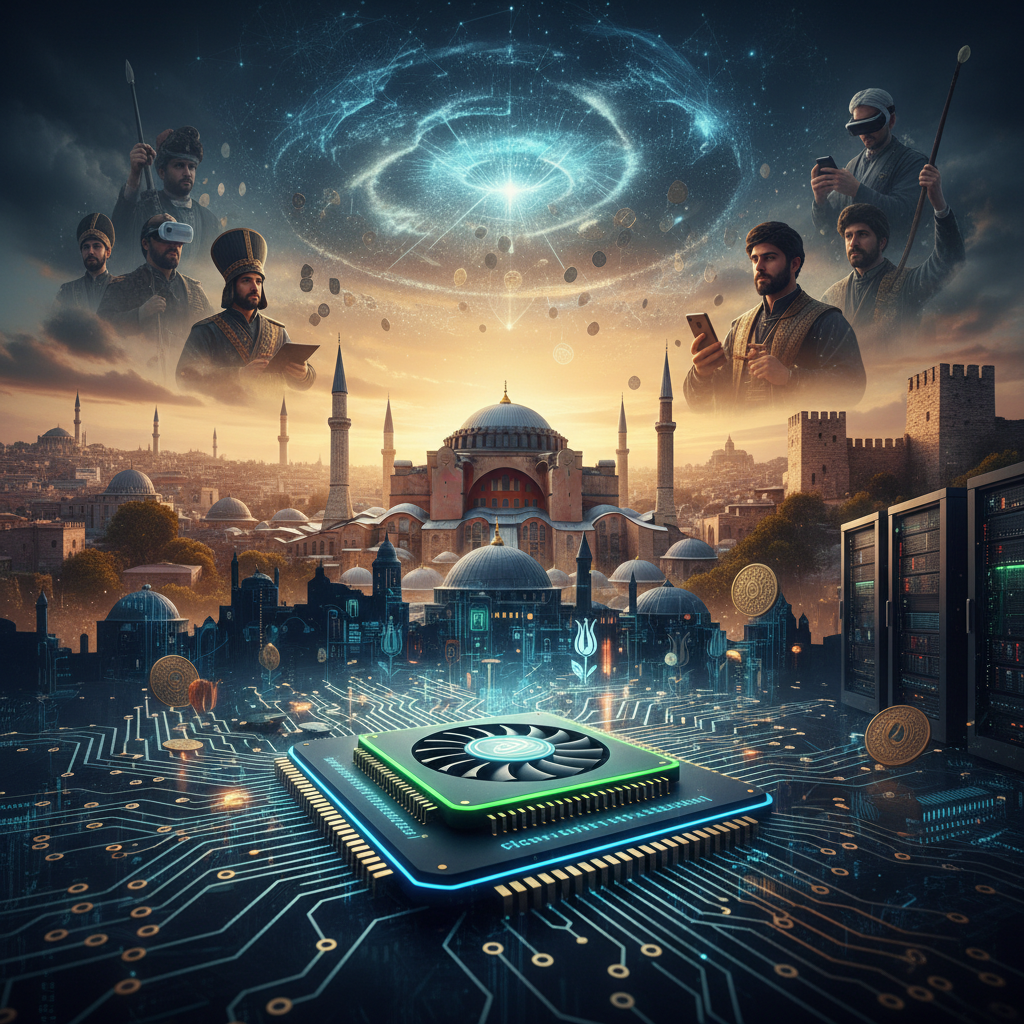
The year is 2026, and the air crackles with a familiar tension. Everywhere I look, from the bustling tech hubs of San Francisco to the burgeoning innovation centers along the Bosphorus, people are asking the same question: Are we in an AI bubble, a repeat of the dot-com bust that wiped out fortunes and dreams a quarter-century ago?
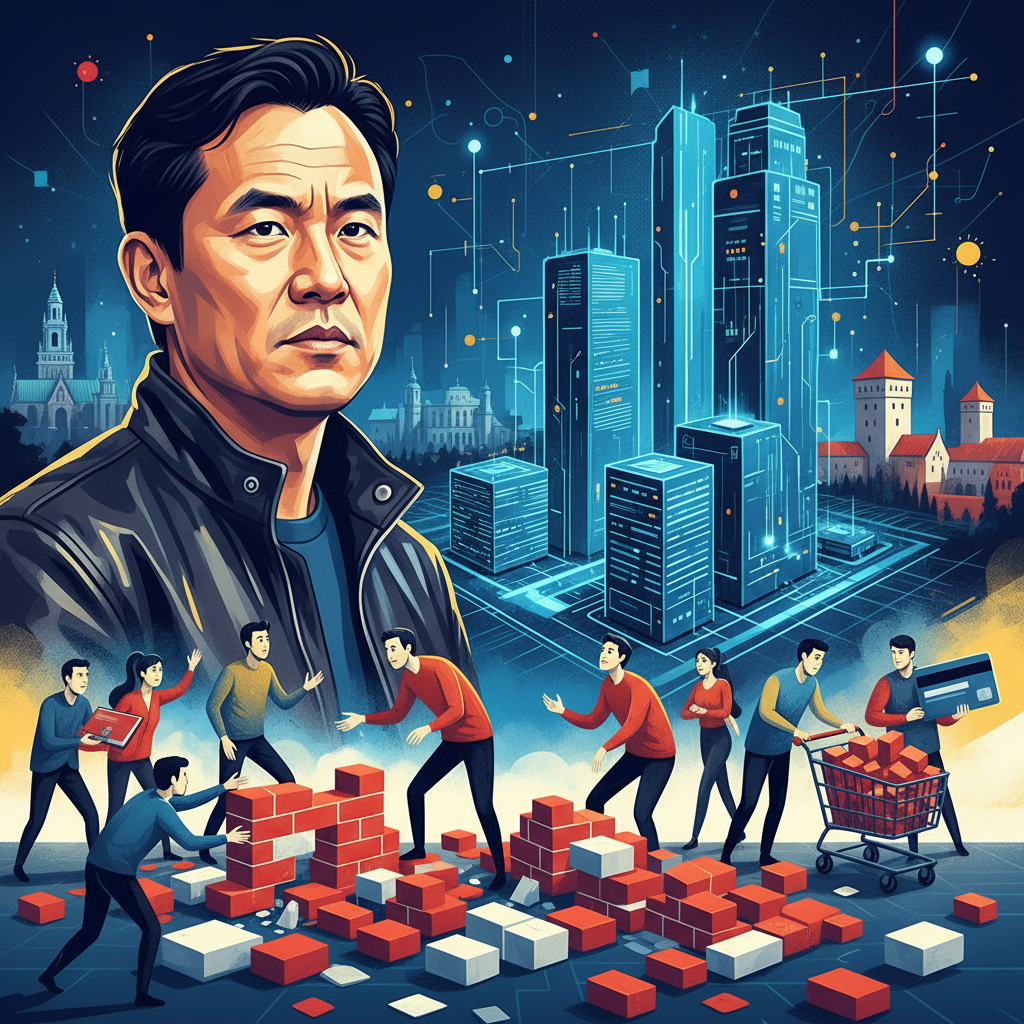
My answer, delivered with the conviction of someone who thinks in decades, not quarters, is a resounding no. This is not a bubble in the traditional sense, not a mere speculative frenzy built on vaporware and unrealistic projections. What we are witnessing is the foundational restructuring of global industry, a shift as profound as the invention of the printing press or the advent of electricity. And for those who understand history, particularly the history of empires and innovation, the signs are clear: Turkey is building the future at the crossroads, and this time, we are not just observers.
Let us consider the titans of this new era. NVIDIA, a company once known primarily for gaming graphics cards, now commands a market capitalization that has, at times, surpassed $2 trillion. Jensen Huang, its visionary CEO, has transformed it into the undisputed king of AI infrastructure, the picks and shovels of this new gold rush. Their GPUs are not just components; they are the very engines driving the generative AI revolution, from OpenAI's GPT models to Google's Gemini and Anthropic's Claude. The demand for these chips is insatiable, and the supply chain is stretched to its limits. This is not a company selling dreams; it is selling the very hardware that makes the dreams possible.
Contrast this with the dot-com era. Many companies then had little more than a website and a business plan scribbled on a napkin. Their valuations were based on potential eyeballs, not tangible, indispensable technology. Today, the leading AI firms are generating real revenue, solving real problems, and creating products that are demonstrably transforming industries. Microsoft's integration of OpenAI's capabilities into its Copilot suite, for instance, is already boosting productivity in enterprises globally, a measurable impact that goes far beyond mere hype. According to Bloomberg Technology, enterprise spending on AI software is projected to grow significantly year over year, indicating a robust market, not a fragile one.
Yet, the skeptics persist. They point to the astronomical valuations of private AI startups, many of which are still pre-revenue or generating minimal income. They highlight the massive capital expenditure required to train and deploy large language models, questioning the long-term profitability of such ventures. Indeed, some smaller players might find themselves in precarious positions if the funding tap tightens. But this is the natural culling process of any transformative technological wave, not an indictment of the wave itself.
What makes this period different, in my opinion, is the sheer breadth and depth of AI's application. It is not confined to a single sector. AI is reshaping healthcare, finance, logistics, defense, and even creative industries. In Turkey, for example, our defense tech sector, already a global leader in drone technology, is integrating AI at an unprecedented pace. Companies like Baykar, with their renowned Bayraktar drones, are not just building hardware; they are developing sophisticated AI systems for autonomous operation, target recognition, and swarm intelligence. This is tangible innovation, driven by strategic national interests and global demand, not just venture capital enthusiasm.
Istanbul's tech ambitions are massive and realistic. We are not chasing fads; we are building sustainable ecosystems. The Turkish government, through initiatives like the National AI Strategy, is actively fostering research and development, investing in AI talent, and creating regulatory frameworks that encourage innovation while addressing ethical concerns. Universities across Turkey are churning out brilliant AI engineers and researchers, many of whom are choosing to stay and contribute to our local ecosystem, rather than seeking opportunities abroad. This is a crucial differentiator from past tech booms where talent often concentrated in a few dominant centers.
Consider the words of Satya Nadella, Microsoft's CEO, who recently stated,