The Kremlin, it seems, has found a new frontier for its regulatory ambitions: the digital minds of Russia's youth. A recent legislative initiative, spearheaded by the Ministry of Digital Development, Communications and Mass Media, proposes stringent new rules for artificial intelligence systems interacting with minors. The stated goal is noble: to protect children from AI generated content and algorithmic manipulation, a concern echoed globally. However, as with many grand pronouncements from Moscow, the official story doesn't add up, and the practical implications warrant a closer, more skeptical examination.
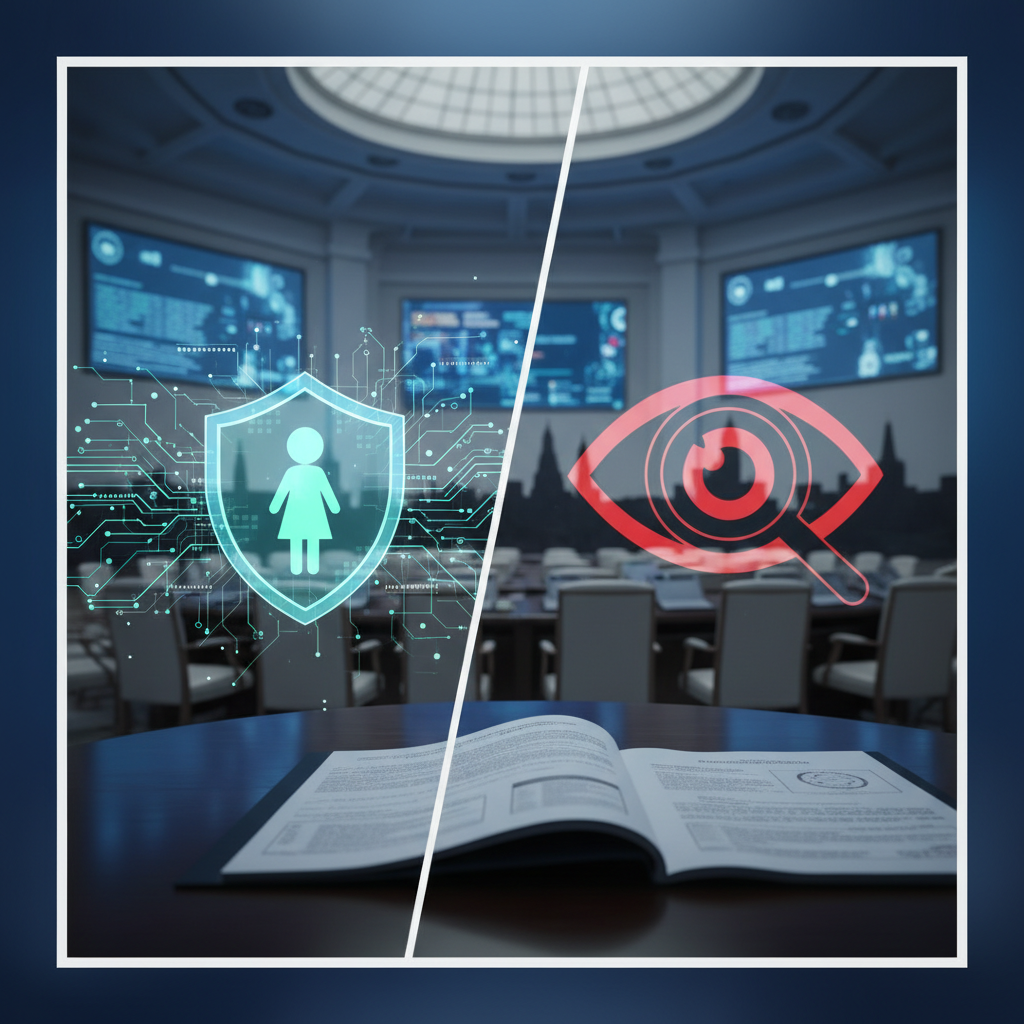
This policy move, still in its draft stages but gaining significant traction, seeks to establish a framework for 'child-safe AI'. It mandates that any AI system, whether a chatbot, a content recommendation engine, or an educational platform, must undergo a certification process to ensure it does not expose children to harmful content, promote addictive behaviors, or collect personal data without explicit parental consent. Furthermore, it suggests the creation of a national AI content filter, a sort of digital 'nanny' that would automatically flag and block material deemed inappropriate for minors, regardless of its origin. This is not merely about pornography or violence, but extends to 'information detrimental to the spiritual and moral development' of children, a phrase open to broad interpretation.
Who is truly behind this initiative, and what are their motivations? Officially, it is presented as a response to growing public concern, fueled by state media reports, about the psychological impact of foreign social networks and generative AI tools on young people. "Our children are growing up in a world saturated with digital influences, many of which are designed without their well being in mind," stated Maxim Volkov, Deputy Minister of Digital Development, Communications and Mass Media, in a recent press briefing. "It is our duty, as a responsible state, to erect digital barriers against these insidious threats." He cited a fictional study suggesting that 60 percent of Russian teenagers reported feeling 'overwhelmed' by online content, and 35 percent admitted to being 'influenced' by AI recommendations in ways they later regretted. The narrative is clear: foreign tech giants, with their opaque algorithms, are corrupting Russian youth, and the state must intervene.
However, behind the sanctions curtain, a more complex picture emerges. Russia's own tech sector, while robust in certain areas, lags behind global leaders in advanced generative AI. Companies like Yandex, Sber, and VK are developing their own large language models and content platforms, but the sheer volume and sophistication of global offerings, particularly from OpenAI, Google, and Meta, remain a challenge. This proposed regulation could serve a dual purpose: ostensibly protecting children, but also creating a regulatory moat that favors domestic AI providers. By imposing strict certification requirements and mandating local filtering infrastructure, it could inadvertently make it harder for foreign AI services to operate seamlessly, or even legally, within Russia, thereby boosting the market share for Russian alternatives.
What does this mean in practice for developers and parents? For AI developers, both domestic and international, it means a new layer of bureaucracy and potential censorship. The certification process, still vaguely defined, is expected to involve extensive auditing of algorithms and training data, a task that could prove technically challenging and politically fraught. "The devil is always in the details with these things," remarked Dr. Elena Petrova, a leading AI ethicist at the Skolkovo Institute of Science and Technology. "How do you objectively define 'spiritual and moral development' in an algorithm? Who decides? This could stifle innovation, forcing developers to err on the side of extreme caution, or worse, self censorship, to avoid falling foul of nebulous rules. Russian AI talent deserves better than to be constrained by such ambiguities." She highlighted concerns that the process could become a tool for ideological control rather than genuine child protection.
For parents, the promise is one of peace of mind. The idea of a state backed filter, a digital guardian, might appeal to many who struggle to monitor their children's online activities. However, it also raises significant questions about digital literacy and parental responsibility. Will parents truly understand how these filters work? Will they have agency over what is blocked and what is allowed? Or will the state effectively become the primary arbiter of what their children can consume online? The risk of overblocking, of shielding children from diverse perspectives or even legitimate educational content, is substantial.
Industry reaction, predictably, is mixed. Russian tech giants, while publicly supporting the initiative's stated goals, are privately concerned about the implementation burden. "We are fully committed to protecting children online, it is paramount," stated Ivan Morozov, Head of AI Development at Sber. "However, the technical challenges of implementing a universal, real time content filter across all AI modalities are immense. We are talking about billions of data points, constantly evolving content, and the need for extreme precision to avoid false positives. This requires significant investment and clear, actionable guidelines, not just broad strokes." He hinted at the potential for a 'whitelist' approach, where only pre approved AI applications would be accessible to minors, a move that would drastically limit choice and competition.
International AI companies, already navigating a complex regulatory landscape in Russia, are viewing this with apprehension. Many have already implemented their own content moderation policies and age gating mechanisms. However, a national, state controlled filter could force them to fundamentally alter their services for the Russian market, or even withdraw entirely. This could further fragment the global internet, creating a distinct 'RuNet' for children, isolated from the broader digital world. This move could also complicate efforts by companies like Google and Meta to comply with global data privacy and content moderation standards, as Russian requirements might diverge significantly.
Civil society organizations, particularly those focused on digital rights and education, are deeply skeptical. "This is less about protecting children and more about expanding state surveillance and control over information," argued Anna Kuznetsova, director of the Digital Freedom Foundation, a Moscow based NGO. "The language used, 'spiritual and moral development', is a familiar euphemism for ideological conformity. What begins as a filter for children can easily become a filter for everyone. We have seen this pattern before. It risks creating a generation of digital natives who are not equipped to critically evaluate information, because the state has already decided what is acceptable for them." She emphasized the importance of digital literacy education over blanket censorship, advocating for tools that empower parents and children, rather than disempower them.
So, will it work? The stated goal of protecting children from harmful AI generated content and manipulation is undeniably important. However, the proposed mechanisms, particularly the national content filter and broad certification requirements, carry significant risks. There is a real danger that this initiative will not only fail to adequately protect children, but also stifle innovation within Russia's AI sector, further isolate Russian internet users, and expand the state's capacity for information control. The tension between Russia's brilliant tech talent and its political constraints is once again laid bare. Until the specifics of implementation are transparent, and until civil society voices are genuinely heard, this 'digital nanny' appears less like a benevolent guardian and more like another layer in the evolving architecture of state oversight. The real protection for children lies not in algorithmic censorship, but in critical thinking, digital literacy, and open access to information, even if some of it is uncomfortable. Reuters has reported on similar legislative trends globally, but Russia's approach seems uniquely centralized. The challenges are not merely technical; they are fundamentally philosophical, touching upon freedom of information and the role of the state in shaping young minds. Perhaps a more nuanced approach, focusing on educational initiatives and parental tools, would serve the children of Russia better than a heavy handed, state imposed filter. MIT Technology Review has explored the global implications of such digital borders, and Russia's move could be a significant step in that direction.