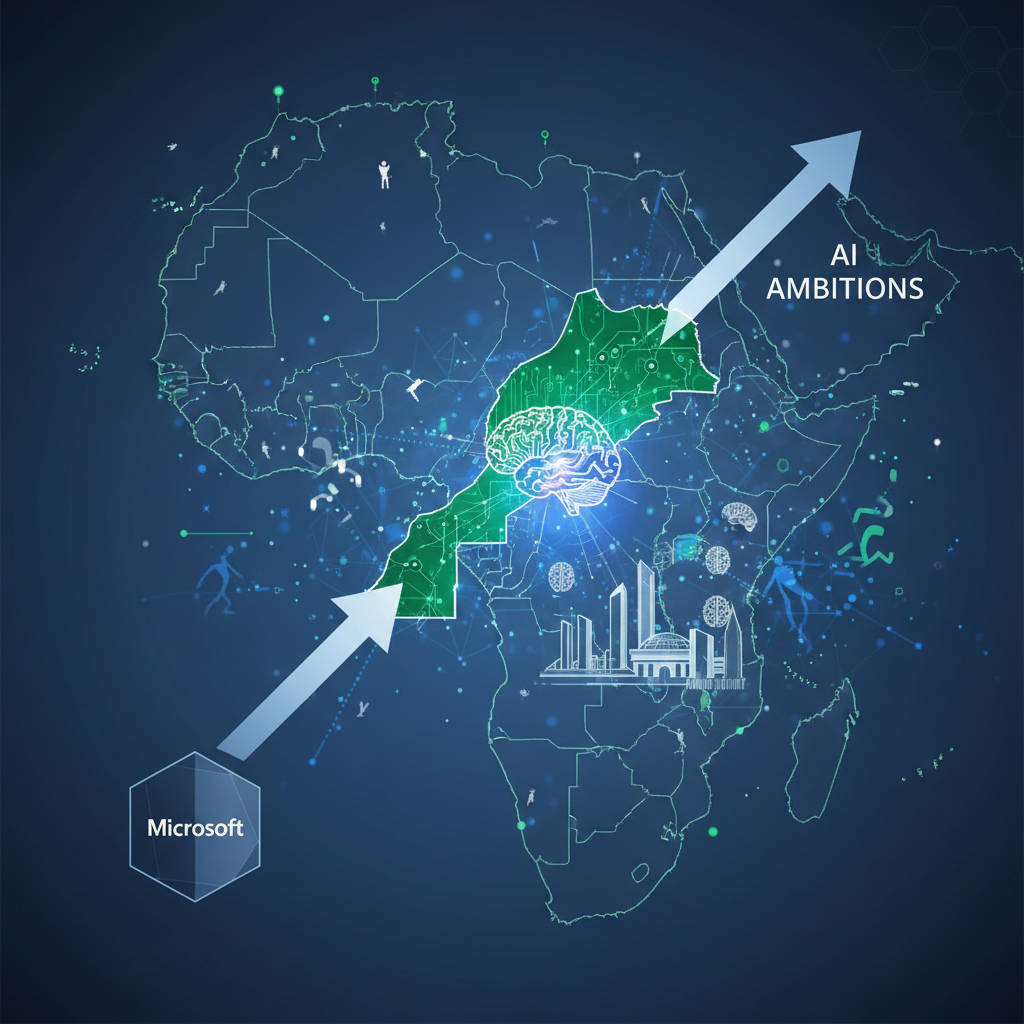
Is the saga of Inflection AI a cautionary tale or a blueprint for the future of artificial intelligence development? When news broke that Microsoft had effectively hired the entire founding team of Inflection AI, including its CEO Mustafa Suleyman, it wasn't just a headline, it was a tremor that shook the very foundations of the AI ecosystem. For those of us observing the global tech currents from places like Morocco, this event isn't just Silicon Valley drama, it's a stark illustration of the forces shaping our own nascent AI ambitions.
Let us rewind a little. Inflection AI, founded by luminaries like Suleyman, Karén Simonyan, and Reid Hoffman, burst onto the scene with a mission to build deeply personal AI. They raised over 1.3 billion dollars, a staggering sum, and were heralded as a potential challenger to OpenAI and Anthropic. Their flagship product, Pi, aimed to be a compassionate, empathetic AI companion. The ambition was palpable, the talent undeniable. Then, in a move that felt both sudden and inevitable, Microsoft announced that Suleyman would head a new consumer AI unit, Microsoft AI, bringing with him a significant portion of Inflection's engineering and research talent. Inflection, in turn, pivoted to an enterprise model, licensing its technology rather than developing its own consumer products.
This isn't merely a corporate acquisition, it's a talent migration on an unprecedented scale. Microsoft didn't buy Inflection AI as a whole entity, they absorbed its intellectual capital, its human ingenuity. This phenomenon, often dubbed a 'talent acquisition' or 'acqui-hire' on steroids, highlights a critical trend: in the AI race, talent is the ultimate currency. Data from PitchBook indicates that venture capital investment in AI startups, while still robust, is increasingly scrutinizing pathways to profitability and market dominance. The Inflection story suggests that for some, the quickest path to market is to join forces with a titan.
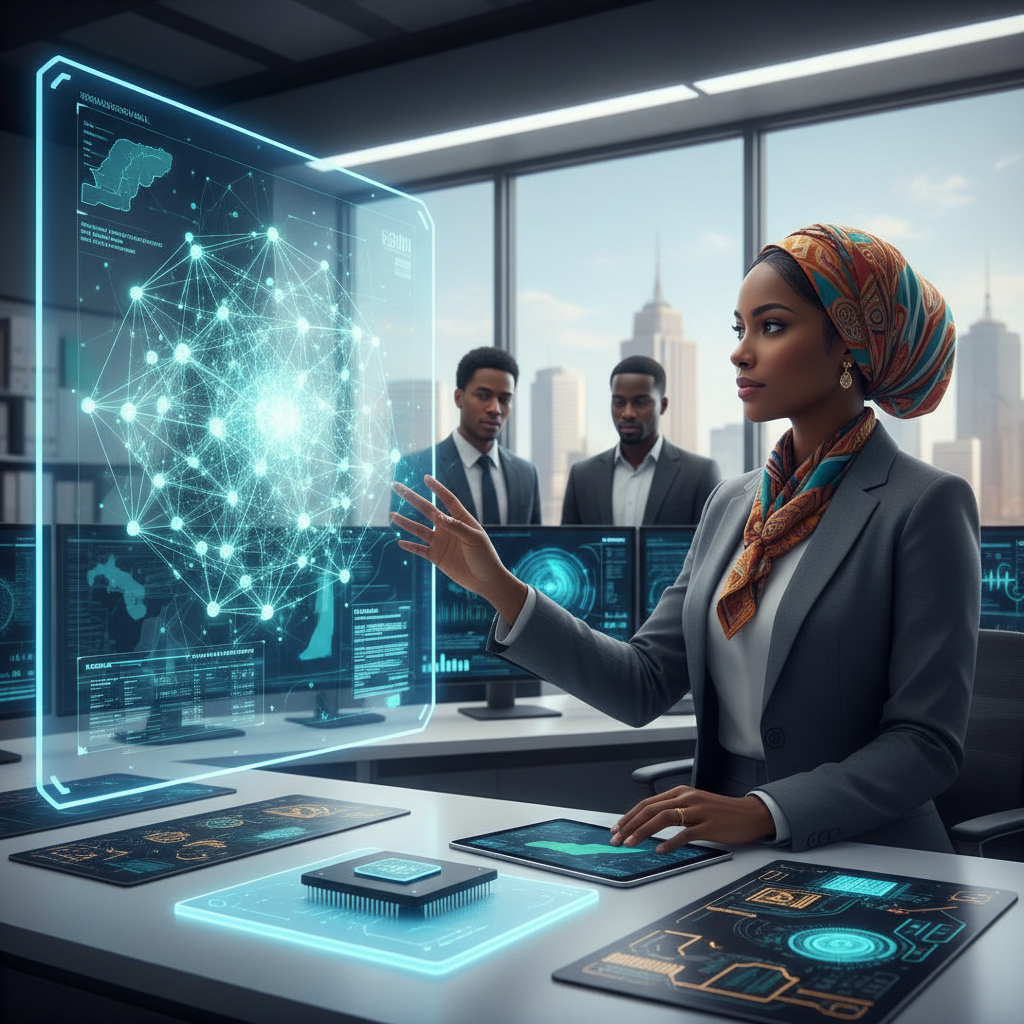
From my vantage point in Casablanca, a city that is steadily becoming the AI capital nobody expected, this event resonates deeply. We are building our own ecosystems, nurturing local talent, and attracting investment. But the question looms: can our startups, even with their innovative spirit and unique cultural insights, withstand the gravitational pull of global giants? "The brain drain is a constant concern for any emerging tech hub," notes Dr. Fatima Zahra El-Malki, Director of AI Research at Mohammed VI Polytechnic University. "We invest heavily in education and infrastructure, but the allure of working on projects with vast resources and global impact, like those at Microsoft, is powerful. We must create equally compelling opportunities here in Morocco." She points to the recent launch of several AI-focused incubators in Rabat and Marrakech as crucial steps, aiming to retain and attract talent by offering competitive research environments and access to local data sets.
Indeed, the numbers tell a compelling story. Microsoft, under Satya Nadella, has been aggressively positioning itself as a leader in the AI era. Their multi-billion dollar investment in OpenAI, the integration of Copilot across their product suite, and now this strategic absorption of Inflection's team, paints a clear picture. According to their latest earnings reports, Microsoft's cloud services, heavily infused with AI capabilities, continue to drive significant growth, with Azure AI services seeing a reported 45% increase in adoption over the last year. This isn't just about technology; it's about market share, talent acquisition, and ultimately, shaping the future of how AI interacts with humanity. You can read more about the broader implications of such moves on TechCrunch.
Some argue that this consolidation is inevitable and even beneficial. "In the early stages of a transformative technology, consolidation often accelerates progress," states Karim Benjelloun, a venture capitalist based in Dubai with significant investments in North African tech. "Large companies have the compute power, the data, and the distribution channels to scale AI solutions rapidly. Smaller, independent labs can innovate, but scaling is a different beast. This move by Microsoft could be seen as an efficient allocation of resources, putting top talent where it can have the broadest impact." He highlights that the sheer cost of training foundational models, often running into hundreds of millions of dollars per model, makes it difficult for even well-funded startups to compete long-term without significant backing.
However, others express concern. Dr. Amina Boukhari, a leading ethicist and AI policy advisor to the Moroccan government, voices a different perspective. "When a handful of mega-corporations control the vast majority of AI development, we risk narrowing the scope of innovation and embedding their biases into the very fabric of our digital future. Diversity of thought, approach, and cultural perspective is crucial for building AI that serves all of humanity, not just a select few." She emphasizes the importance of initiatives like the Moroccan National Strategy for AI, which prioritizes ethical AI development and aims to foster a diverse local ecosystem. Morocco sits at the crossroads of Africa, Europe, and the Arab world and that's our AI superpower, offering a unique blend of cultural insights that could enrich AI development significantly.
My own view is that this trend, while seemingly a 'brain drain' on the surface, presents a unique challenge and opportunity for regions like ours. We cannot outspend the tech giants, but we can out-innovate them in niche areas, focus on local problems, and cultivate a distinct approach to AI. The Sahara is vast, but the data flowing across it is vaster, and much of that data holds unique insights relevant to our continent. We have a chance to build AI that understands the nuances of Darija, the complexities of African agricultural patterns, or the specific needs of our burgeoning automotive industry, where AI is increasingly critical for autonomous driving and smart manufacturing. This isn't about competing head-on with Microsoft or Google for general-purpose AI; it's about building specialized, culturally intelligent AI that addresses our specific needs and opportunities.
The future of AI won't be solely dictated by Silicon Valley boardrooms. It will also be shaped in research labs in Rabat, in startup garages in Marrakech, and in the collaborative spaces of Casablanca. The Inflection AI story serves as a powerful reminder that the landscape is constantly shifting, and adaptability is paramount. For Morocco, it means doubling down on our strengths, fostering local talent, and building an ecosystem that is resilient and distinct. We must ensure our talent finds compelling reasons to stay, to build, and to innovate right here. The global AI race is not just about who has the biggest budget, but who can cultivate the most fertile ground for innovation, and who can connect the dots that others miss. The lessons from Inflection AI are clear: talent is king, and its gravitational pull is immense. But even a powerful current can be redirected with strategic vision and local ingenuity. For more in-depth analysis on the global AI landscape, I often consult MIT Technology Review.
This isn't a fad, it's the new normal. The consolidation of AI talent and resources into the hands of a few tech behemoths will continue. However, this doesn't spell the end for smaller players or emerging markets. Instead, it forces us to be more strategic, more focused, and more collaborative. We must leverage our unique position and cultural heritage to build AI that truly serves our people and our continent. The game has changed, but the opportunity for Morocco to carve out its own significant role in this new AI era remains vibrant and compelling. We just need to play a different, smarter game.