
Ah, Italy. We are a people of connection, of passionate conversation, of sharing our lives through stories and laughter. For generations, our piazzas and family tables were the epicenters of this vibrant exchange. Now, in this digital age, much of that beautiful human dance has moved online, particularly to platforms like Instagram and WhatsApp. And with Meta's recent push into AI, these digital spaces are transforming once again.
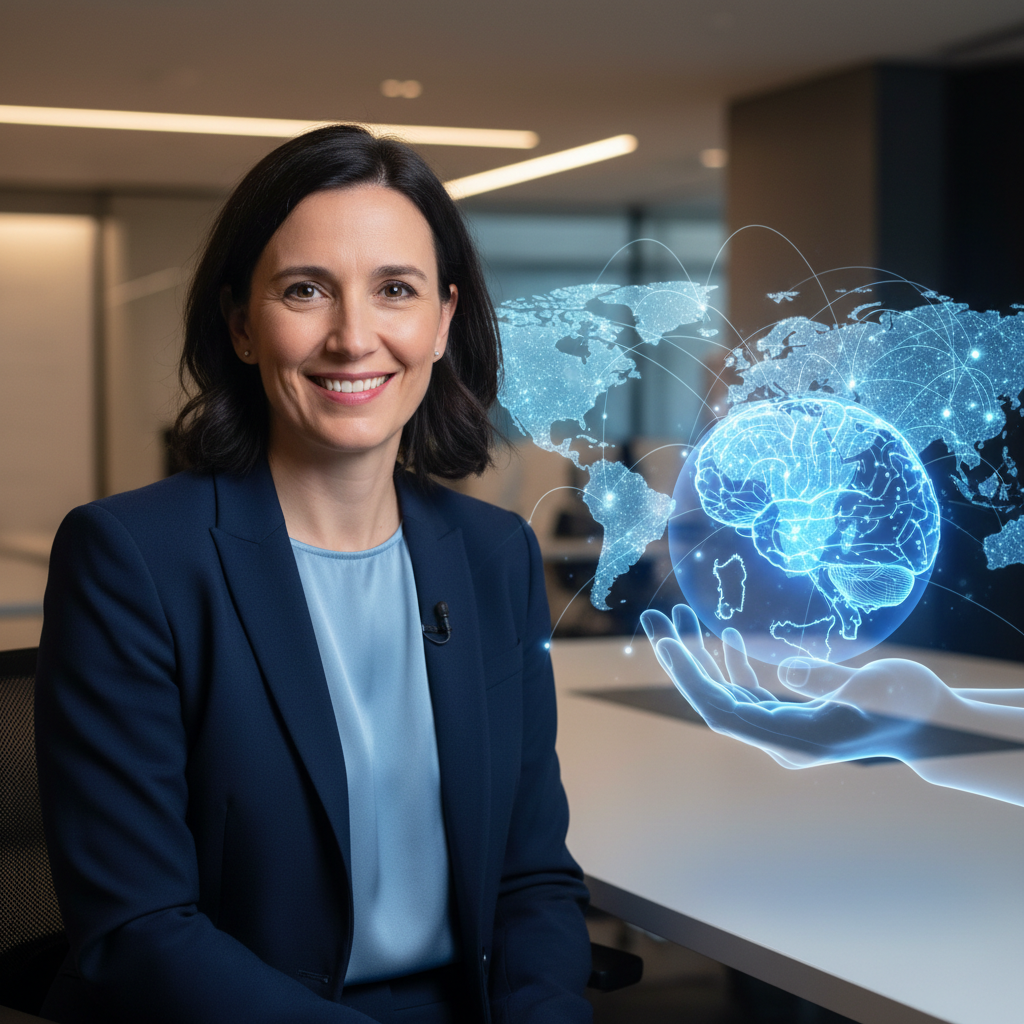
I recently had the pleasure of speaking with Nicola Mendelsohn, Meta's Head of Global Business Group. While she is based in London, her insights resonate deeply with how technology impacts communities across Europe, especially here in Italy. She is a woman who understands the pulse of global communication, and her perspective on Meta's AI innovations is both pragmatic and hopeful. It is a story not just of algorithms, but of people, of how we choose to connect, create, and even conduct our small businesses in this new landscape.
“We are building AI to help people do more, to express themselves more creatively, and to connect more deeply,” Mendelsohn has stated publicly, a sentiment that echoes through our conversation. She speaks with a clear vision, one that acknowledges the immense power and responsibility that comes with shaping how billions interact daily. We spoke about the practical implications of Meta's AI models, like Llama 3, now integrated into the very apps we use for everything from sending a quick 'buongiorno' to sharing a perfect plate of pasta on Instagram Stories. It is a world where la dolce vita meets machine learning, where our traditions meet tomorrow's technology.
Consider the new AI assistants popping up in WhatsApp. For many, this is more than just a novelty. Imagine a small artisan in Florence, perhaps a leather craftsman, who struggles with English. Now, an AI assistant can help him translate customer inquiries instantly, allowing him to expand his reach globally without losing the personal touch. This is not just about efficiency, it is about empowerment. "AI is already helping businesses of all sizes connect with customers in more personalized and efficient ways," Mendelsohn noted in a recent interview, highlighting the commercial aspect that is so vital to Italy's countless small and medium enterprises. This is particularly relevant given that over 80% of Italian businesses are small or medium sized, many of whom rely heavily on platforms like WhatsApp Business to reach their clientele.
On Instagram, the AI features are leaning heavily into creativity. We are seeing tools that can generate images from text prompts, or even help refine existing photos with a simple command. For the fashion blogger in Milan, this means new ways to visualize trends, to create stunning backdrops for their latest looks without needing a full production team. For the food influencer in Naples, it means enhancing the visual appeal of a Neapolitan pizza, making it even more tempting to their followers. It is about democratizing creativity, giving everyone access to tools that were once the exclusive domain of professional designers. It is about bringing a touch of high fashion, a bit of that Milanese flair, to everyone's fingertips. Wired has covered extensively how these creative AI tools are changing digital content creation, and Meta is certainly at the forefront of that shift.
Mendelsohn’s background, with her extensive experience in advertising and business strategy, gives her a unique perspective on how these technologies will be adopted. She understands that technology must serve human needs, not the other way around. "The biggest opportunity for AI is to help people with tasks that are mundane or repetitive, freeing them up to do more creative and strategic work," she explained. This philosophy is crucial, especially in a country like Italy where craftsmanship and human ingenuity are so highly valued. We do not want AI to replace our artisans, but to augment their incredible talent, to allow them to focus on the 'art' rather than the 'admin.'
One of the key challenges, of course, is ensuring these AI tools are developed responsibly. Privacy, data security, and the potential for misinformation are constant concerns. Meta has invested significantly in safety and ethical AI development, recognizing that trust is paramount. "We are committed to building AI responsibly, with safety and privacy at the core of everything we do," Mendelsohn emphasized. This is not just corporate speak; it is a necessity for widespread adoption, particularly in Europe where data protection regulations like GDPR are so stringent. The European Union has been proactive in AI regulation, and companies like Meta must navigate this complex landscape carefully. Reuters often reports on the intersection of AI development and regulatory frameworks, highlighting the global efforts to balance innovation with oversight.
As I reflect on our conversation, I am struck by the sheer scale of Meta's ambition. They are not just building features; they are building new ways for people to interact. In a workshop in Milan, a young designer might use AI to brainstorm new patterns for textiles, then share them instantly with a client via WhatsApp. A grandmother in Puglia might use an AI assistant to help her video call her grandchildren in London, bridging language barriers with ease. These are the human stories behind the technology, the everyday moments that truly matter.
Italy does AI differently, with style, always with an eye towards how it enhances our lives, our culture, our connections. It is not just about raw processing power, but about how that power can serve the human spirit. Nicola Mendelsohn and Meta are navigating this exciting, sometimes daunting, new frontier. Their vision is one where AI is a tool for greater connection, greater creativity, and ultimately, a richer human experience. The journey is just beginning, but the promise is clear: to make our digital conversations as warm and engaging as a Sunday lunch with family. It is a future I, for one, am eager to embrace, with a good espresso in hand, of course. Perhaps even an AI could suggest the perfect blend. It is a thought, no? The possibilities are as endless as a Roman sunset. For more on how AI is impacting various aspects of life, you might find this article on AI and health in Peru [blocked] interesting, showing the global reach of these technologies.





