
Mali's Digital Leap: AI for Agriculture Promises a Bountiful Future
Mali is embracing AI to revolutionize its agricultural sector, with new initiatives leveraging machine learning for improved crop yields and climate resilience, promising a brighter future for the Malian farmer.
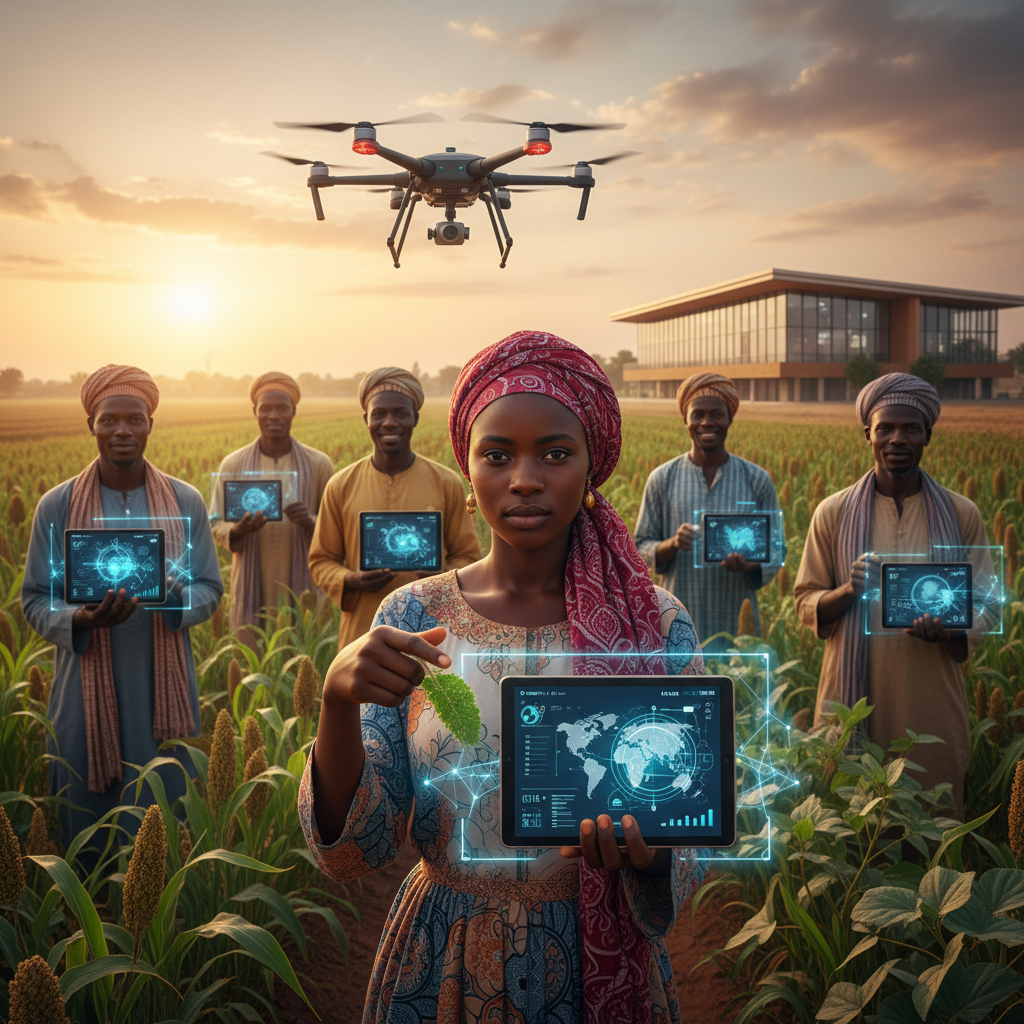

BAMAKO, Mali – In the heart of West Africa, where the rhythm of life is often dictated by the seasons and the soil, a quiet revolution is taking root. Mali, a nation deeply reliant on its agricultural backbone, is increasingly turning to Artificial Intelligence (AI) to address age-old challenges, promising a future where the toil of the paysan yields more, and with greater certainty.
For generations, the Malian farmer, or djoliba, has relied on ancestral knowledge and the whims of nature. But as climate change brings erratic rainfall and soil degradation, traditional methods are being augmented by cutting-edge technology. The Ministry of Agriculture and Rural Development, in partnership with local tech hubs like Bintu Digital, has launched pilot programs utilizing AI-powered drones and data analytics to optimize farming practices.
"This isn't about replacing the djoliba," explains Dr. Aminata Keïta, a leading agronomist and director of the National Institute of Agricultural Research (IER) in Bamako. "It's about empowering him. Imagine knowing precisely when to plant, how much water to use, or detecting crop diseases before they spread, all through a simple application on a smartphone. This is the promise of AI for Mali." She emphasizes that the focus is on accessible, user-friendly solutions that respect local context and traditional farming systems.
One such initiative, dubbed 'Sankoré Agri-Tech,' is testing AI models that analyze satellite imagery and local weather patterns to provide real-time recommendations to farmers. In the Ségou region, known for its rice and millet production, early results are promising. "We've seen a 15% increase in yield for participating farmers in the pilot phase," states Moussa Traoré, CEO of Bintu Digital, a Malian startup at the forefront of this digital transformation. "The AI helps predict pest outbreaks, optimize fertilizer application, and even advise on market prices, ensuring the djoliba gets a fair return for his hard work. This is barika – blessing and prosperity – brought by technology."
However, challenges remain. Internet connectivity, especially in remote rural areas, is a significant hurdle. Furthermore, ensuring that these technologies are truly inclusive and do not exacerbate existing inequalities is paramount. "We must ensure that the benefits of AI reach every djoliba, from the Mopti plains to the Sikasso highlands," asserts Ousmane Diarra, a community leader and advocate for rural development. "Training and digital literacy programs are crucial so that no one is left behind in this digital fanga (power)."
The Malian government, through its National Digital Strategy 2025, has prioritized digital inclusion and the development of local AI expertise. Universities are expanding their computer science programs, and initiatives to train young Malians in data science are gaining momentum. The vision is clear: to harness the power of AI not just for economic growth, but for food security and the sustainable development of the Malian nation, ensuring that the spirit of the djoliba continues to thrive in an increasingly digital world.
Related Articles

Zambia's AI Strategy: Bridging the Digital Gender Divide for Inclusive Growth
 Lindiwe Sibandà
Burkina Faso Embraces AI for Education: A New Dawn for 'Bõnga' Learning
 Idrissà Ouédraogò
AI in Malian Healthcare: A Double-Edged Sword for Our Communities
Mouhamadouù Bâ
AI 'Eyes' on the Field: Zimbabwe's Warriors Embrace Tech for Talent Scouting
 Zinhlée Khumàlo