
Ivorian Women Lead AI Ethics Dialogue: Ensuring Equity in Digital Transformation
Côte d'Ivoire's tech sector is buzzing as women leaders champion ethical AI development, focusing on inclusivity and preventing algorithmic bias against marginalized communities. Their efforts are crucial for a just digital future in West Africa.

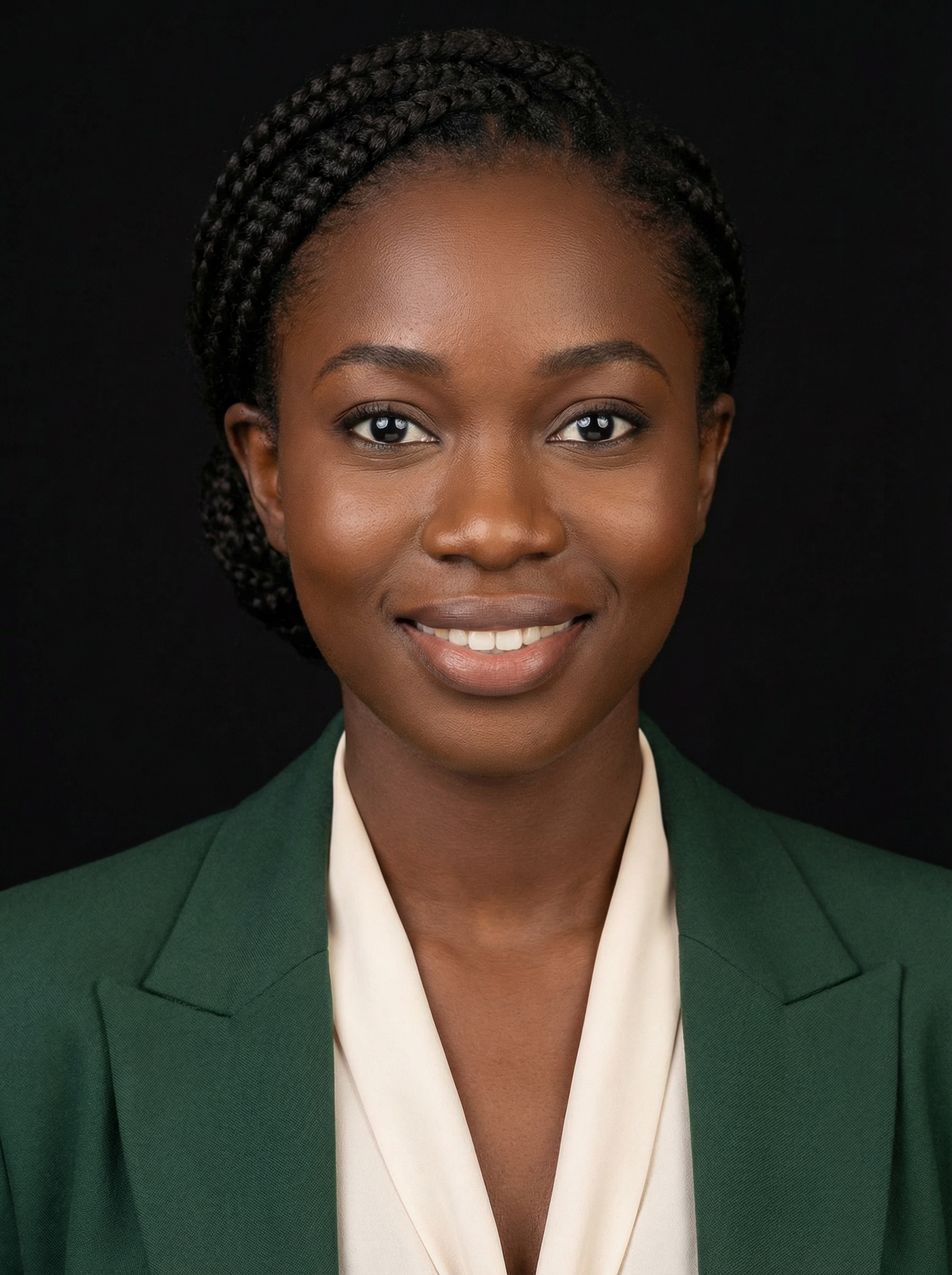
Abidjan, Côte d'Ivoire – The vibrant pulse of Côte d'Ivoire's digital revolution is increasingly being shaped by the voices and visions of its women. As Artificial Intelligence (AI) rapidly integrates into various sectors, from finance to healthcare, a critical conversation on ethical AI development is taking center stage, spearheaded by Ivorian women leaders and experts.
For too long, the narrative around technology in Africa has been dominated by external perspectives, often overlooking the nuanced realities and potential pitfalls for local communities, especially women. However, a new wave of advocacy, deeply rooted in the principles of social justice and equity, is emerging from institutions like the Réseau des Femmes Africaines pour le Développement Durable (REFADD) and local tech hubs.
"The digital transformation must be an inclusive transformation," asserts Dr. Aminata Koné, a leading AI ethicist and researcher at the Institut National Polytechnique Félix Houphouët-Boigny (INP-HB) in Yamoussoukro. "We cannot afford to replicate existing societal biases in our algorithms. For Ivorian women, who often navigate complex socio-economic landscapes, biased AI systems could exacerbate inequalities in access to credit, employment, or even healthcare. Our work is to ensure these systems are built with a deep understanding of our local context and values, reflecting the rich tapestry of our société."
Dr. Koné, whose research often focuses on gender-disaggregated data in AI training, highlights the critical need for diverse datasets. "If the data used to train AI models is predominantly male-centric or lacks representation from various ethnic groups and socio-economic strata, the resulting AI will inevitably be biased. This is particularly pertinent for women in rural areas, or those engaged in the informal sector, whose digital footprints might be less visible in conventional datasets," she explains during a recent panel discussion at the Centre de Recherche et d'Action pour la Paix (CERAP).
Local initiatives are gaining momentum. The Association des Femmes du Numérique de Côte d'Ivoire (AFEN-CI) recently launched a 'Tech for Good' mentorship program, pairing young Ivorian women aspiring to careers in AI with established female tech leaders. "It's about building capacity and consciousness simultaneously," says Mariam Diallo, President of AFEN-CI. "We are not just teaching coding; we are instilling a sense of responsibility to build technology that serves all, especially the most vulnerable. Our sœurs must be at the forefront of this ethical revolution."
The Ivorian government, through the Ministère de l'Économie Numérique, des Télécommunications et de l'Innovation, has acknowledged these concerns. Madame Fatoumata Coulibaly, Director of Digital Innovation, stated, "We are actively engaging with civil society and academic experts to draft national guidelines for ethical AI. The insights from our women tech leaders are invaluable in ensuring these policies are robust, culturally sensitive, and future-proof. Our goal is to position Côte d'Ivoire as a regional leader in responsible AI development, fostering innovation that truly empowers our citizens, particularly our dynamic women."
As Côte d'Ivoire marches forward into the digital age, the proactive engagement of Ivorian women in shaping the ethical contours of AI is not merely a matter of representation; it is a fundamental pillar for building a truly equitable and prosperous digital society, one that resonates with the collective aspirations of the West African region.
Related Articles
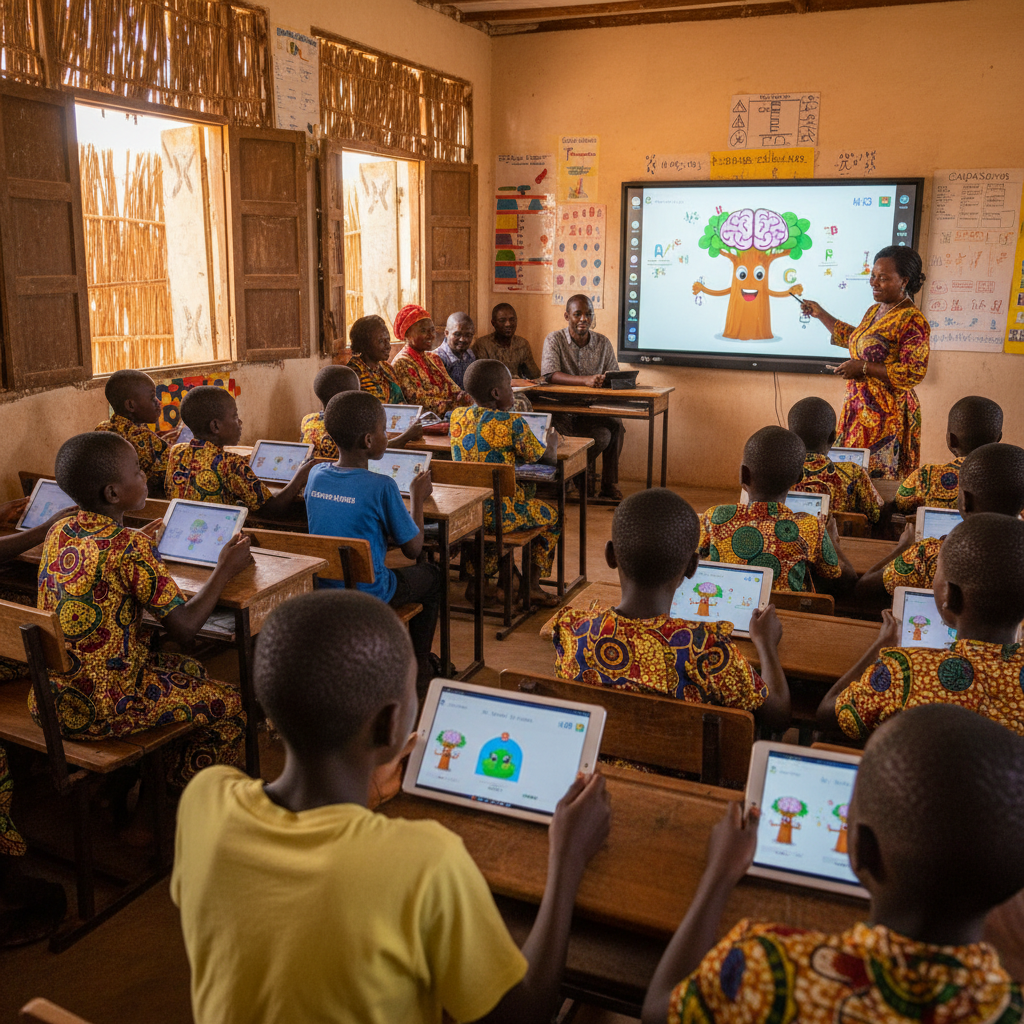
Burkina Faso Embraces AI for Education: A New Dawn for 'Bõnga' Learning
 Idrissà Ouédraogò
AI in Malian Healthcare: A Double-Edged Sword for Our Communities
 Mouhamadouù Bâ
AI 'Eyes' on the Field: Zimbabwe's Warriors Embrace Tech for Talent Scouting
 Zinhlée Khumàlo
Russia's AI Push: National Algorithms for National Security and Economic Might
 Alekseï Volkovì