The dream of harnessing nuclear fusion, the very power source of our sun, has captivated scientists for decades. It promises an almost inexhaustible supply of clean energy, a panacea for our planet's escalating climate and energy crises. Yet, the path to a commercially viable fusion reactor remains fraught with immense engineering and physics challenges. Chief among these is the precise control and containment of superheated plasma, a state of matter so volatile it defies conventional handling.
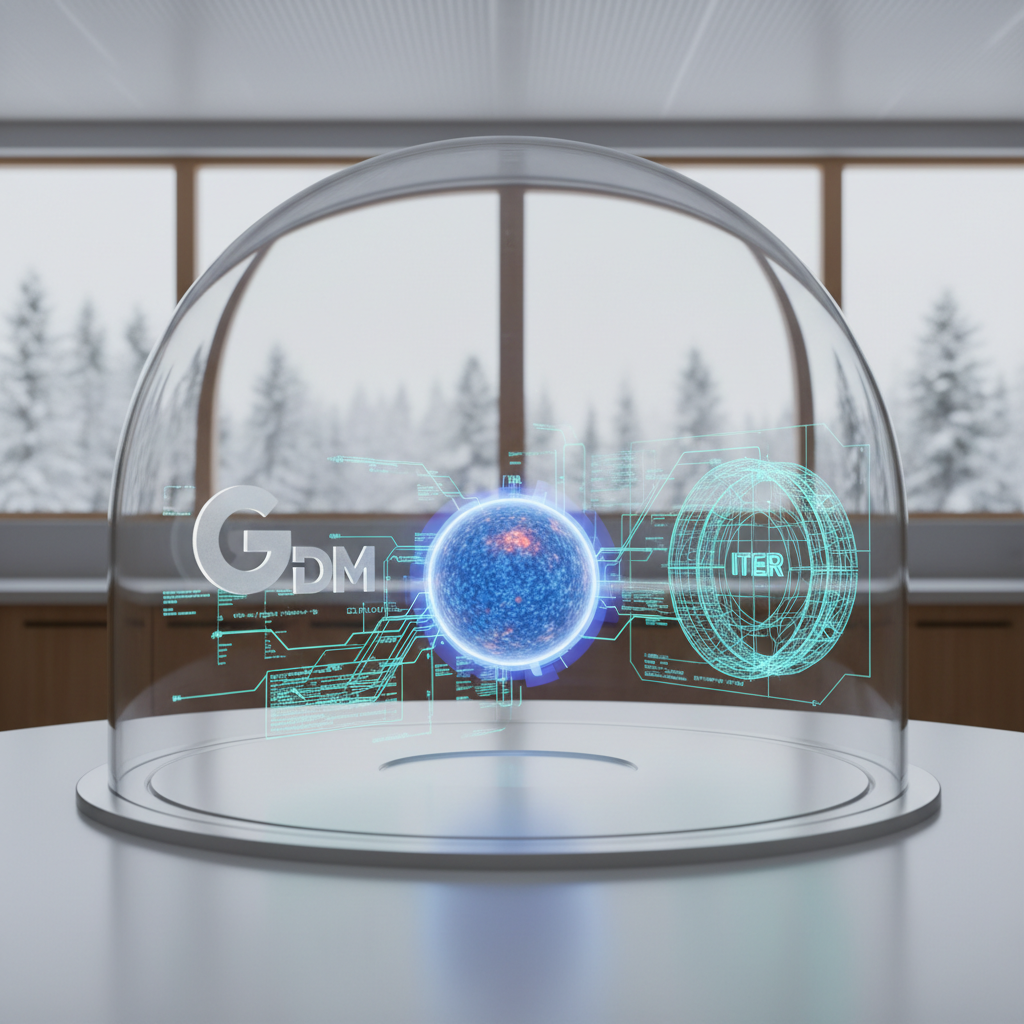
Into this complex arena steps Google DeepMind, a company renowned for its advancements in artificial intelligence, with its new OptiPlasma solution. Unveiled with considerable fanfare, OptiPlasma is presented as a transformative AI framework designed to optimize plasma stability and energy output within tokamak reactors. My initial reaction, as always, is one of cautious skepticism. While the allure of AI solving intractable problems is strong, especially when backed by a tech titan, the practical application in such an unforgiving environment demands rigorous scrutiny. The Swedish model suggests a different approach, one grounded in meticulous, incremental progress, not just bold proclamations.
First Impressions: A Glimmer of Hope, or a Mirage?
My initial engagement with the technical documentation for OptiPlasma revealed a system built upon reinforcement learning, a paradigm where AI agents learn by trial and error within a simulated or real environment. DeepMind claims OptiPlasma can predict and mitigate plasma instabilities with unprecedented speed and accuracy, far surpassing traditional control systems. The system integrates with existing diagnostic sensors, processing terabytes of data per second to make real-time adjustments to magnetic fields, fuel injection, and heating mechanisms. This is not merely an analytical tool, but an active control system, a digital conductor for an orchestra of superheated particles.
The interface, as demonstrated in a recent technical webinar, appears robust and intuitive, presenting complex plasma dynamics in digestible visual formats. Researchers can interact with the AI, setting parameters and observing its learning process. This level of transparency, while welcome, does not automatically equate to efficacy. The true test lies in its performance under the extreme conditions of a working tokamak. We have seen many promising AI models perform impeccably in controlled simulations only to falter when confronted with the unpredictable chaos of the real world.
Key Features Deep Dive: Precision in the Inferno
OptiPlasma's core strength lies in its predictive modeling capabilities. It employs a deep neural network architecture, trained on vast datasets from existing experimental reactors, including the Joint European Torus (JET) and, purportedly, early data from the International Thermonuclear Experimental Reactor (iter) project in France. The system's ability to anticipate disruptive events, such as major plasma disruptions or runaway electrons, is a critical claim. Traditional feedback loops often react to problems as they occur, whereas OptiPlasma aims to preempt them.
Another notable feature is its adaptive learning. As new experimental data becomes available, the AI is designed to refine its control policies, theoretically improving its performance over time. This continuous learning loop is crucial for a field where each experimental run yields unique insights. Furthermore, DeepMind emphasizes OptiPlasma's modularity, suggesting it can be integrated into various tokamak designs, from smaller research facilities to large-scale prototypes like Iter. This flexibility is vital, given the diversity of fusion research globally.
What Works Brilliantly: The Promise of Proactive Control
Where OptiPlasma shows genuine promise is in its capacity for proactive control. Dr. Anya Petrova, head of plasma control systems at the Max Planck Institute for Plasma Physics, noted in a recent interview, “The real-time predictive power of OptiPlasma, if validated at scale, could fundamentally alter our approach to plasma stability. We are moving from reactive mitigation to predictive avoidance, which is a game-changer for reactor longevity and efficiency.” This sentiment is echoed by early reports from institutions collaborating with DeepMind, citing instances where OptiPlasma successfully averted minor instabilities that would typically require manual intervention or even lead to a plasma quench.
Simulations, while not definitive, indicate a potential 15% increase in confinement time and a 10% reduction in energy loss due to turbulence, according to DeepMind's published benchmarks. While these numbers are impressive, they remain theoretical until proven in sustained, high-power experimental campaigns. The ability to explore a vast parameter space for optimization, far beyond human capacity, is also a significant advantage. This could accelerate the discovery of optimal operating regimes for future fusion power plants.
What Falls Short: The Chasm Between Simulation and Reality
Despite the impressive claims, several critical questions remain unanswered. The transition from controlled laboratory environments and simulations to the harsh, unpredictable reality of a fusion reactor is immense. The data used for training, while extensive, is still derived from existing, often sub-optimal, reactor operations. Can an AI trained on past limitations truly transcend them, or will it merely optimize within those constraints?
Furthermore, the robustness of the system against unforeseen plasma phenomena is a significant concern. Fusion plasmas are notoriously complex, exhibiting non-linear behaviors that are not yet fully understood. What happens when OptiPlasma encounters a novel instability not present in its training data? The potential for catastrophic failure, while low, is not zero, and the consequences in a fusion reactor are severe. "The black box nature of some deep learning models presents a challenge for safety-critical applications like fusion," stated Professor Lars Johansson, a nuclear engineering expert at KTH Royal Institute of Technology in Stockholm. "Understanding why the AI makes a certain decision is paramount, especially when billions of euros and decades of research are at stake. Scandinavian data paints a clearer picture when we can interpret the underlying mechanisms, not just the output." This lack of full interpretability is a recurring critique of advanced AI systems and is particularly salient here.
Comparison to Alternatives: A New Paradigm, Not Just an Upgrade
Existing plasma control systems typically rely on classical control theory, employing proportional-integral-derivative (PID) controllers and model-predictive control (MPC) algorithms. These systems are well-understood, highly reliable, and have been refined over decades. Companies like General Fusion and Commonwealth Fusion Systems also utilize advanced computational methods, but their AI integration often focuses on design optimization or data analysis rather than real-time, active control of the plasma itself. For instance, NVIDIA's powerful GPUs are frequently employed for complex simulations and data processing in fusion research, but not necessarily for the direct, closed-loop control that OptiPlasma aims for.
OptiPlasma represents a paradigm shift, moving beyond these traditional methods by leveraging the pattern recognition and adaptive learning capabilities of deep reinforcement learning. While classical controllers are robust for known dynamics, they struggle with the highly non-linear and evolving nature of fusion plasmas. OptiPlasma's strength is its ability to learn these complex dynamics from data, potentially discovering control strategies that human engineers might overlook. However, the established alternatives offer a proven track record of safety and predictability, qualities that are not easily dismissed in such a high-stakes endeavor.
Verdict: A Promising Tool, But Not a Panacea (Yet)
Let's look at the evidence. Google DeepMind's OptiPlasma is undoubtedly an intriguing development, a testament to the potential of AI in tackling some of humanity's most challenging scientific puzzles. Its ability to learn and adapt, coupled with its predictive capabilities, could indeed accelerate the timeline for achieving sustained, high-gain fusion. The prospect of an AI system that can autonomously manage the delicate dance of plasma within a tokamak is compelling.
However, it is crucial to temper enthusiasm with a healthy dose of realism. The path from impressive simulation results to reliable, safe, and economically viable fusion power is long and arduous. OptiPlasma is a sophisticated tool, but it is not a magic bullet. Its success hinges on extensive, long-duration testing in operational reactors, rigorous validation of its decision-making processes, and a clear understanding of its limitations. The fusion community must approach its integration with meticulous care, ensuring that the pursuit of efficiency does not compromise the paramount need for safety and predictability. For now, OptiPlasma is a powerful new instrument in the fusion scientist's toolkit, but the symphony of limitless clean energy still requires many more movements before its grand finale. We must continue to question, to test, and to demand empirical proof, for the stakes are simply too high for anything less. You can follow more developments in AI research on MIT Technology Review and Ars Technica. For broader AI industry news, TechCrunch often covers new product announcements. The journey to fusion power is a marathon, not a sprint, and AI, while a powerful companion, is still learning to navigate the terrain.