
Guinea Grapples with AI's Political Promise and Peril: A Sahelian Perspective
As AI's influence grows globally, Guinea faces critical decisions on integrating this technology into its governance, balancing innovation with the preservation of its unique societal fabric and democratic aspirations. Experts warn of both transformative potential and significant risks.
Click play to listen to this article read aloud using text-to-speech.
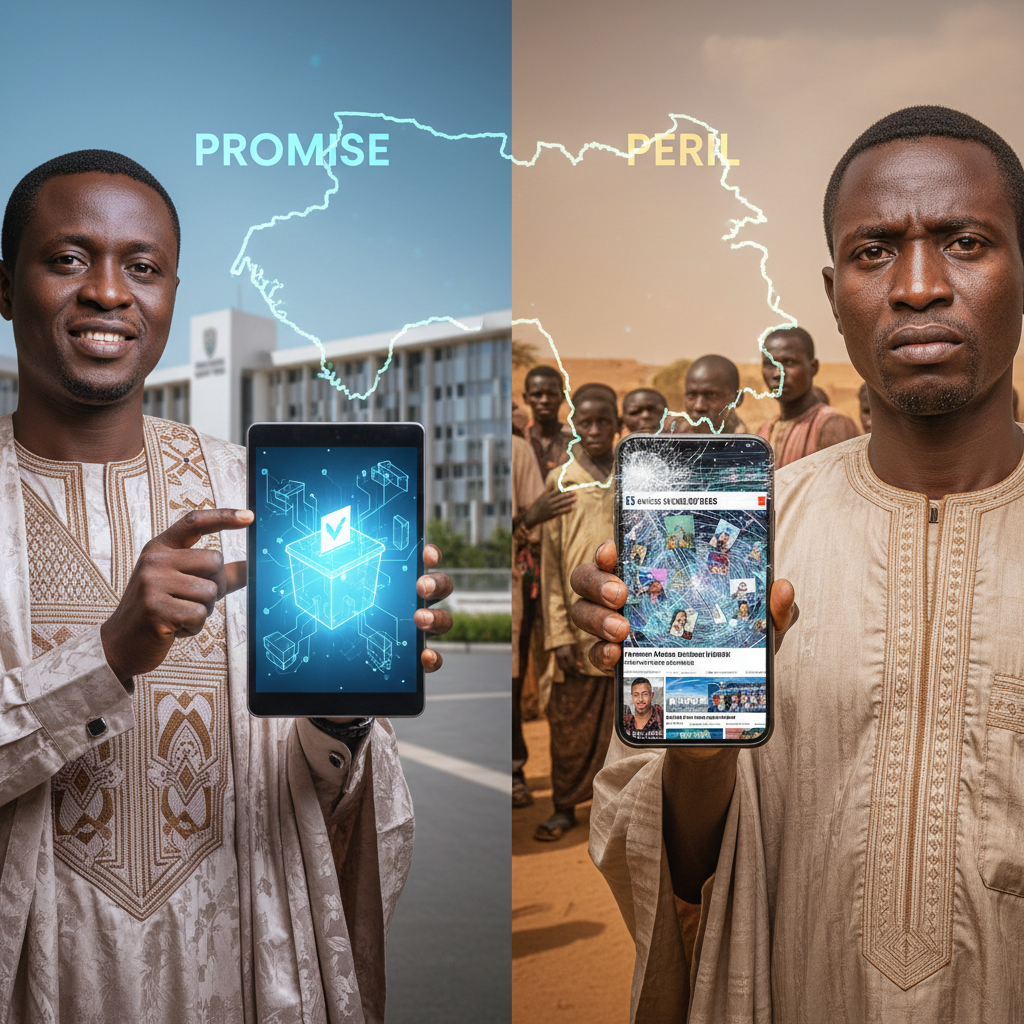
CONAKRY, GUINEA – The global march of Artificial Intelligence (AI) has reached the shores of West Africa, and here in Guinea, the discourse is shifting from mere technological curiosity to a pressing political imperative. As a seasoned observer of Guinean affairs, particularly through the lens of our unique societal structures and burgeoning democratic journey, I see a nation at a crossroads, grappling with how AI can serve its people without undermining its hard-won stability.
Recent pronouncements from the Ministère des Postes, des Télécommunications et de l'Économie Numérique indicate a strategic push towards digital transformation, with AI positioned as a key accelerator. "We are not just consumers of technology; we must be architects of our digital future," declared Dr. Fanta Diallo, Director of Digital Innovation at the Ministry, during a recent symposium at the Université Gamal Abdel Nasser de Conakry. "AI offers unprecedented opportunities for public service delivery, from optimizing agricultural yields in the Fouta Djallon to enhancing healthcare access in remote Kankan villages. But this must be done with Guinean values at its core."
However, the political implications are profound. The potential for AI to streamline bureaucracy and combat corruption, a perennial challenge in our region, is undeniable. Imagine AI-powered systems flagging irregularities in procurement or managing land registries with unprecedented transparency. This could be a game-changer for good governance, fostering greater trust between the state and its citizens – a critical element for any stable democracy in the Sahelian belt.
Yet, the shadows of concern loom large. My conversations with civil society leaders, particularly those from organizations like the Observatoire Guinéen des Droits de l'Homme, reveal anxieties about data privacy and the potential for surveillance. "In a nation still solidifying its democratic institutions, the unchecked power of AI could be a double-edged sword," warns Mamadou Saliou Baldé, a prominent human rights advocate. "Who controls the algorithms? How do we ensure these tools don't become instruments of political control or exacerbate existing inequalities, especially concerning our diverse ethnic groups? These are not merely technical questions; they are fundamental to our vivre ensemble."
The debate extends to the job market. While AI promises new industries, there's a palpable fear among the jeunesse that automation could displace traditional livelihoods, particularly in sectors like mining and informal trade that employ a significant portion of our population. The government's proposed Agence Nationale de l'Intelligence Artificielle (ANIA) is tasked with developing a national strategy that addresses these socio-economic impacts, ensuring a just transition.
For Guinea, and indeed for many nations across ECOWAS, the integration of AI is not just about adopting new tools; it's about navigating a complex political landscape. It requires robust regulatory frameworks, investment in digital literacy for all citizens – from the bustling markets of Madina to the quiet hamlets of Nzérékoré – and a steadfast commitment to democratic principles. As we move forward, the challenge is to harness AI's immense power to strengthen our nation, rather than inadvertently creating new vulnerabilities in our political and social fabric. The eyes of West Africa are watching how Guinea steps up to this epochal challenge.
Related Articles
Ankara's AI Vision: TÜBİTAK Leads Charge for National Digital Sovereignty
 Emrè Yilmazì
Brazil's AI Policy: A 'Feminist' Lens for Digital Inclusion, Says Minister
 Fernandà Oliveirà
Morocco's AI Health Revolution: Berber Communities on the Forefront of Digital Wellness
 Tariqù Benaì
Ghana's 'Adinkra AI' Initiative: Bridging Tradition and Technology for Digital Inclusion
 Akosùa Mensàh