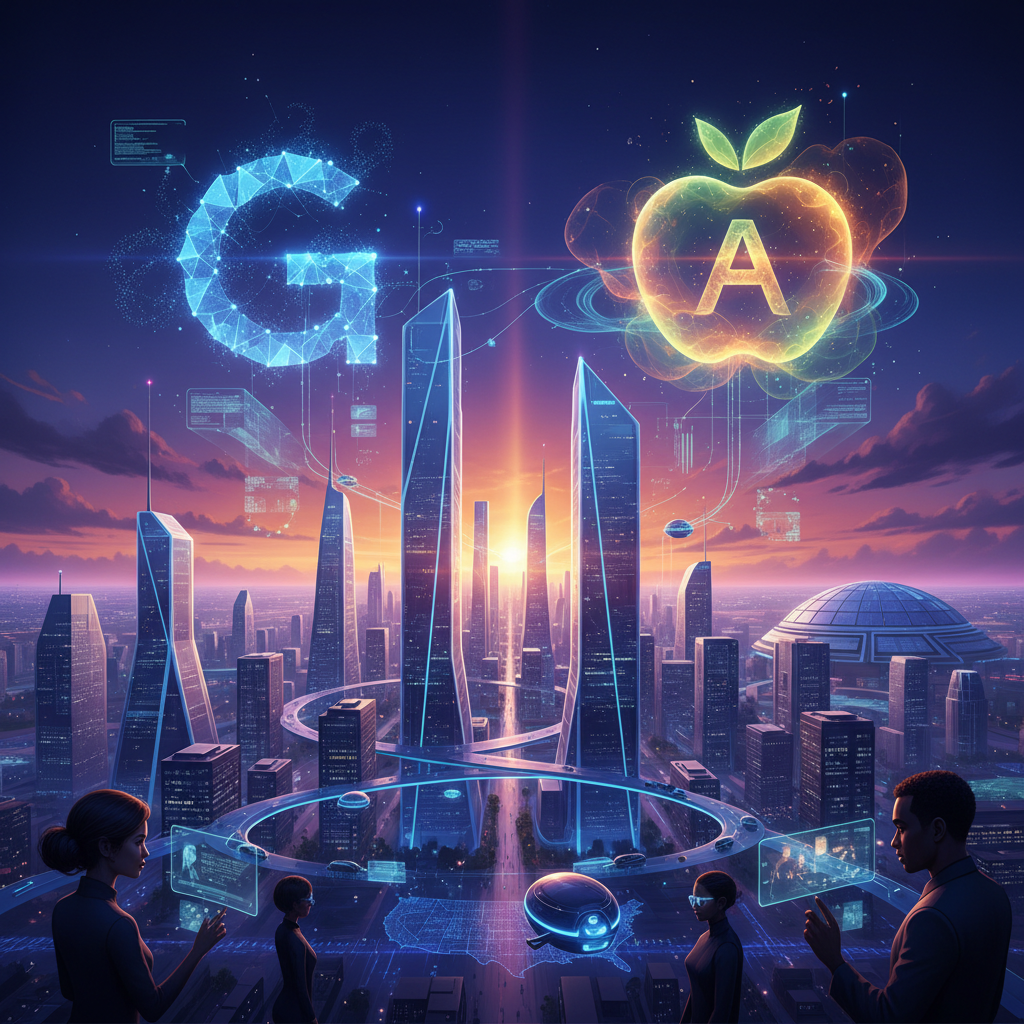

Man, oh man, have you ever had one of those moments when you just know you're standing at the edge of something monumental? Like when the first iPhone dropped, or when the internet finally clicked for everyone? I'm telling you, we're in one of those moments right now, and it's all thanks to multimodal AI. We're not just talking about chatbots anymore, folks. We're talking about AI that sees, hears, touches, and even reasons across all those senses simultaneously, just like we do. I just saw the future and it's incredible, a vibrant tapestry woven with digital threads that understand our world in ways we've only dreamed of.
Imagine this: It's 2030, and you're walking through a bustling street market in, say, Seattle's Pike Place. Your augmented reality glasses, powered by Apple's new 'Aura' multimodal OS, are subtly highlighting the freshest catch at a fish stall, giving you real-time information about its origin and sustainability. A vendor calls out a special, and Aura's audio processing instantly translates it, not just the words, but the nuance in their voice, telling you if it's a genuine bargain or a tourist trap. You pick up a piece of fruit, and Aura's haptic feedback and visual analysis confirm its ripeness, even suggesting a recipe based on your dietary preferences and what's already in your smart fridge back home. This isn't science fiction, my friends, this is the very near future, and it's going to make our lives richer, more efficient, and undeniably more connected.
How do we get from today's impressive but still somewhat siloed AI to that seamless, sensory-rich reality? It's a journey built on breakthroughs happening right now. Companies like Google, with their ever-evolving Gemini models, and Meta, pushing the boundaries with Llama-powered vision and audio understanding, are laying the groundwork. We're seeing massive leaps in neural network architectures that can process diverse data types, images, video, audio, text, even haptic data, not just sequentially, but in parallel, creating a holistic understanding. Think about it: today's AI might describe a picture, but tomorrow's will understand the emotion in the faces, the ambient sounds of the environment, and the implied narrative of the scene, all at once. This integrated perception is the secret sauce.
One key milestone we're already hitting is the convergence of AI with advanced sensor technology. Our smartphones are just the beginning. Wearable devices, smart home systems, and even our cars are becoming sophisticated data collectors. The next generation of smart glasses, like the ones Meta and Apple are racing to perfect, won't just overlay digital information onto your view; they'll be your constant, intelligent companion, interpreting your surroundings and anticipating your needs. Imagine driving down a busy freeway in Los Angeles, and your car's AI, perhaps powered by NVIDIA's latest automotive chips, not only sees the traffic but hears the subtle changes in engine sounds from nearby vehicles, feels the slight vibrations from the road, and reasons about potential hazards before you even consciously register them. That's a level of proactive safety and intuitive interaction that will redefine transportation.