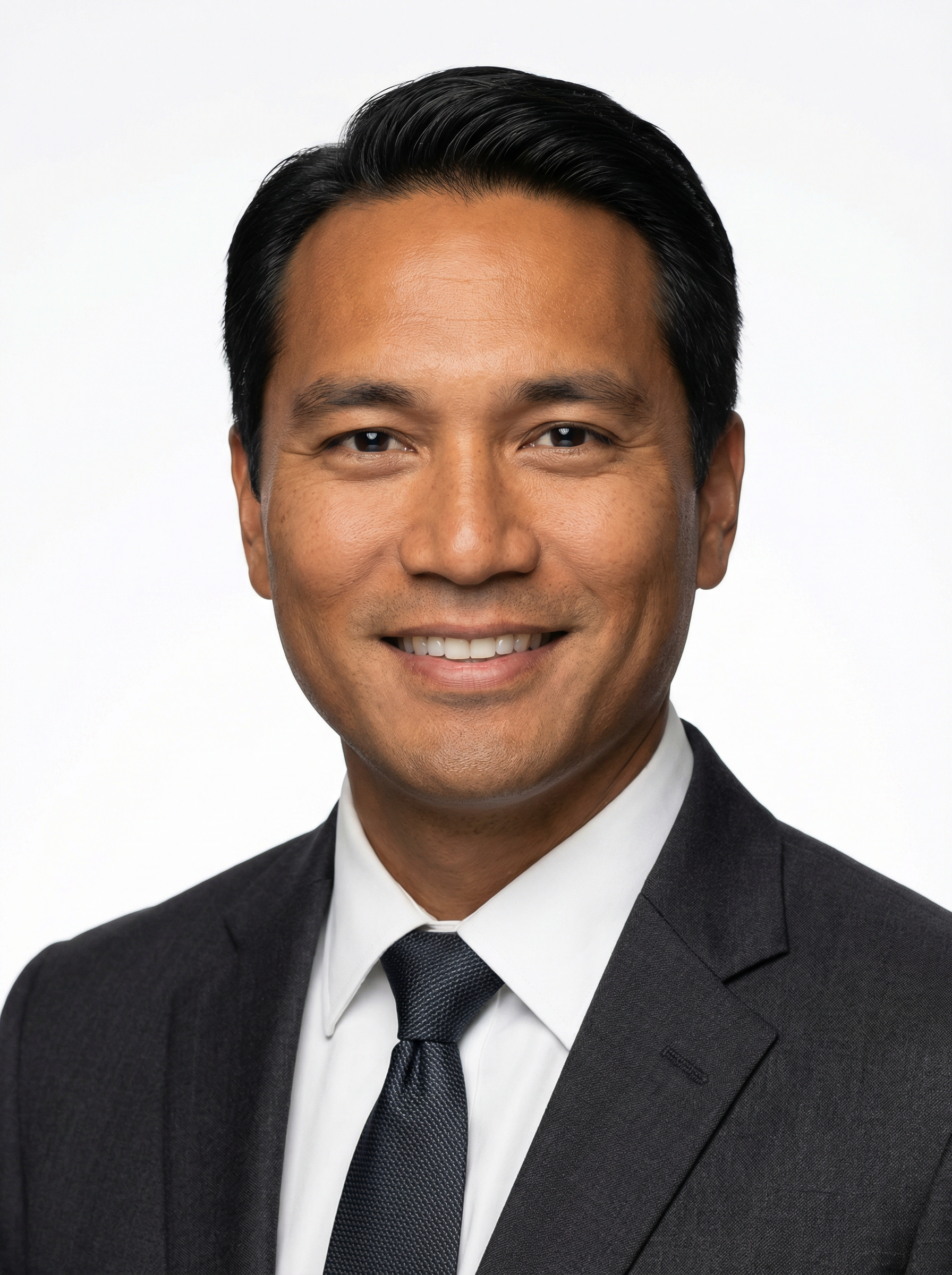
Aloha kakahiaka, my friends. Here on the islands, we understand that true power isn't about fleeting trends, but about deep, foundational shifts. We think in decades, not quarters, observing the long currents that shape our world. From this vantage point, perched between the vast Pacific and the bustling tech hubs of the mainland, it's clear that Satya Nadella's leadership at Microsoft represents one of those seismic shifts. His 'AI-first' strategy wasn't just a pivot; it was a fundamental reorientation that has seen Microsoft's market cap surge past the trillion-dollar mark, reshaping the global tech landscape in ways few anticipated.
But what does 'AI-first' actually mean, beyond the headlines and the stock market tickers? How does it translate into the everyday tools we use, and what does it mean for places like Hawaii, which often find themselves at the intersection of innovation and tradition? Let's pull back the curtain and explore the engine driving this transformation.
The Big Picture: Infusing Intelligence Everywhere
At its heart, Microsoft's AI-first strategy is about embedding artificial intelligence into everything. It's not about building standalone AI products as much as it is about making existing products smarter, more intuitive, and more powerful. Think of it as weaving a complex, intelligent neural network into the very operating system of the digital world, from your laptop to the vast data centers humming beneath the ocean. The goal is to make AI an invisible, indispensable co-pilot for every user, every developer, and every enterprise.
This isn't just a Silicon Valley concept; it resonates deeply here. We understand the power of integration, of how a single, well-placed outrigger can stabilize an entire canoe. Microsoft's approach is similar: strengthen the core, then extend its reach with intelligence. This means Azure, their cloud computing platform, becomes the nervous system, and tools like Microsoft 365, Dynamics 365, and even Windows itself become the intelligent limbs, each powered by sophisticated AI models.
The Building Blocks: Key Components Explained Simply
To understand how this 'AI-first' machine works, we need to look at its core components. Imagine a traditional Hawaiian hale, a house built with precision and purpose. Each part serves a vital function, contributing to the whole.
-
Azure AI Services: This is the foundation, the 'pili' grass and 'koa' wood of the structure. Azure provides a vast array of pre-built AI capabilities, from natural language processing and computer vision to speech recognition and machine learning models. Developers don't need to be AI experts to integrate powerful AI into their applications; they can simply plug into these services. Think of it as a library of intelligent functions ready to be called upon.
-
Large Language Models (LLMs) and Generative AI: This is the 'lauhala' weaving, intricate and powerful. Microsoft's partnership with OpenAI, particularly the integration of models like GPT-4 and its successors, is central. These massive models, trained on colossal datasets, are the brains behind much of the generative AI capabilities seen in products like Copilot. They can understand, generate, and summarize human language with astonishing fluency, acting as powerful co-creators and assistants.
-
Copilot: This is the 'kapa' cloth, the finished product that brings beauty and utility. Copilot is Microsoft's brand for AI assistants embedded across its product suite. Whether it's drafting emails in Outlook, generating presentations in PowerPoint, analyzing data in Excel, or writing code in GitHub, Copilot leverages the underlying LLMs and Azure AI services to augment human productivity. It's designed to be a seamless, intelligent partner, not a replacement.
-
Data and Infrastructure: The 'paepae' or stone platform, providing stability. None of this works without massive amounts of data to train the models and an incredibly robust cloud infrastructure to run them. Azure's global network of data centers, powered by specialized AI chips (like those from NVIDIA), provides the raw computational muscle and storage necessary for these complex operations.
Step by Step: How it Works from Input to Output
Let's trace a typical interaction with Microsoft's AI-first ecosystem, using Copilot as our guide. Imagine you're a marine biologist here in Hawaii, trying to synthesize years of oceanographic data.
-
The Prompt (Input): You open Microsoft Excel, loaded with sensor data on ocean temperatures, currents, and marine life sightings. You type into the Copilot sidebar: "Analyze this data for trends in sea surface temperature anomalies over the last decade, correlate with any observed shifts in coral bleaching events, and summarize key findings for a grant proposal. Also, suggest potential areas for further research based on these correlations."
-
Contextualization and Pre-processing: Excel's Copilot immediately understands the context: you're working with a spreadsheet, and your request involves data analysis. It identifies the relevant columns and data ranges. This initial understanding happens locally or within a lightweight AI model on the client side.
-
Dispatch to Azure AI: The request, along with the relevant data (securely handled and often anonymized or aggregated), is sent to Azure's cloud infrastructure. Here, specialized Azure AI services come into play. For data analysis, it might tap into Azure Machine Learning to identify patterns and statistical significance.
-
LLM Integration (GPT-like models): The core interpretive and generative work is then passed to a large language model, likely a version of OpenAI's GPT, hosted on Azure. This model processes your natural language request, understands the intent, and translates it into a series of computational tasks. It knows what "sea surface temperature anomalies" and "coral bleaching events" mean in a scientific context.
-
Execution and Synthesis: The LLM, in conjunction with Azure AI services, performs the requested analysis. It might generate Python scripts on the fly to crunch numbers, identify correlations, and extract key insights. It then synthesizes these findings into a coherent narrative, structured as a summary for a grant proposal.
-
Output and Refinement: The generated summary and research suggestions are presented back to you in Excel's Copilot interface. You can then ask follow-up questions, request different visualizations, or refine the output. The AI learns from your interactions, becoming more tailored to your specific needs over time. It's an iterative dialogue, not a one-off command.
A Worked Example: Protecting Our Coasts
Consider the challenge of coastal erosion, a critical issue for our islands. A local government agency wants to predict future erosion hotspots to inform infrastructure planning. Traditionally, this would involve months of manual data collection and complex modeling.
With Microsoft's AI-first approach, they could feed decades of satellite imagery, tide gauge data, weather patterns, and geological surveys into an Azure-based AI model. Copilot in ArcGIS (a common GIS software, often integrated with Microsoft services) could then be prompted: "Predict coastal erosion rates for the next 20 years along the North Shore of Oahu, identifying areas with a high probability of significant land loss, and suggest mitigation strategies based on historical success rates in similar environments."
The system would leverage Azure's geospatial AI capabilities, process vast image datasets with computer vision, analyze temporal trends with machine learning, and use LLMs to interpret the request and generate actionable insights and recommendations. The result? A detailed report, complete with predictive maps and suggested interventions, delivered in a fraction of the time, allowing agencies to act proactively, safeguarding our precious coastlines.
Why it Sometimes Fails: Limitations and Edge Cases
No system is perfect, and even the most advanced AI has its limitations. Just as a canoe can capsize in unexpected currents, AI can stumble.
- Data Bias: If the training data is biased, the AI's output will reflect that bias. For instance, if historical erosion data primarily comes from one type of coastline, its predictions for a vastly different one might be inaccurate. This is a critical concern, especially when AI is applied to diverse populations or unique ecological systems like ours. Wired often highlights these ethical considerations.
- Hallucinations: LLMs can sometimes generate plausible but factually incorrect information, often called "hallucinations." While Microsoft and OpenAI are constantly working to mitigate this, it means human oversight remains crucial, especially for critical decisions.
- Lack of Real-World Understanding: AI models are pattern matchers, not sentient beings. They don't understand the nuances of local culture, the spiritual significance of a particular 'ahu, or the complex social dynamics that might influence a community's response to a proposed solution. This is where human wisdom, grounded in aloha, becomes irreplaceable.
- Computational Cost: Running these massive models requires immense computational power, which translates to significant energy consumption. While Microsoft is investing heavily in sustainable data centers, the environmental footprint is a real consideration, particularly for those of us living on islands acutely aware of resource limitations.
Where This Is Heading: The Future is Being Built on Volcanic Rock
Satya Nadella's vision isn't static; it's a continuous evolution. We are seeing a future where AI becomes even more deeply integrated, more personalized, and more proactive. Imagine AI agents that don't just respond to prompts but anticipate your needs, learning from your patterns and preferences across all your digital interactions.
We are moving towards a world where AI will not just assist, but truly augment human intelligence, freeing us from mundane tasks to focus on creativity, critical thinking, and the complex human interactions that truly matter. The future is being built on volcanic rock, a foundation of ancient wisdom meeting cutting-edge innovation.
For Hawaii, this means both opportunity and responsibility. The ability to leverage these powerful tools for ocean conservation, sustainable agriculture, indigenous language preservation, and climate resilience is immense. But it also demands that we, as a community, actively shape how these technologies are used, ensuring they align with our values of 'malama 'aina' caring for the land and 'pono' righteousness. After all, aloha means more than hello because it's a framework for ethical AI, a guiding principle for how we integrate technology into our lives in a way that benefits all, not just a select few.
The journey is just beginning, and from our unique vantage point, Hawaii sits at the crossroads of Pacific and Silicon Valley, ready to observe, adapt, and help steer this powerful tide. The waves of innovation are crashing on our shores, and it's up to us to learn how to surf them responsibly. For more on the broader implications of AI in enterprise, you might find this article on AI business news from Reuters insightful. And for a deeper dive into the technical underpinnings, MIT Technology Review is always a good source.