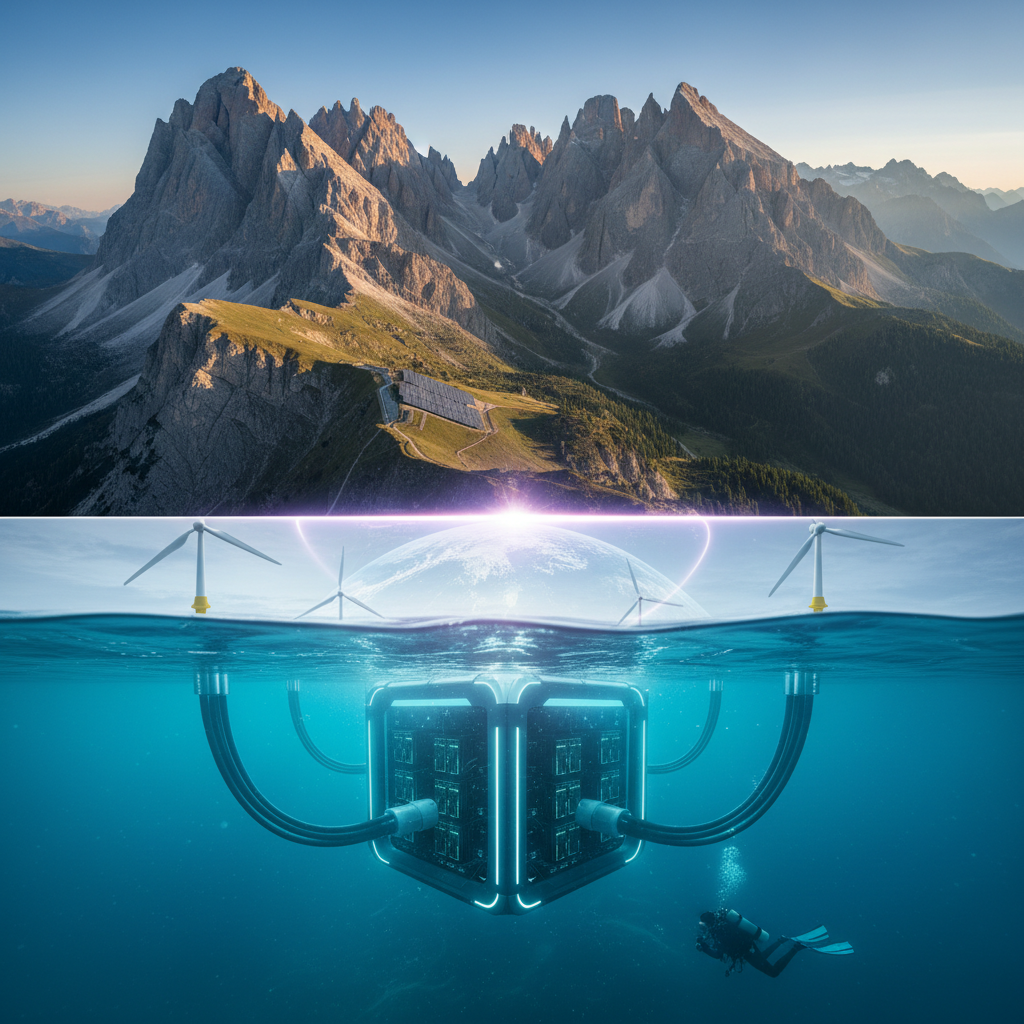

Ah, Italia. My home. A land where history breathes from every stone, where the scent of espresso lingers in the air, and where the very landscape, from the snow-capped Dolomites to the sapphire embrace of the Mediterranean, is a masterpiece. But even masterpieces face threats, and for our beloved Italy, as for the rest of the world, climate change is a shadow growing longer with each passing year. The question on everyone's lips, from the bustling markets of Palermo to the quiet vineyards of Tuscany, is a profound one: can artificial intelligence, this powerful new tool, truly help us protect what we cherish?
For a long time, when people spoke of AI, they thought of robots, or perhaps algorithms that recommend your next movie. But now, we are seeing a dramatic shift. AI is stepping into the arena of our greatest global challenge: climate change. And here in Italy, we are not just spectators; we are active participants, blending our inherent passion for innovation with a deep respect for our natural heritage. Italy does AI differently, with style, you see.
One of the most compelling stories unfolding right now involves Enel, our multinational energy giant, and Google's advanced AI models, particularly Gemini. Enel, with its vast network spanning continents, is at the forefront of renewable energy production. They manage hydroelectric dams nestled in our mountains, solar farms basking in our southern sun, and wind turbines dancing along our coasts. Imagine the sheer volume of data generated by such an operation: weather patterns, energy consumption, grid stability, equipment performance. It's a symphony of numbers, and traditionally, making sense of it all to optimize for a greener future has been a monumental task.
This is where Gemini, Google's multimodal AI, enters the picture. Think of it as a super-intelligent conductor for this data symphony. Enel is leveraging Gemini's capabilities to process complex environmental data, predict energy demand with unprecedented accuracy, and optimize the performance of their renewable assets. For instance, by analyzing satellite imagery, weather forecasts, and historical data, Gemini can help predict solar panel efficiency under varying cloud cover or anticipate wind turbine output based on microclimates. This isn't just about efficiency; it's about maximizing clean energy production and minimizing reliance on fossil fuels, a critical step towards decarbonization.
I spoke with Dr. Elena Rossi, Enel's Head of Digital Innovation, during a recent conference in Milan. Her eyes sparkled with a genuine sense of purpose.