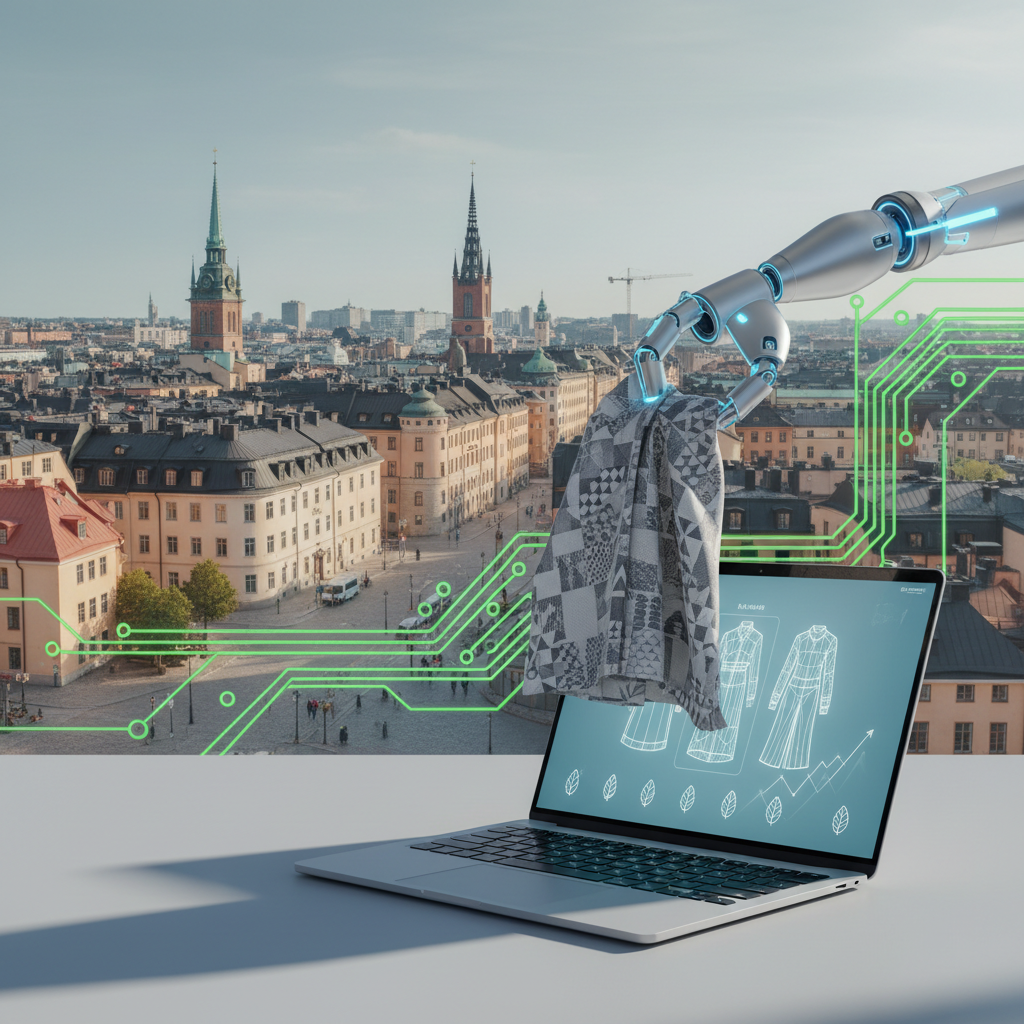

The question is no longer if artificial intelligence will impact white-collar professions, but how deeply and how permanently. Recent headlines, particularly from the United States and the United Kingdom, paint a stark picture: consulting firms, law offices, and even newsrooms are reporting significant layoffs, often attributed directly or indirectly to the increasing capabilities of generative AI models like OpenAI's GPT-4 and Google's Gemini. But is this a genuine, irreversible trend, or merely the latest wave of technological hype amplified by economic anxieties? As a journalist for DataGlobal Hub, based in Sweden, I find it imperative to cut through the noise and examine the empirical data.
Historically, every major technological leap has been met with both utopian visions of leisure and dystopian fears of mass unemployment. The industrial revolution, the advent of computers, and the rise of the internet all sparked similar debates. Yet, history consistently shows a pattern of job transformation rather than outright elimination, albeit with significant periods of disruption and re-skilling. The crucial difference now, proponents argue, is the cognitive nature of AI's encroachment. Unlike machines that augmented physical labor, AI is now performing tasks once considered uniquely human, such as drafting legal documents, analyzing market trends, or even generating news articles. This distinction demands a more rigorous analysis than previous technological shifts.
Let's look at the evidence. A recent report from the World Economic Forum, published in late 2025, projected that 69 million jobs could be created by AI by 2027, while 83 million could be displaced globally. This represents a net loss of 14 million jobs, or 2 percent of current employment. While these are projections, the anecdotal evidence is accumulating. Major consulting firms, traditionally bastions of highly paid analytical work, have reportedly reduced their junior ranks, with some citing AI tools as enabling smaller teams to handle larger workloads. Law firms are deploying AI for discovery and contract analysis, tasks that once occupied countless billable hours for paralegals and junior associates. Even in journalism, my own profession, platforms are experimenting with AI-generated content, leading to concerns about the future of human reporters.
In Sweden, the picture is perhaps less dramatic but equally concerning. Our highly digitized economy and early adoption of technology make us particularly susceptible to these shifts. Companies like Klarna, a Swedish fintech giant, have long embraced automation, and while they often frame it as efficiency, the impact on human roles is undeniable. "We are seeing a clear bifurcation," explains Dr. Elin Sundberg, a labor economist at Uppsala University. "Some roles are being augmented, making human workers more productive, while others are being entirely automated. The challenge for Sweden, with its strong social safety nets, is not just managing unemployment, but ensuring that the new jobs created are accessible and offer comparable quality of life." Her research indicates that approximately 15 percent of current white-collar tasks in Sweden could be fully automated within the next five years, with another 40 percent significantly augmented.
The implications extend beyond mere job numbers. The quality of work, the demand for new skills, and the potential for increased economic inequality are all critical considerations. "The narrative that AI will simply free us for more creative work is overly simplistic and frankly, a bit naive," states Professor Lars Johansson, a leading expert in human-computer interaction at the Royal Institute of Technology in Stockholm. "For every high-level prompt engineer or AI ethicist role created, there are many more routine tasks being absorbed by algorithms. We must ask ourselves, what happens to the millions who performed those routine tasks?" Professor Johansson points to the increasing demand for 'soft skills' such as critical thinking, creativity, and emotional intelligence, which are harder for current AI to replicate, but also harder to quantify and train for at scale.
The Swedish model suggests a different approach to this technological transition. Instead of simply reacting to layoffs, there is a strong emphasis on continuous education, retraining programs, and robust social support systems. The concept of 'flexicurity,' a combination of flexible labor markets and strong social security, could be tested like never before. "Our historical commitment to lifelong learning and active labor market policies will be crucial," says Anna-Lena Eriksson, Director General of the Swedish Public Employment Service. "We are investing heavily in digital literacy and AI upskilling initiatives, working with companies like Spotify and Ericsson to identify future skill demands. This is not just about mitigating job losses, but about seizing new opportunities and ensuring our workforce remains competitive." Indeed, the ability to adapt swiftly has always been a hallmark of the Nordic countries, and this crisis will be a true test of that resilience.
However, the speed of AI development, particularly from powerhouses like Google and OpenAI, presents an unprecedented challenge. The iterative improvements in models like Gemini mean that what was considered a complex, human-only task yesterday might be within AI's grasp tomorrow. This rapid evolution makes long-term workforce planning incredibly difficult. The question then becomes: can our societal structures, including educational institutions and labor market policies, evolve at a pace commensurate with technological advancement? Wired has extensively covered the accelerating pace of AI innovation, highlighting the difficulties businesses face in keeping up.
My verdict, after scrutinizing the available data and expert opinions, is that this trend is far from a mere fad. We are indeed witnessing a fundamental reshaping of white-collar work. While mass unemployment on a scale comparable to the Great Depression is unlikely, significant job displacement and transformation are inevitable. The 'new normal' will involve a much closer collaboration between humans and AI, where human workers are increasingly tasked with oversight, ethical judgment, and creative problem-solving that AI cannot yet master. The challenge lies in ensuring that this transition is equitable, that the benefits of increased productivity are broadly shared, and that those displaced are given genuine opportunities to re-skill and find new meaningful employment. Scandinavian data paints a clearer picture of the need for proactive policy, not reactive measures. We cannot afford to be complacent, assuming that history will simply repeat itself. The cognitive revolution demands a cognitive response, one that prioritizes human dignity and societal well-being above raw efficiency gains. The future of work, particularly in knowledge-intensive sectors, will depend on our collective ability to navigate this complex landscape with foresight and compassion. For more on the economic implications of AI, Bloomberg Technology provides ongoing analysis of market shifts and corporate strategies. The conversation must move beyond mere automation to holistic societal adaptation, a task that requires more than just technological prowess; it demands genuine leadership and a commitment to our shared future. MIT Technology Review also offers deep dives into the societal impact of these technological changes.