
Xin chào, everyone! Ngo Thi Huừngé here, and I am practically buzzing with excitement today. You know, sometimes I look out from my apartment window in Ho Chi Minh City, seeing the endless stream of motorbikes and trucks, and I think about how fast everything moves here. But what if I told you that the speed and efficiency we see today are just the beginning, a mere whisper compared to the roar of what is coming? We are talking about self-driving trucks and autonomous delivery systems, and let me tell you, they are not just reshaping the $800 billion logistics industry globally, they are about to revolutionize Vietnam's place within it.
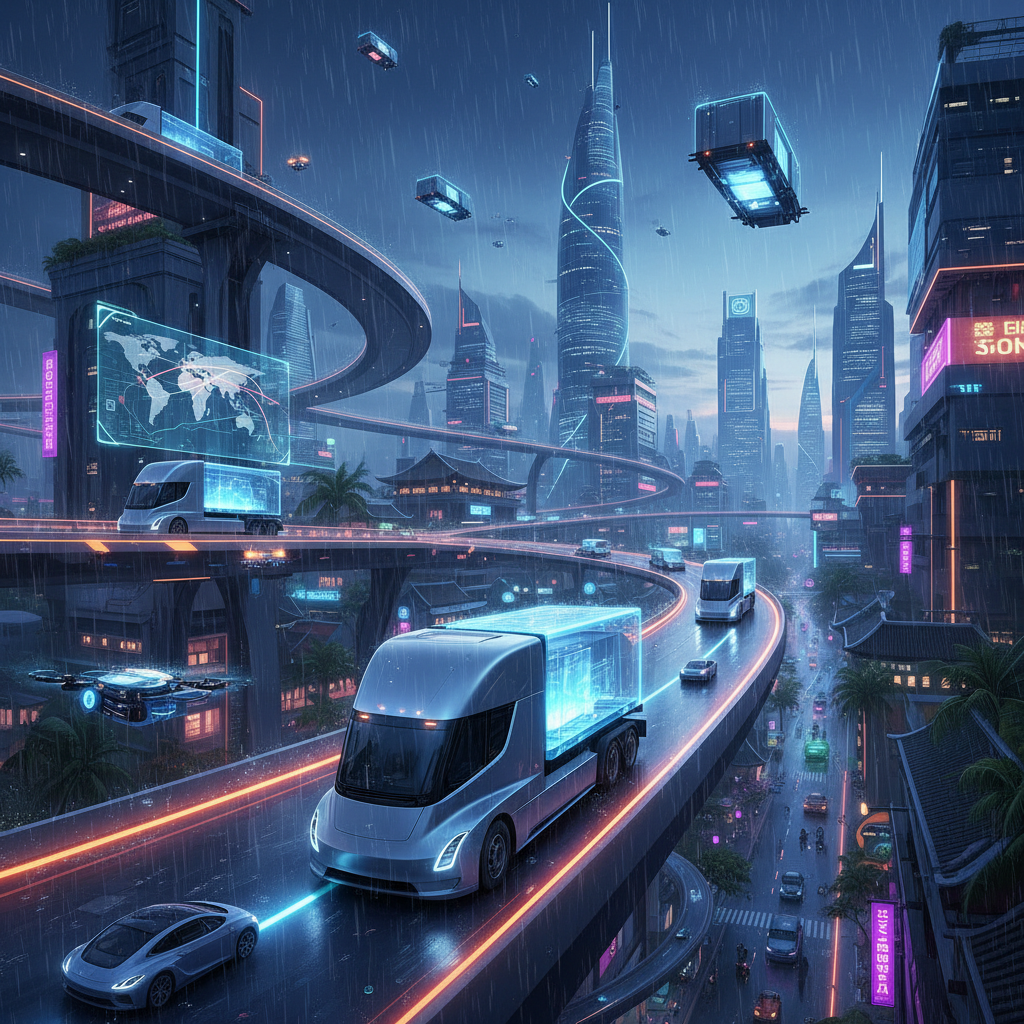
Imagine this: it is 2031. A container ship docks at Cai Mep International Terminal, its cargo destined for a factory in Binh Duong. Instead of a human driver waiting, a sleek, electric autonomous truck, perhaps a Tesla Semi or a similar model from a local Vietnamese innovator, glides into position. It connects seamlessly, loads its cargo, and then, with no one in the driver's seat, embarks on its journey. Traffic is optimized by AI, routes are dynamically adjusted for efficiency, and deliveries happen around the clock, without breaks, without fatigue. This is not science fiction, my friends; this is the very near future, and Vietnam is perfectly positioned to embrace it.
How do we get there from today, you ask? It is a journey of incremental innovations, each building on the last. Right now, we see companies like Waymo and Cruise testing autonomous ride-hailing in limited areas, and while passenger vehicles grab headlines, the real, immediate impact is brewing in commercial logistics. The controlled environments of highways and fixed routes make trucks a prime candidate for early adoption. We are already seeing Level 3 and Level 4 autonomous trucking tests happening in the United States and Europe, with companies like TuSimple and Embark leading the charge. Tesla, of course, with its vision and relentless pursuit of autonomy, is a major player here. Their Tesla Semi, with its advanced Autopilot features, is already laying the groundwork for fully autonomous freight movement.
For Vietnam, the path involves several key milestones. First, we need robust digital infrastructure. Our 5G rollout, while impressive, must be comprehensive, providing the low latency and high bandwidth essential for real-time communication between autonomous vehicles, central command systems, and traffic management. Second, regulatory frameworks must evolve. Our government, always forward-thinking, will need to establish clear guidelines for testing, deployment, and liability for autonomous vehicles. This is a complex challenge, but one that nations around the world are grappling with, and Vietnam can learn from those experiences while forging its own path.
Third, and this is where I get truly excited, our local tech ecosystem must step up. Ho Chi Minh City never sleeps, especially its coders, and I see so many brilliant minds here ready to tackle these challenges. Vietnamese startups are already making waves in AI, and I believe we will see local companies developing specialized AI for route optimization, predictive maintenance for autonomous fleets, and even last-mile delivery solutions using smaller autonomous robots. Think about the potential for our e-commerce giants, like Tiki and Shopee Vietnam, to leverage these systems for hyper-efficient delivery across our sprawling cities and rural areas. This is where Vietnam is the dark horse of AI, ready to surprise the world.
Who wins in this new landscape? Certainly, the logistics companies that embrace this technology early will gain a massive competitive advantage. Reduced operating costs, improved safety, and faster delivery times mean greater profitability and market share. Consumers will win too, with quicker, more reliable, and potentially cheaper delivery services. Manufacturers, especially those in our booming export sector, will see their supply chains become more resilient and efficient. As Mr. Tran Thanh Hai, Deputy Director of the Agency of Foreign Trade at the Ministry of Industry and Trade, once noted, "Logistics costs are a significant component of our export prices. Any innovation that reduces these costs will directly boost our competitiveness on the global stage." This future is not just about technology; it is about economic empowerment.
However, we must also acknowledge who might face challenges. Truck drivers, a vital part of our economy, will see their roles evolve. It is crucial that we invest in retraining and upskilling programs, preparing them for new roles in fleet management, remote monitoring, and maintenance of these advanced vehicles. This is not about replacing humans entirely, but about augmenting human capability and shifting the nature of work. Governments and educational institutions must collaborate to ensure a just transition for our workforce. As Professor Le Truong Tung, Rector of FPT University, often emphasizes, "Education must adapt faster than technology itself. We need to prepare our youth not just for today's jobs, but for tomorrow's." FPT University is already a leader in this area, preparing the next generation of tech talent.
Looking at the broader picture, the environmental benefits are enormous. Electric autonomous trucks, optimized for efficiency, will significantly reduce carbon emissions from the transportation sector. Imagine cleaner air in our cities, and a quieter environment, especially during night deliveries. This aligns perfectly with Vietnam's commitment to sustainable development and green growth. The data generated by these autonomous fleets will also provide unprecedented insights into traffic patterns and infrastructure needs, allowing for smarter urban planning and investment.
What should you, my dear readers, do now? For businesses in logistics and manufacturing, start exploring pilot programs and investing in AI capabilities. Partner with tech startups, both local and international, to understand how these systems can integrate into your operations. For policymakers, prioritize infrastructure development and agile regulatory frameworks. For individuals, embrace lifelong learning. The world is changing rapidly, and adaptability is our greatest asset. This startup just changed the game, and it is happening all around us.
The journey to a fully autonomous logistics network will be complex, filled with challenges and triumphs, but the destination is clear: a more efficient, safer, and sustainable future. I am incredibly optimistic about Vietnam's role in this global transformation. We have the spirit, the talent, and the ambition to not just adopt these technologies, but to innovate and lead in this exciting new era of autonomous logistics. Keep your eyes on the road, everyone, because the future is driving itself, and it is heading straight for us! For more on the cutting edge of AI in logistics, I highly recommend checking out TechCrunch's AI section. The insights there are truly invaluable.