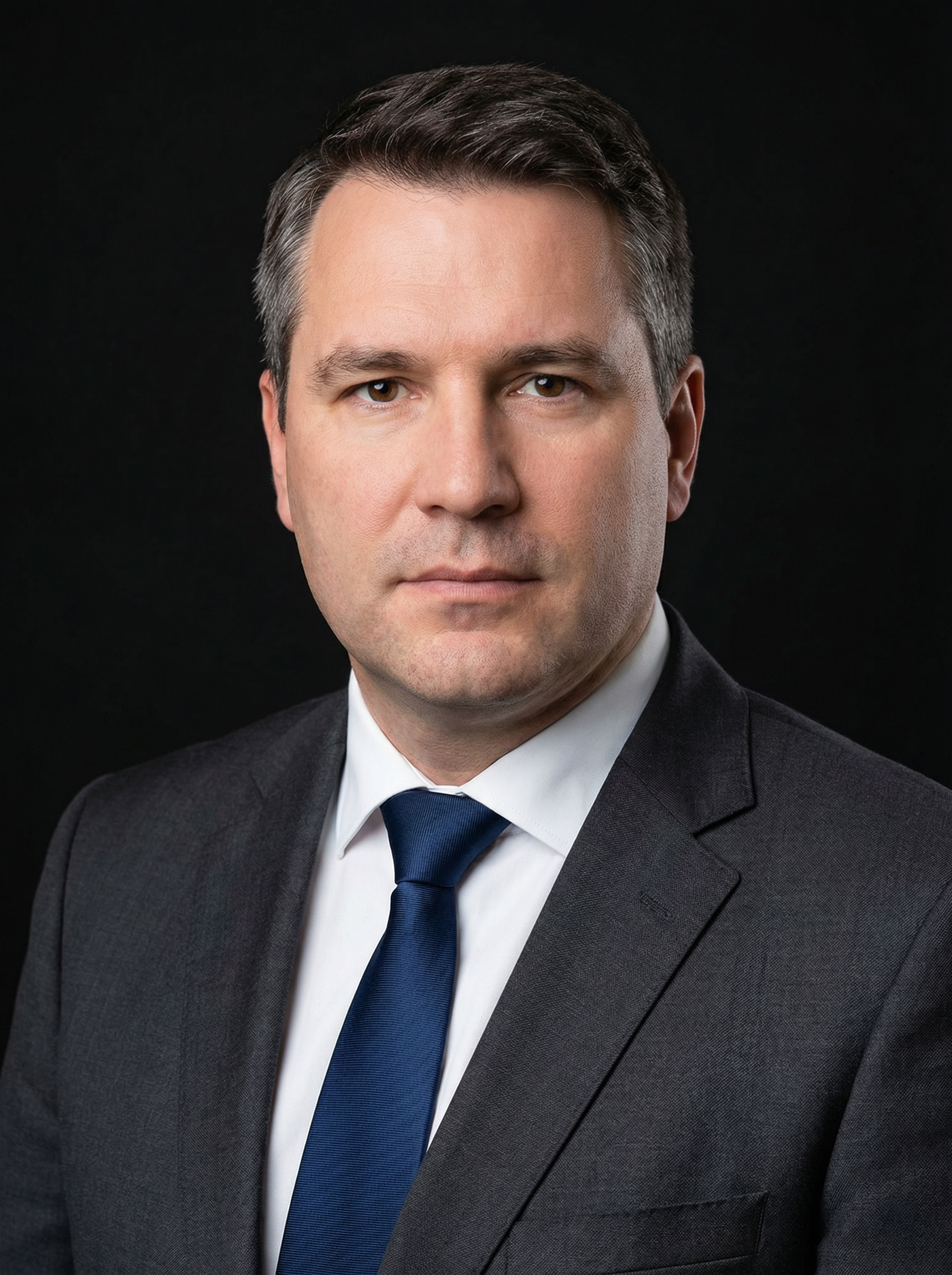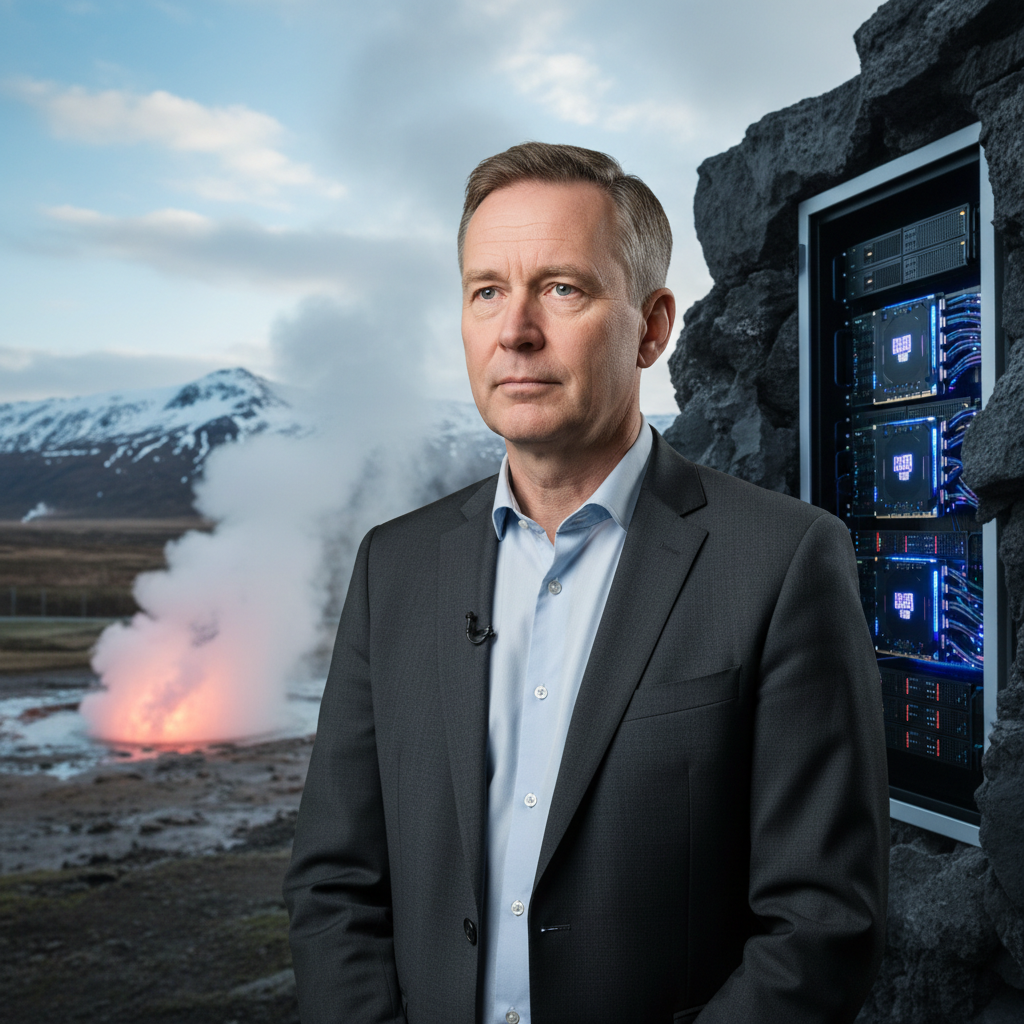

The wind, a constant companion in Iceland, was whipping around the windows of the Reykjavík University building as I made my way to meet Páll Grímsson. Inside, however, there was a warmth, a focused energy that felt very much like the geothermal power that heats our homes and fuels our ambitions. Páll, a professor and co-founder of the Icelandic Institute for Intelligent Machines, isn't one for grand pronouncements, but his work speaks volumes about the quiet revolution happening here, where the land of fire and ice meets the cutting edge of artificial intelligence.
For generations, Icelanders have lived in intimate dialogue with nature, understanding its power and its fragility. This deep connection, I believe, shapes our approach to technology, especially when it comes to something as impactful as AI. We see it not just as a tool for efficiency or profit, but as a potential partner in protecting our precious environment. Páll Grímsson embodies this spirit, dedicating much of his career to exploring how AI can help us understand and mitigate climate change.
"We have a unique laboratory here," Páll told me, gesturing vaguely towards the window, where I imagined the distant steam plumes of Hellisheiði power plant. "Our environment is extreme, dynamic, and rich in data, from glaciers melting to volcanic activity. AI can help us make sense of it all, to predict, to adapt, and to innovate." He has been a vocal proponent of using AI for environmental monitoring and resource management, a field where Iceland, with its vast renewable energy resources and sensitive ecosystems, has much to offer.
Páll's journey into AI began decades ago, long before it became the global phenomenon it is today. He studied computer science and later focused on machine learning, always with an eye towards practical applications. His early work involved using AI for image processing, a skill that proved invaluable when applied to satellite imagery for monitoring environmental changes. He's not just an academic, you see, he's a problem solver, someone who sees the world's challenges and immediately thinks, 'How can we build something to fix that?'
One of the most compelling aspects of Iceland's contribution to AI and climate change is our abundant geothermal and hydroelectric power. This isn't just about clean energy for our homes, it's about powering the energy-hungry data centers that fuel AI development. "Training large AI models requires immense computational power, and that means immense electricity," Páll explained. "If that electricity comes from fossil fuels, then the environmental cost of AI itself becomes a problem. Here, we can run these computations with a carbon footprint that is virtually zero." This is a point he has made publicly, emphasizing the ethical imperative to develop AI sustainably. According to a report by MIT Technology Review, the energy consumption of AI models is a growing concern, making Iceland's green data centers particularly attractive for climate-focused AI research.
His vision extends beyond just powering data centers. Páll has been involved in projects that use AI to optimize energy grids, predict renewable energy output, and even improve the efficiency of geothermal drilling. Imagine, for a moment, an AI system that can analyze geological data to pinpoint the most effective locations for new geothermal wells, reducing exploratory drilling and maximizing energy extraction. This is not science fiction; these are the kinds of applications Páll and his colleagues are actively pursuing.
"It's about leveraging our strengths," he said, his eyes twinkling. "We have the clean energy, the challenging environment that generates unique data, and a small, agile scientific community. This allows us to experiment, to fail fast, and to learn quickly." He believes that Iceland's story is unique, offering a blueprint for other small nations to make significant contributions to global challenges, not by trying to outcompete Silicon Valley on scale, but by focusing on niche areas where their specific circumstances give them an advantage.
I asked him about the challenges, of course. Even in a country as forward-thinking as Iceland, there are hurdles. "Data privacy is always a concern, especially when dealing with environmental data that might have implications for land use or resource allocation," he admitted. "And attracting top talent to a small country, even one as beautiful as ours, can be difficult. But the passion for making a difference, that's what drives us." He mentioned the importance of international collaboration, citing projects with European partners that bring diverse expertise to the table.
Páll also touched upon the role of AI in understanding complex climate systems. "The Earth's climate is an incredibly complex system, with countless variables interacting in non-linear ways," he stated. "Traditional climate models are powerful, but AI, particularly machine learning, can uncover patterns and make predictions that might elude human analysis alone. This is crucial for developing effective adaptation strategies." He pointed to initiatives using AI to forecast extreme weather events with greater accuracy, which can save lives and protect infrastructure.
His work, and the work of many others here, reminds me that innovation isn't just about massive corporations or bustling tech hubs. Sometimes, it flourishes in unexpected places, nurtured by a deep respect for the land and a clear understanding of what's at stake. Páll Grímsson isn't just building algorithms; he's helping to build a more sustainable future, one geothermal-powered computation at a time. His quiet determination is a testament to the power of human ingenuity, especially when guided by a genuine desire to protect our shared home. You can often find more about cutting edge AI applications in climate science through resources like Nature Machine Intelligence.
As I left, the wind was still strong, but the sun had broken through the clouds, casting a golden light over the city. It felt like a metaphor, somehow. The challenges are immense, the storms are brewing, but with minds like Páll's, and the unique resources of our island, there's a real sense of hope that we can navigate them. It's a reminder that even in the face of global crises, the human spirit, coupled with intelligent tools, can find a way forward. For more on how AI is impacting various sectors, including environmental efforts, you might find interesting articles on TechCrunch.
This isn't just about technology; it's about people, their vision, and their unwavering commitment to a better world, powered by the very elements that define our existence here in Iceland.