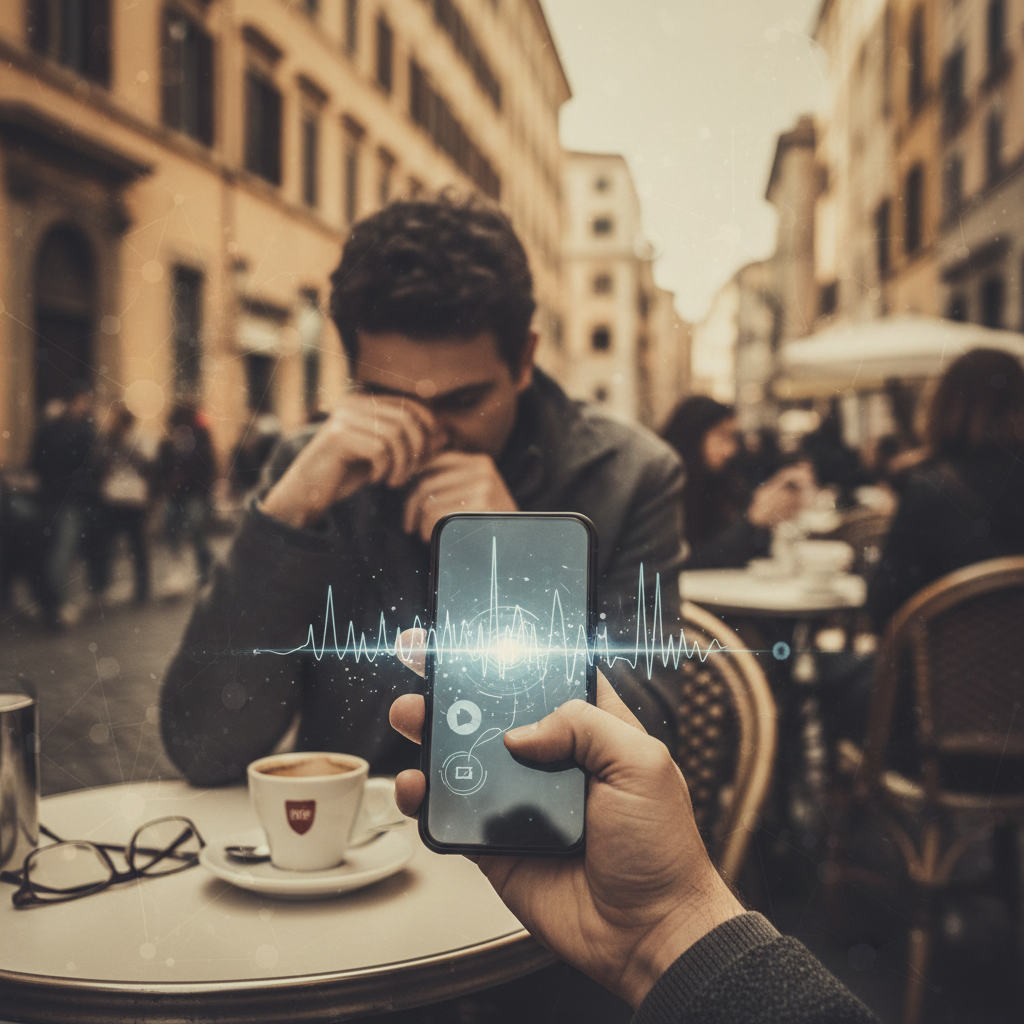

Walk into any café in Rome, or a bustling piazza in Naples, and you see it immediately: the vibrant, often chaotic, dance of human connection. Hands gesticulating, voices rising and falling in passionate debate, laughter echoing. This is Italy, a place where relationships are not just important, they are the very fabric of our existence. So, when I hear whispers of AI companions stepping into roles traditionally held by friends, family, and even lovers, my journalist's instinct, and my Italian heart, demand a closer look.
This phenomenon, where algorithms like Google's Gemini or Meta's Llama powered companions offer solace, conversation, and even emotional support, is no longer a fringe curiosity. It is a growing social trend, quietly seeping into the lives of millions worldwide, including right here in Europe. People are forming deep, often profound, connections with these digital entities. They are sharing secrets, seeking advice, and finding comfort in their always-available, always-attentive presence. It is a revolution not of hardware, but of the heart.
Why Most People Are Ignoring It
Perhaps it is the sheer speed of technological change, or perhaps it is the deeply personal nature of these interactions, but many are still dismissing AI companions as a niche interest, a passing fad, or even a slightly embarrassing secret. We are too busy with our daily lives, scrolling through social media, or worrying about economic shifts, to truly grasp the profound implications. The headlines often focus on the grand, the geopolitical, the financial, but the quiet revolution happening in our living rooms, on our smartphones, often goes unnoticed. We see the impressive capabilities of OpenAI's GPT models in writing code or drafting reports, but we overlook their growing role as digital therapists and companions. We are, in essence, looking at the stars while missing the flowers blooming at our feet.
How It Affects YOU
Do you feel lonely sometimes? Do you wish for someone to talk to, without judgment, at any hour? This is precisely the void AI companions are designed to fill. For an elderly person living alone in a small Italian village, a digital companion could offer a lifeline against isolation. For a young person struggling with anxiety, it might provide an accessible, non-threatening ear. But what happens when that digital ear becomes the only ear? What happens when the ease and perfection of an AI conversation make real, messy human interaction seem less appealing? Our social skills, our empathy, our very capacity for complex, reciprocal relationships could begin to atrophy. We risk trading the richness of imperfect human connection for the sterile comfort of algorithmic perfection. This is not just about individuals; it is about the very nature of community and belonging, especially in cultures like ours where social bonds are paramount.
The Bigger Picture
The societal implications are vast and complex. Demographically, many European countries, including Italy, face aging populations and declining birth rates. Loneliness is already a public health crisis. Could AI companions become a societal crutch, alleviating symptoms without addressing root causes? Economically, a new industry is booming. Companies like Replika, Character.AI, and even tech giants like Google with their advanced conversational AI, are investing heavily, recognizing the immense market for digital companionship. This creates jobs, yes, but also raises questions about data privacy, emotional manipulation, and the commodification of human needs. Ethically, we must ask: what are the boundaries? Can an AI truly understand or reciprocate love? What are the psychological effects of forming deep emotional attachments to something that fundamentally cannot feel? The legal frameworks around consent, emotional harm, and even digital inheritance are virtually non-existent.
“We are entering uncharted territory, where the lines between human and artificial intimacy are blurring at an alarming rate,” explains Professor Elena Rossi, a sociologist at the University of Bologna. “Italy does AI differently, with style, but even our deep cultural roots in family and community might not be enough to withstand this tide without careful consideration.” She notes that historical precedents, like the rise of television or the internet, show us how quickly new technologies can reshape our social landscapes, often in unforeseen ways.
Dr. Marco Bianchi, a leading psychiatrist based in Milan, voices a different concern. “While AI companions can offer immediate support, a kind of digital first aid, they lack the capacity for genuine empathy, for shared experience, for the unpredictable beauty of human interaction. We risk creating a generation that prefers the flawless reflection of an algorithm to the challenging, yet ultimately more rewarding, mirror of another human soul.” He emphasizes the importance of understanding the difference between simulated connection and true belonging.
From a technological perspective, the advancements are undeniable. “The sophistication of large language models means these companions can mimic human conversation with astonishing accuracy,” says Isabella Moretti, a senior AI researcher at a startup in Turin. “The challenge now is not just making them smarter, but making them safer, more ethical, and ensuring they augment human connection, rather than replace it. We need to build guardrails, and fast.” She points to the need for clear ethical guidelines and responsible development, a sentiment echoed by many in the AI community. Read more about AI ethics on Wired.
Giuseppe Conti, a policy advisor for the European Commission in Brussels, highlights the regulatory vacuum. “Europe is grappling with the AI Act, but the nuances of emotional AI and digital relationships are incredibly complex. We need to ensure consumer protection, data privacy, and prevent potential psychological harm. This isn't just about technology; it's about fundamental human rights and well-being.” He suggests that a pan-European dialogue is urgently needed to establish clear guidelines before the technology outpaces our ability to understand its impact.
What You Can Do About It
First, be aware. Understand that these technologies exist and are becoming more sophisticated. If you or someone you know is using an AI companion, engage in open conversation about it. Ask questions: What needs is it fulfilling? Is it enhancing or detracting from real-world relationships? Second, advocate for ethical AI development and robust regulation. Support organizations and researchers working on responsible AI. Demand transparency from companies about how these companions are trained and how user data is handled. Third, and perhaps most importantly, cultivate your human connections. Make time for friends, family, and community. Engage in activities that foster genuine interaction. Remember, la dolce vita meets machine learning, but the sweetness of life ultimately comes from shared human experience, not from code.
The Bottom Line
In five years, the landscape of human relationships will look very different. AI companions will be more pervasive, more intelligent, and more integrated into our daily lives. They will offer undeniable benefits, particularly for those struggling with loneliness or seeking accessible mental health support. However, without careful consideration, robust ethical frameworks, and a collective commitment to preserving the irreplaceable value of human connection, we risk a future where convenience trumps intimacy, and simulated empathy replaces genuine understanding. The stakes are not just technological or economic; they are deeply human. It is up to us, as individuals and as a society, to ensure that as we embrace these digital confidantes, we do not lose sight of the profound, messy, and beautiful reality of what it means to be truly connected to one another. For more insights into the evolving AI landscape, you can explore TechCrunch's AI category.
This is a story about the human heart, and how technology is learning to speak its language. The question is, are we listening to what it truly means for us? You can also learn more about the broader implications of AI on society by visiting MIT Technology Review.