
The promise of artificial intelligence in healthcare has long transcended the realm of science fiction, evolving into a tangible force that redefines diagnostics, accelerates vaccine development, and expands the reach of telemedicine. Across the globe, from Silicon Valley to Shanghai, companies are pouring billions into this sector. Yet, to understand the true impact and the unique trajectory of this revolution, one must look closely at how nations, particularly those with centralized economic structures, are adapting these technologies. Russia, with its vast geography and a healthcare system grappling with historical challenges, presents a particularly compelling case study.
Here, the narrative is not merely one of technological adoption, but of strategic integration, often spearheaded by state-affiliated entities. Moscow's AI ambitions tell a bigger story, one deeply intertwined with national development goals and the pursuit of digital sovereignty. My sources in the tech sector confirm that the integration of AI into healthcare is proceeding with an almost military precision, a characteristic often observed in large-scale state-backed projects.
Consider the omnipresent influence of Sberbank, Russia's largest financial institution, which has aggressively diversified into technology. Under the leadership of Herman Gref, Sberbank has transformed itself from a traditional bank into a sprawling tech conglomerate, venturing into areas as diverse as cloud computing, food delivery, and crucially, artificial intelligence in healthcare. Its 'SberHealth' ecosystem is a prime example of this ambition, aiming to integrate everything from online doctor consultations to AI-powered diagnostic tools and electronic health records. This is not a fragmented market of competing startups; it is a meticulously constructed edifice designed to centralize and streamline. “Sberbank’s approach is unique because it leverages its massive customer base and financial muscle to build a vertically integrated healthcare platform,” explains Dr. Anna Petrova, a senior analyst at the Skolkovo Foundation's AI research division. “They are not just selling software; they are attempting to own the entire patient journey, from initial symptom check to treatment and follow-up.”
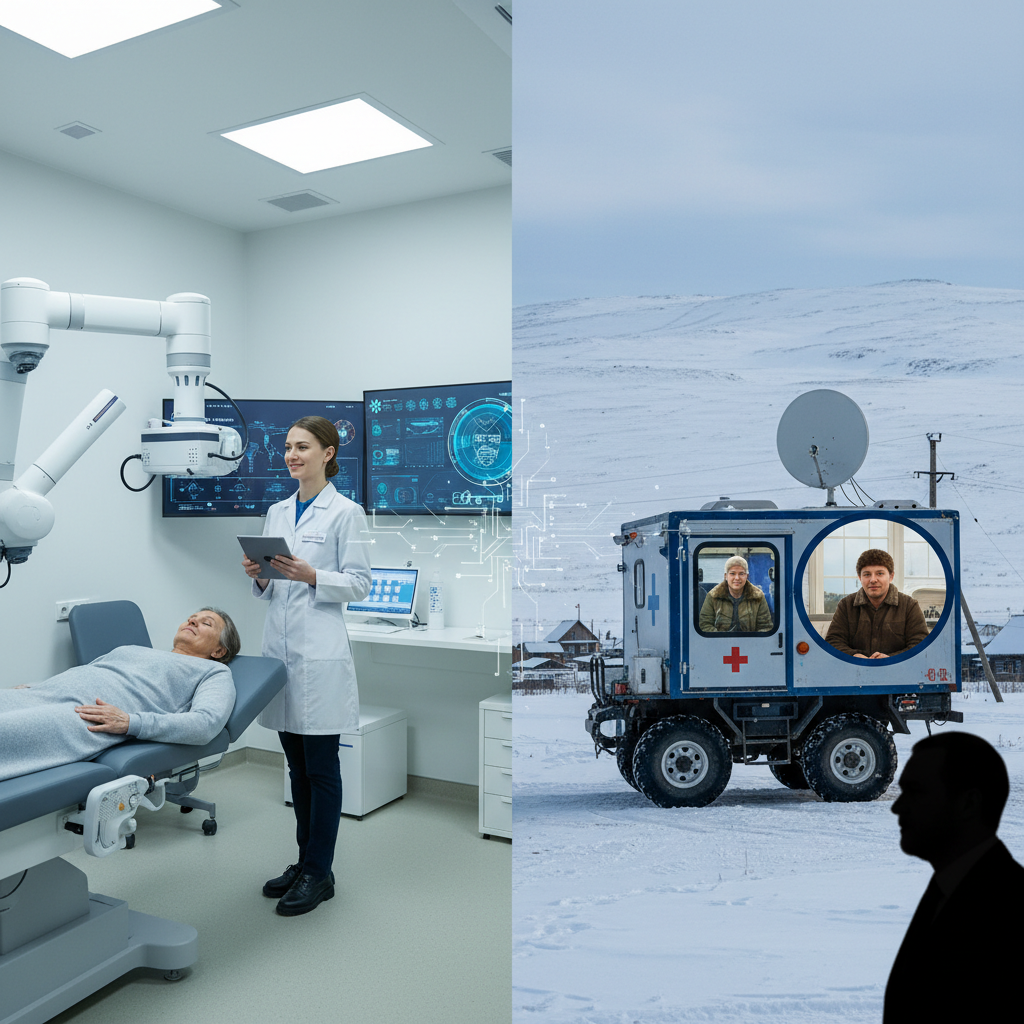
One of the most significant developments is the deployment of AI for medical image analysis. In regions like Tatarstan and the Moscow Oblast, Sberbank's AI solutions are being piloted in polyclinics and hospitals to assist radiologists in detecting anomalies in X-rays, CT scans, and mammograms. This technology, often powered by neural networks trained on vast datasets of anonymized patient imagery, promises to reduce diagnostic errors and accelerate turnaround times. A recent report from the Russian Ministry of Health indicated that AI-assisted diagnostics in pilot regions led to a 15 percent reduction in misdiagnoses for certain conditions and a 20 percent faster processing time for routine scans in 2025. This efficiency gain is critical for a country where access to specialist medical care can be uneven, particularly in remote areas.
Telemedicine, another pillar of this revolution, has seen exponential growth, accelerated by the recent global health crises. For residents of Siberia's sprawling territories, where the nearest specialist might be hundreds or even thousands of kilometers away, a video consultation with a doctor is not merely a convenience, it is a lifeline. Platforms like SberHealth and Yandex.Health have expanded their services dramatically. “The digital divide remains a challenge, but telemedicine is undeniably democratizing healthcare access for millions in Russia,” states Ivan Volkov, CEO of a Moscow-based telemedicine startup, MedConnect. “We've seen a 300 percent increase in telemedicine consultations in rural areas over the past two years, a trend that is only set to continue.” The Kremlin's digital strategy reveals a clear directive to prioritize such services, recognizing their potential to bridge geographical gaps and improve public health metrics.
Vaccine development, traditionally a lengthy and resource-intensive process, is also being transformed by AI. While Russia has its own robust scientific institutions, the global race for rapid vaccine creation has highlighted the power of computational biology and machine learning. AI algorithms can analyze vast genomic and proteomic datasets to identify potential vaccine targets, predict protein structures, and optimize drug compounds. Russian research institutes, often in collaboration with domestic tech firms, are exploring these avenues. For instance, the Gamaleya National Research Center for Epidemiology and Microbiology, renowned for its vaccine work, has reportedly begun integrating AI tools to accelerate its research pipelines, though specific details remain guarded. This strategic embrace of AI in biotechnology is not merely about health; it is about national security and scientific prestige on the global stage.
However, this rapid technological integration is not without its complexities and potential pitfalls. The centralization of health data, while offering efficiency, raises significant concerns about privacy and data security. The sheer volume of sensitive patient information being aggregated by entities like Sberbank creates an attractive target for cyber adversaries. Furthermore, the reliance on AI for critical diagnostic decisions necessitates rigorous validation and ethical oversight. Who is accountable when an AI algorithm makes an error with life-altering consequences? These are questions that Russian regulators are beginning to grapple with, often looking to European Union frameworks like the AI Act for guidance, albeit with a distinct national flavor. According to a recent investigation by Reuters, global discussions around AI ethics in healthcare are intensifying, and Russia is no exception.
Moreover, the 'brain drain' phenomenon, where talented AI specialists and medical professionals seek opportunities abroad, continues to pose a challenge to Russia's ambitious digital health agenda. While state-backed initiatives offer significant resources, the allure of international tech hubs and research centers remains strong. Attracting and retaining top-tier talent is paramount for sustaining innovation. “The competition for AI talent is global and fierce,” remarks Dr. Elena Smirnova, a leading AI researcher who recently returned to Russia after a decade in Silicon Valley. “To truly lead, Russia needs to foster an environment of open innovation, not just centralized control.”
Despite these challenges, the trajectory is clear: AI is fundamentally reshaping Russian healthcare. From the bustling clinics of St. Petersburg to the remote medical outposts in the Urals, algorithmic intelligence is augmenting human capabilities, expanding access, and accelerating scientific discovery. The integration of AI into Russia's healthcare system is a testament to a broader national strategy, one that seeks to leverage technology not just for economic growth, but for social stability and geopolitical influence. The coming years will reveal whether this centralized, state-driven approach can deliver on its ambitious promises while navigating the intricate ethical and practical considerations inherent in such a profound transformation. The world watches, not just for medical breakthroughs, but for the model of digital governance that emerges from this grand experiment, as detailed by MIT Technology Review. For further insights into the global landscape of AI in healthcare, particularly regarding ethical frameworks, one might consider the ongoing debates surrounding Healthcare AI [blocked] legislation in other parts of the world. Ultimately, the success of this revolution will be measured not just in technological prowess, but in the tangible improvements to the lives of ordinary citizens, from Kaliningrad to Vladivostok. For more general AI industry news, TechCrunch offers a broad perspective on global developments. This intricate dance between innovation and control will define Russia's healthcare future.