
The quest for novel materials has long been a cornerstone of scientific progress, a painstaking endeavor often characterized by trial, error, and serendipitous discovery. Today, however, a new protagonist has entered this ancient narrative: artificial intelligence. The burgeoning field of AI-powered materials discovery, particularly its application to superconductors and advanced battery components, is generating considerable excitement, promising to accelerate innovation at an unprecedented pace. Yet, as a Belgian observer, I find myself asking a familiar question: does this actually work, or are we merely witnessing another wave of technological exuberance?
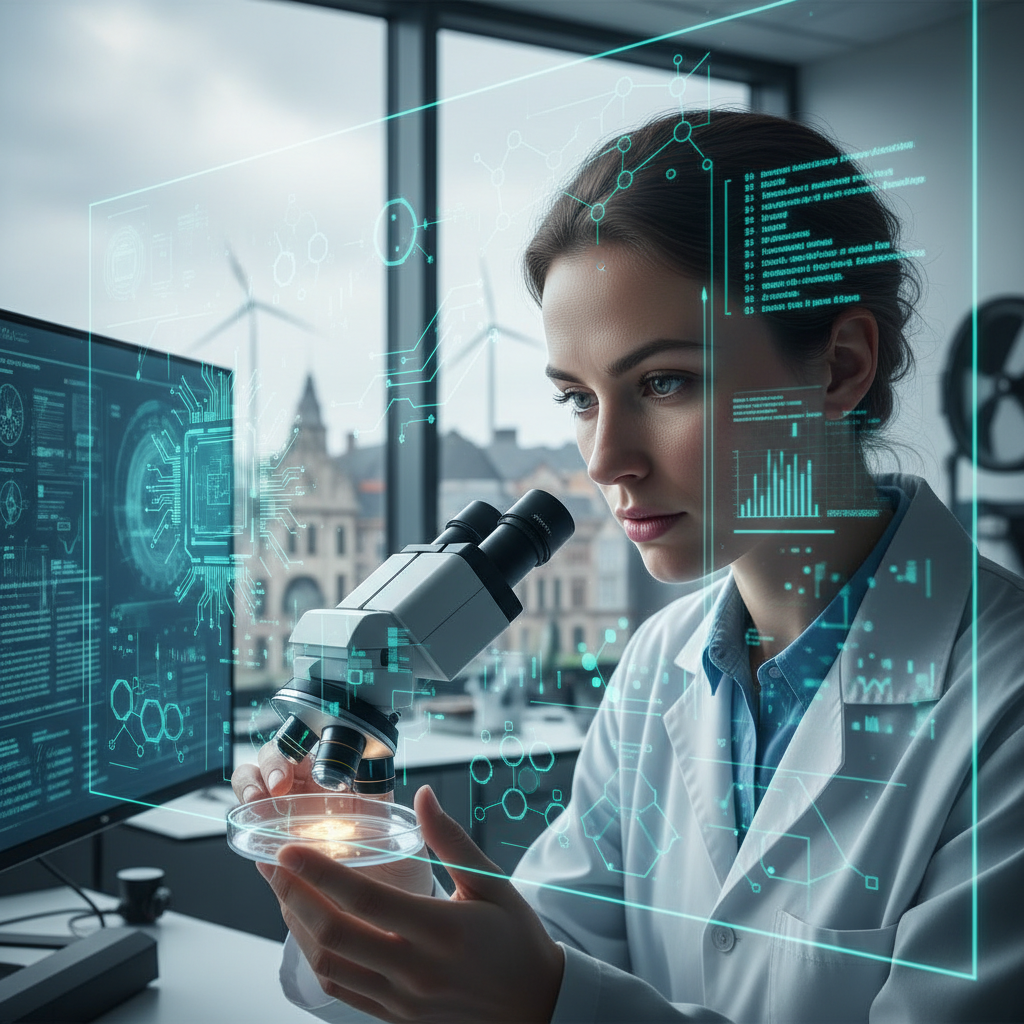
In Belgium, a nation renowned for its scientific rigor and industrial innovation, the implications are particularly resonant. Institutions such as KU Leuven and the interuniversity microelectronics center, imec, are at the forefront of exploring how AI can streamline the identification and synthesis of materials with specific, desirable properties. The allure is undeniable: imagine a world where the next generation of high-temperature superconductors, capable of revolutionizing energy transmission, or battery materials offering unprecedented energy density and charging speeds, are not stumbled upon but intelligently designed. This vision, articulated by proponents, suggests a paradigm shift from laborious experimentation to predictive modeling, drastically cutting down research cycles and costs. We are told that AI can sift through vast datasets of material properties, quantum mechanics simulations, and chemical compositions, identifying patterns and predicting the performance of hypothetical compounds long before a single atom is manipulated in a laboratory.
Indeed, some initial results are compelling. Researchers at Google DeepMind, for instance, have demonstrated AI models capable of predicting the crystal structures of thousands of new materials, a feat that would be computationally intractable for human scientists alone. Similar efforts are underway at NVIDIA, leveraging their powerful GPU architectures to accelerate quantum chemistry simulations, a critical component in understanding material behavior. These advancements are not trivial; they represent a significant leap in our capacity to explore the atomic frontier. According to a recent report in MIT Technology Review, investments in AI for materials science have surged by over 40% in the last two years, reflecting a global belief in its transformative potential.
However, Brussels has questions and so should you. The journey from theoretical prediction to practical application is fraught with complexities that even the most sophisticated AI models struggle to navigate. Dr. Annelies De Vos, Head of Materials Informatics at imec, a research hub deeply embedded in the European innovation ecosystem, articulates this challenge with characteristic Belgian pragmatism. “While AI can certainly narrow the search space for promising candidates, the real world of material synthesis is messy and unpredictable,” she noted in a recent seminar. “Factors like impurities, processing conditions, and scale-up challenges often mean that a theoretically perfect material behaves very differently in practice. We are still far from a fully autonomous discovery pipeline.”
Consider the case of superconductors. The dream of room-temperature superconductivity has tantalized physicists for decades, promising lossless energy transmission and revolutionary advancements in computing and medical imaging. AI models are now being deployed to identify novel compounds that might exhibit this elusive property. Yet, the path to achieving stable, reproducible, and scalable room-temperature superconductivity remains elusive, despite AI’s assistance. The recent LK-99 saga, where claims of a room-temperature superconductor were met with intense scrutiny and ultimately debunked, serves as a stark reminder of the gap between initial promise and verified reality. While AI was not directly implicated in the LK-99 claims, the episode underscores the critical need for rigorous experimental validation, a domain where human ingenuity and painstaking effort remain irreplaceable.
Battery materials present a similar narrative. The demand for higher energy density, faster charging, and longer-lasting batteries for electric vehicles and grid storage is immense. AI is being used to design new electrolytes, cathodes, and anodes, optimizing their chemical composition and structural integrity. Companies like IBM and Microsoft are investing heavily in this area, leveraging their cloud computing resources and AI platforms to accelerate research. Yet, the commercialization of these AI-designed materials still faces significant hurdles, including cost-effectiveness, scalability of manufacturing, and long-term stability under real-world operating conditions. “The industrialization of any new material is a multi-year, multi-million-euro undertaking,” explains Professor Jan Van der Steen, a chemical engineer at KU Leuven specializing in electrochemistry. “AI can shave off some time in the initial discovery phase, perhaps by 15% to 20%, but it cannot bypass the fundamental engineering and economic realities of bringing a material from the lab to the market.”
The EU's approach deserves more credit than it gets in fostering a balanced perspective on AI’s role in such critical fields. Unlike some regions that prioritize speed above all else, the European Union, through initiatives like the AI Act, emphasizes responsible innovation, transparency, and human oversight. This regulatory framework, often viewed as cumbersome by Silicon Valley, actually provides a necessary safeguard against unchecked technological enthusiasm. It compels researchers and developers to consider the broader societal and environmental implications of their work, including the energy consumption of large-scale AI models and the ethical sourcing of raw materials for new battery technologies. For instance, the development of new battery materials, even if AI-driven, must still contend with the EU’s stringent regulations on critical raw materials and circular economy principles. This is not merely an academic exercise; it dictates the very viability of these innovations within the European market.
Furthermore, the data-driven nature of AI presents its own set of challenges. The quality and breadth of data available for materials science are often limited, fragmented, and proprietary. Training robust AI models requires vast, high-quality datasets, which are not always readily available in this specialized domain. “The 'garbage in, garbage out' principle applies rigorously here,” states Dr. Marc Dubois, a data scientist at the Flemish Institute for Technological Research (vito). “If our input data on material properties is incomplete or biased, the AI’s predictions will reflect those flaws. Curation and standardization of materials data are monumental tasks that often receive less attention than the AI algorithms themselves.”
While the potential of AI in accelerating materials discovery is undeniable, it is crucial to temper expectations with a healthy dose of skepticism. AI is a powerful tool, an intelligent assistant that can augment human capabilities, but it is not a magic wand. The intricate dance between theoretical prediction, experimental validation, and industrial scaling remains a fundamentally human endeavor, guided by expertise, intuition, and an understanding of the physical world that AI, for now, can only approximate. Belgium, with its tradition of meticulous research and its position within the EU’s thoughtful regulatory landscape, is well-placed to navigate this complex terrain. The real breakthrough will not be in AI replacing human scientists, but in its intelligent integration into a robust, interdisciplinary research process. Anything less is, frankly, just more digital dust. The future of materials discovery, much like a perfectly brewed Belgian beer, requires patience, precision, and a deep understanding of its constituent elements, AI or otherwise.
For more on the intersection of AI and scientific discovery, consult Reuters' technology section. Explore the latest in AI research and applications on arXiv. Learn about imec's contributions to microelectronics and materials science.