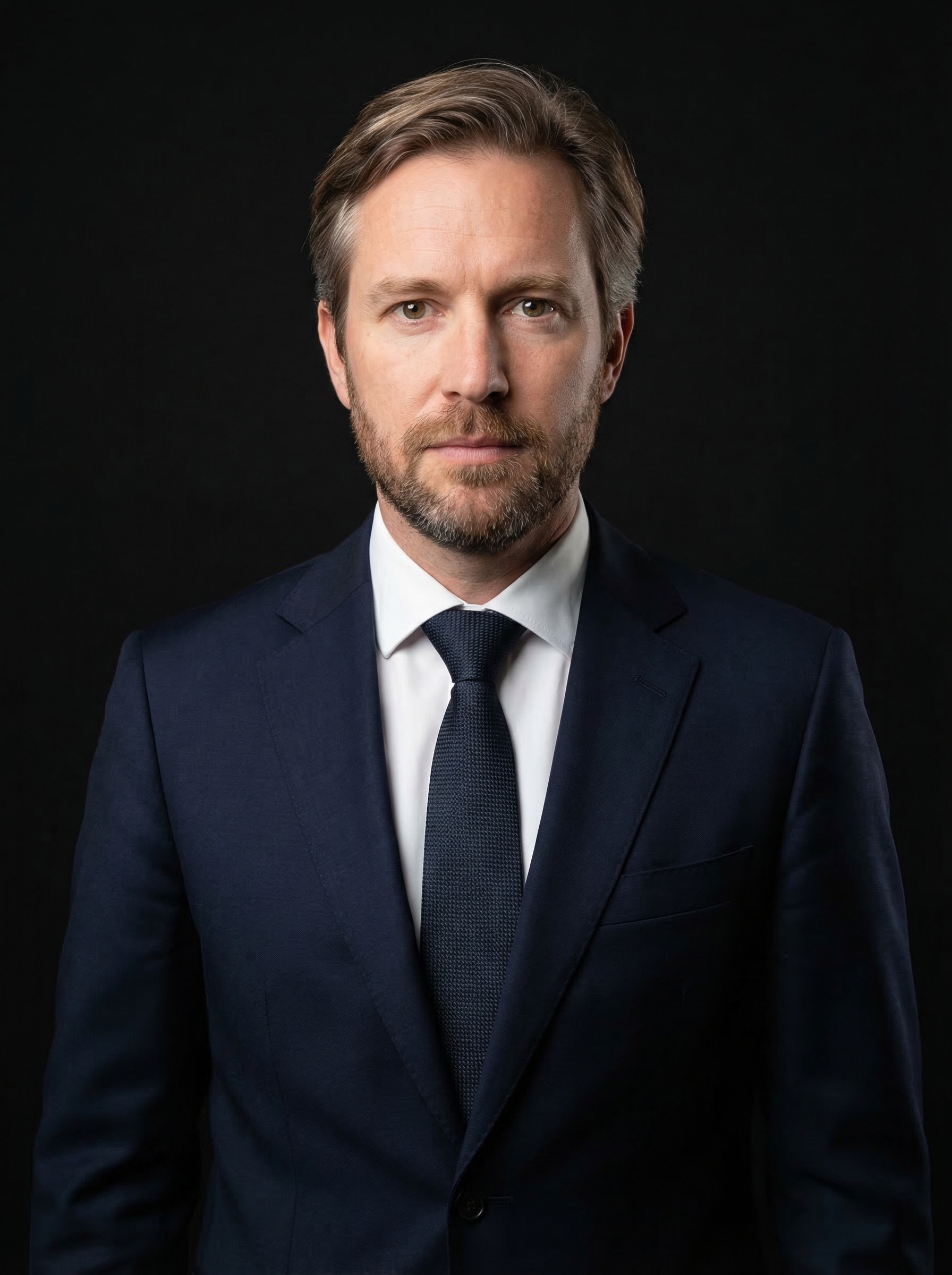
Ah, the crisp morning air in Bratislava, it always reminds me of new beginnings, of possibilities blooming even in unexpected corners. And speaking of blooming possibilities, let me tell you about a man whose work is making waves far beyond our beautiful Danube, reaching right into the heart of European policy making. I am talking about Michal Pěchouček, a name that might not yet be a household one for everyone, but trust me, it soon will be, especially as the world grapples with the urgent question: do we have the right to know if we are talking to an AI?
Imagine a world where every interaction, every piece of information, every decision, could be subtly influenced by an artificial intelligence, and you would not even know it. A bit unsettling, right? This is exactly the challenge Michal Pěchouček, a brilliant mind with deep roots in Central European academia and innovation, is tackling head-on with his startup, GeniLaw. His company is not just building AI; it is building trust in AI, creating tools that ensure transparency and accountability, especially crucial as AI transparency laws spread globally.
Michal's story is not one of overnight Silicon Valley success, but rather a testament to persistent intellectual curiosity and a deep-seated belief in the power of technology for good. His defining moment, in my opinion, came not in a boardroom, but in a lecture hall, surrounded by students eager to understand the complex dance between algorithms and human society. He realized that for AI to truly integrate into our lives, it needed to be understood, not feared, and that understanding starts with transparency.
Born and raised in the Czech Republic, just a stone's throw from Slovakia, Michal's early life was steeped in the rich academic tradition of Central Europe. He pursued his studies at the Czech Technical University in Prague, a powerhouse of engineering and computer science. It was there, amidst the historic spires of Prague, that his fascination with artificial intelligence truly blossomed. He earned his Ph.D. in AI, focusing on multi-agent systems and game theory, long before AI became the global phenomenon it is today. His academic career flourished, leading him to become a full professor and eventually the head of the Department of Computer Science at CTU, a position he held with distinction for many years. He was not just teaching AI; he was shaping the next generation of AI researchers and practitioners in the region.
But Michal was not content to stay solely within the ivory tower. He saw the immense potential of his research to solve real-world problems and recognized the growing need for practical applications of AI, particularly in areas demanding high levels of trust and regulation. This drive led him to co-found several successful technology companies, including Cognitive Security, which was later acquired by Cisco Systems. This experience gave him invaluable insight into translating complex academic research into viable commercial products, a skill that would prove pivotal for GeniLaw. He understood that the theoretical elegance of AI needed to meet the messy realities of business and policy.
The idea for GeniLaw, while perhaps brewing for years, truly crystallized as regulatory bodies around the world, particularly in the European Union, began to seriously consider and implement comprehensive AI legislation. The EU AI Act, for instance, places significant emphasis on transparency, requiring developers and deployers of AI systems to provide clear information about their capabilities and limitations. Michal saw a gap: while the laws were coming, the tools to implement that transparency were still nascent. He envisioned a platform that could help companies comply with these new regulations, ensuring that users always knew when an AI was at play. This was his breakthrough: not just to build AI, but to build the infrastructure of trust around AI.
Building GeniLaw was not without its challenges. Attracting top-tier talent in a competitive global market, especially for a niche but critical area like AI compliance, required immense dedication. Michal leveraged his extensive network from his academic and entrepreneurial past, bringing together a diverse team of AI ethicists, legal experts, and software engineers. He fostered a culture of meticulous research and ethical responsibility, understanding that their product was not just a piece of software, but a cornerstone of public trust. He often emphasizes, “We are not just selling a product; we are selling peace of mind in the age of AI.”
Funding for GeniLaw came from a mix of European venture capital firms and strategic angel investors who shared Michal's vision for responsible AI. While specific figures are not always public, the company has reportedly secured several rounds of funding, allowing them to rapidly develop their platform and expand their reach. Their growth has been steady, driven by the increasing global demand for AI transparency solutions, particularly from industries like finance, healthcare, and public administration, where regulatory scrutiny is highest. Reuters reported on the increasing investment in AI governance tools, highlighting the growing market GeniLaw operates within.
Today, GeniLaw is headquartered in Prague, but its influence is felt across Europe. They are actively engaging with European institutions, contributing to discussions on AI policy, and helping companies navigate the complex landscape of AI regulation. Their platform provides tools for AI system auditing, bias detection, and, crucially, clear disclosure mechanisms that alert users when they are interacting with an AI. This is particularly important for conversational AI, chatbots, and automated decision-making systems. The company's work aligns perfectly with the spirit of the EU AI Act, which seeks to establish a human-centric approach to AI. As Michal himself once stated in an interview, “Transparency is not just a regulatory burden; it is a competitive advantage and a fundamental right in the digital age.”
What drives Michal Pěchouček? It is more than just building a successful company. It is a genuine passion for ensuring that AI serves humanity responsibly. He believes that Central Europe, with its strong technical universities and a pragmatic approach to innovation, has a unique role to play in shaping this future. Indeed, I often say that Central Europe's quiet revolution [blocked] is precisely about leaders like Michal, who are building foundational technologies that enable a safer, more ethical digital world.
What is next for GeniLaw? As AI models become even more sophisticated and pervasive, the need for robust transparency tools will only intensify. Michal and his team are constantly innovating, exploring how to apply their expertise to new frontiers, such as generative AI content authentication and the detection of AI-generated misinformation. Their goal is to become the global standard for AI transparency and compliance, ensuring that as AI evolves, our right to know keeps pace. It is a monumental task, but with leaders like Michal Pěchouček, I feel incredibly optimistic about our future. The future, my friends, is not just intelligent; it is intelligently transparent. For more on the broader implications of AI ethics, you can always check out MIT Technology Review. The conversation is just beginning, and Michal is right there, leading the charge. And who knows, perhaps soon, Bratislava will be having its moment as a hub for AI ethics, too, inspired by such visionaries. For deeper dives into AI policy and ethics, Wired often has excellent coverage.