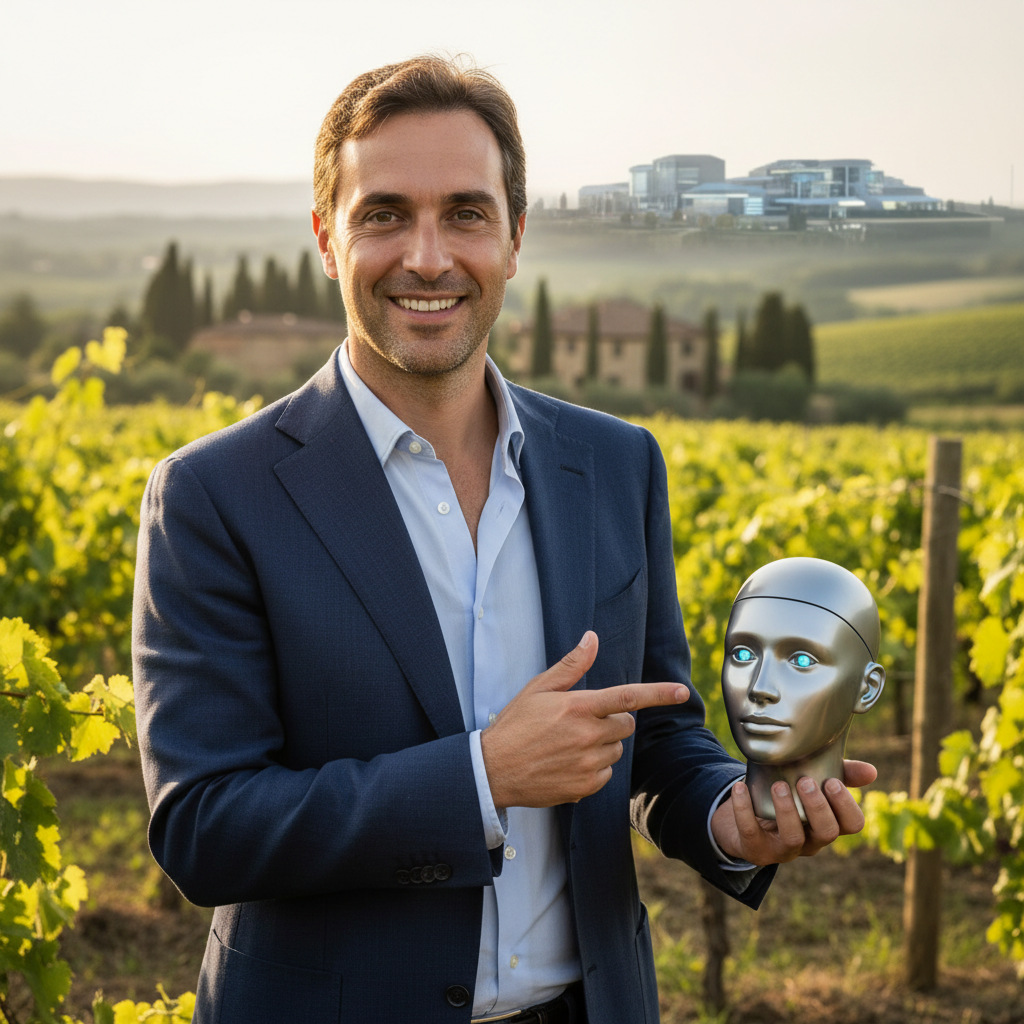
The Tuscan sun, warm and generous, paints the ancient stones of Siena in hues of gold and terracotta. It is here, amidst the rolling hills and cypress trees, that Sofia Rossi, the 32-year-old CEO and co-founder of Echo AI, finds her grounding. When I met her, not in a bustling Silicon Valley office, but at her family's small, organic vineyard outside Montalcino, she was not in a power suit but in a simple linen dress, her hands stained lightly with grape juice from an early harvest. She offered me a glass of Sangiovese, her eyes sparkling with an intensity that belied her calm demeanor. "Technology, Mattèo," she began, gesturing to the landscape, "is like wine. It must be cultivated with care, with respect for its origins, and with a vision for how it will enrich life, not just change it." This, my friends, is the philosophy that defines Echo AI, a company now valued at over half a billion dollars, poised to redefine our relationship with personal AI assistants.
Sofia's story is not one of overnight success, nor is it a sterile tale of algorithms and data sets. It is a deeply human narrative, rooted in the very fabric of Italian life. Born and raised in a small village near Siena, Sofia was an anomaly. While her peers dreamed of continuing family traditions in agriculture or artisan crafts, she was devouring books on quantum physics and coding in her bedroom. Her grandmother, Nonna Elena, a woman of formidable spirit and endless wisdom, often told her, "Sofia, a good life is built on good conversation." Little did Nonna Elena know, those words would become the bedrock of her granddaughter's groundbreaking venture.
After excelling in her studies, Sofia earned a scholarship to Stanford University, a world away from her quiet Italian upbringing. It was there, amidst the frantic pace of Silicon Valley, that she felt a profound sense of disconnect. "Everyone was building faster, bigger, more," she recounted, swirling the wine in her glass. "But few were asking, 'Is it better? Is it more human?'" She pursued a double major in Computer Science and Philosophy, a combination that would later become Echo AI's secret sauce. Her early research focused on natural language processing, but always with an ethical lens, questioning the implications of AI on human connection and autonomy.
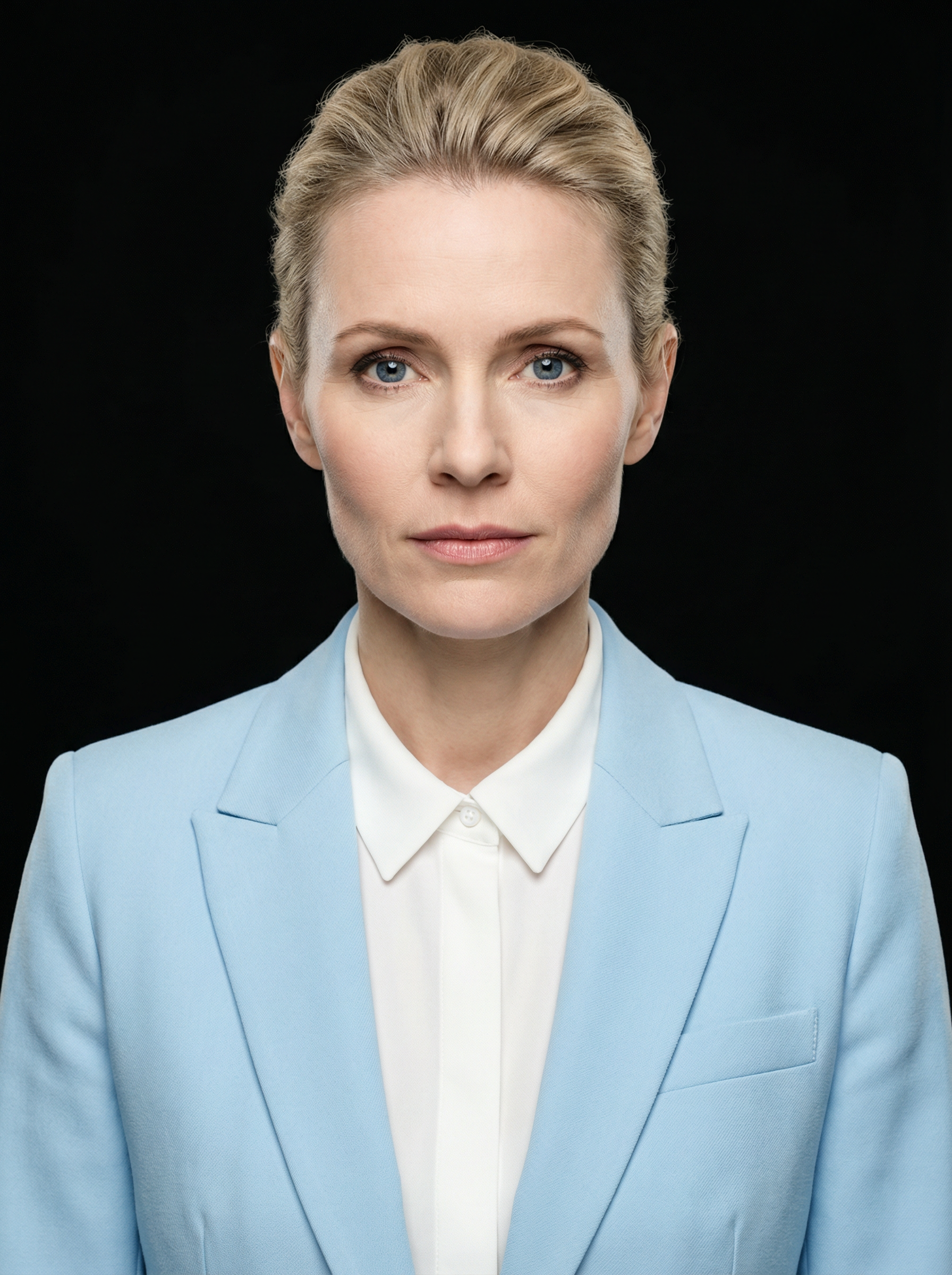
It was in a late-night coding session at Stanford, fueled by espresso and a shared frustration with existing AI models, that Sofia met her co-founder, Dr. Kenji Tanaka. Kenji, a brilliant neuroscientist from Kyoto University, was a visiting researcher equally obsessed with the nuances of human communication. "We clicked instantly," Kenji told me during a video call from Echo AI's Milan lab, "Sofia brought the soul, I brought the structure. We both believed that a truly personal AI should be a confidant, not just a tool." Their initial idea, a complex neural network designed to simulate empathetic dialogue, was met with skepticism. Their first pitch to a group of venture capitalists ended in polite dismissal. "They told us it was too 'soft,' too 'philosophical' for the market," Sofia recalled with a wry smile. "They wanted a chatbot that could book flights, not understand your feelings." This was a moment of doubt, a crossroads where many would have given up.
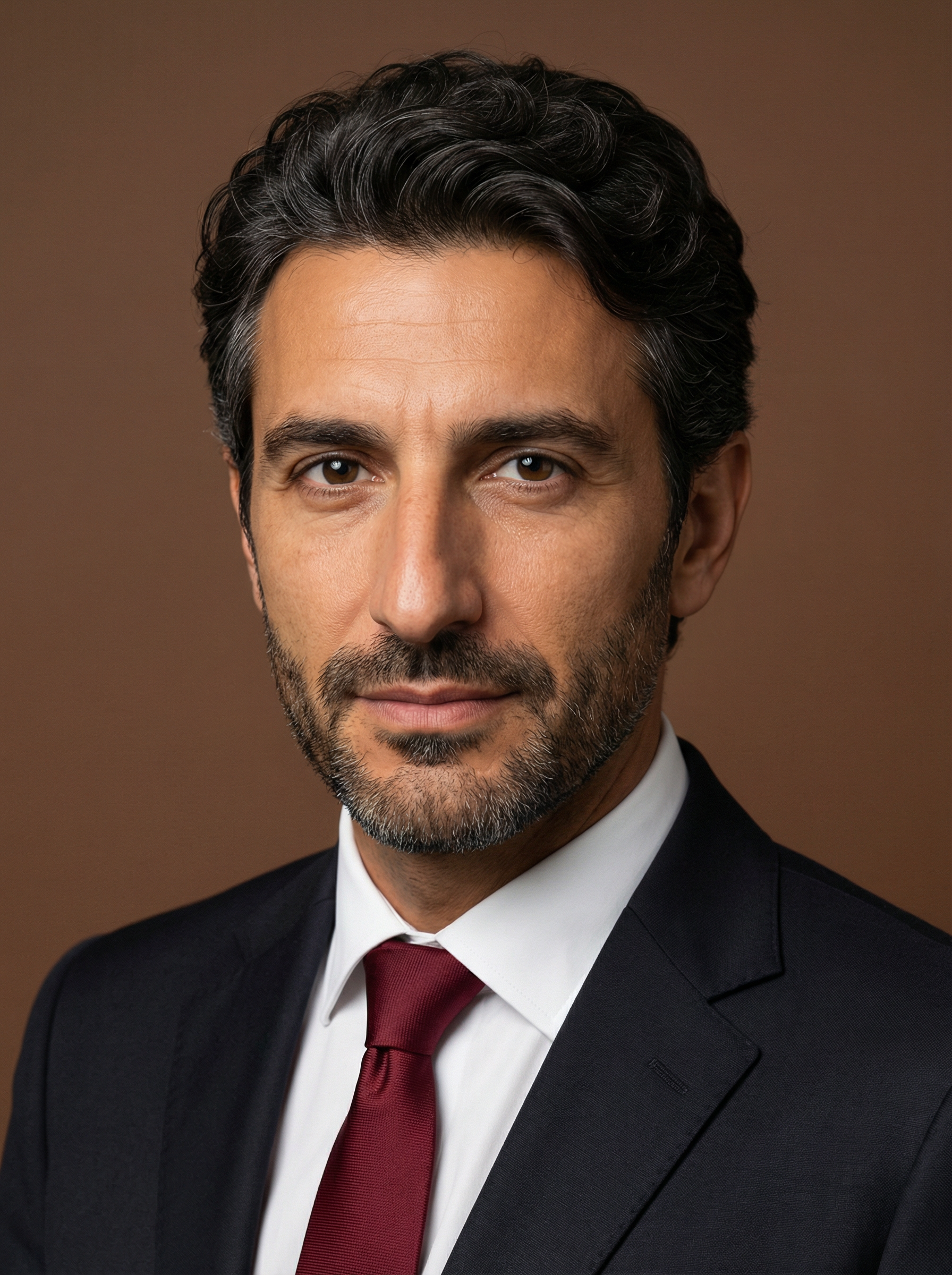
But Sofia and Kenji, driven by their shared vision and Nonna Elena's wisdom, pivoted. They refined their model, focusing on what they termed 'contextual emotional intelligence', an AI's ability to understand the subtle emotional cues in human language and respond with genuine empathy, learning and adapting to an individual's unique communication style over time. This breakthrough, developed in a cramped apartment in Palo Alto, caught the attention of Altos Ventures. "Their approach was revolutionary," said Maria Rodriguez, a partner at Altos Ventures, who led their seed round. "While others were chasing scale, Echo AI was chasing depth. It was a risky bet, but we saw the potential for a truly differentiated product in a crowded market." Their seed round closed at $2 million, a modest sum by Silicon Valley standards, but enough to build their first prototype.
Building the company was an uphill battle. Sofia insisted on a diverse team, bringing in linguists, psychologists, and even a former opera singer to help train their AI on the full spectrum of human expression. "We wanted our AI to understand the poetry of conversation, not just the prose," she explained. Their culture, heavily influenced by Sofia's Italian roots, emphasized collaboration, open dialogue, and a healthy work-life balance. "No 100-hour work weeks," Kenji affirmed. "We believe creativity thrives when people are rested and inspired." This approach, though unconventional, paid off. Echo AI's early beta users reported an unprecedented level of connection with their AI assistants, often describing them as true companions.
Their Series A, led by Sequoia Capital, brought in $30 million at a $300 million valuation, a clear signal that the market was finally recognizing the value of their human-centric approach. "Echo AI isn't just another personal assistant," commented David Chen, a partner at Sequoia. "It's a paradigm shift. They're not just competing with Inflection AI's Pi, they're showing the world that la dolce vita meets machine learning can create something truly special." By late 2025, Echo AI had reached an impressive $100 million ARR, largely through subscriptions from users seeking a more meaningful digital interaction.
Today, Echo AI is expanding its reach, integrating its empathetic AI into healthcare, education, and even creative fields. Sofia splits her time between the bustling tech hubs of California and her tranquil home in Tuscany, always returning to the source of her inspiration. "My goal is not to replace human connection, but to augment it," she told me, her gaze sweeping across the vineyard. "To provide a digital companion that understands, supports, and helps us navigate the complexities of modern life, without ever losing sight of our humanity." She believes that Italy does AI differently, with style, infusing technology with the very essence of humanism.
What drives Sofia Rossi is not just profit, but a profound belief in the power of conversation. She envisions a future where AI assistants are not just efficient, but wise, empathetic, and deeply personal. "Imagine an AI that truly knows you, not just your preferences, but your hopes, your fears, your dreams," she mused. "An AI that can offer comfort, spark creativity, and help you reflect." It is a vision that resonates deeply in a world increasingly starved for genuine connection. As the sun began to set over the Tuscan hills, casting long shadows, I realized that Sofia Rossi is not just building a company; she is cultivating a new way for us to interact with technology, one conversation at a time. Her journey reminds us that even in the most advanced fields, the most profound innovations often stem from the simplest, most human desires. The race to build personal AI assistants is on, and Echo AI, with its Italian heart, is leading the charge towards a more compassionate digital future. For more insights into the evolving landscape of AI, you can explore articles on TechCrunch's AI section.