
The digital landscape of April 2026 feels increasingly like a geopolitical chessboard, with artificial intelligence as the most coveted, and potentially most dangerous, piece. Nations are scrambling to establish their own regulatory frameworks, often with divergent priorities and methods. This fragmentation, I contend, risks creating a patchwork of rules that could stifle innovation, exacerbate inequalities, and critically, fail to address the truly global risks posed by advanced AI systems. From my vantage point in Canada, a nation often lauded for its pragmatic approach to technology and its commitment to multilateralism, the question of international AI governance is not merely academic; it is a matter of profound national and global security.
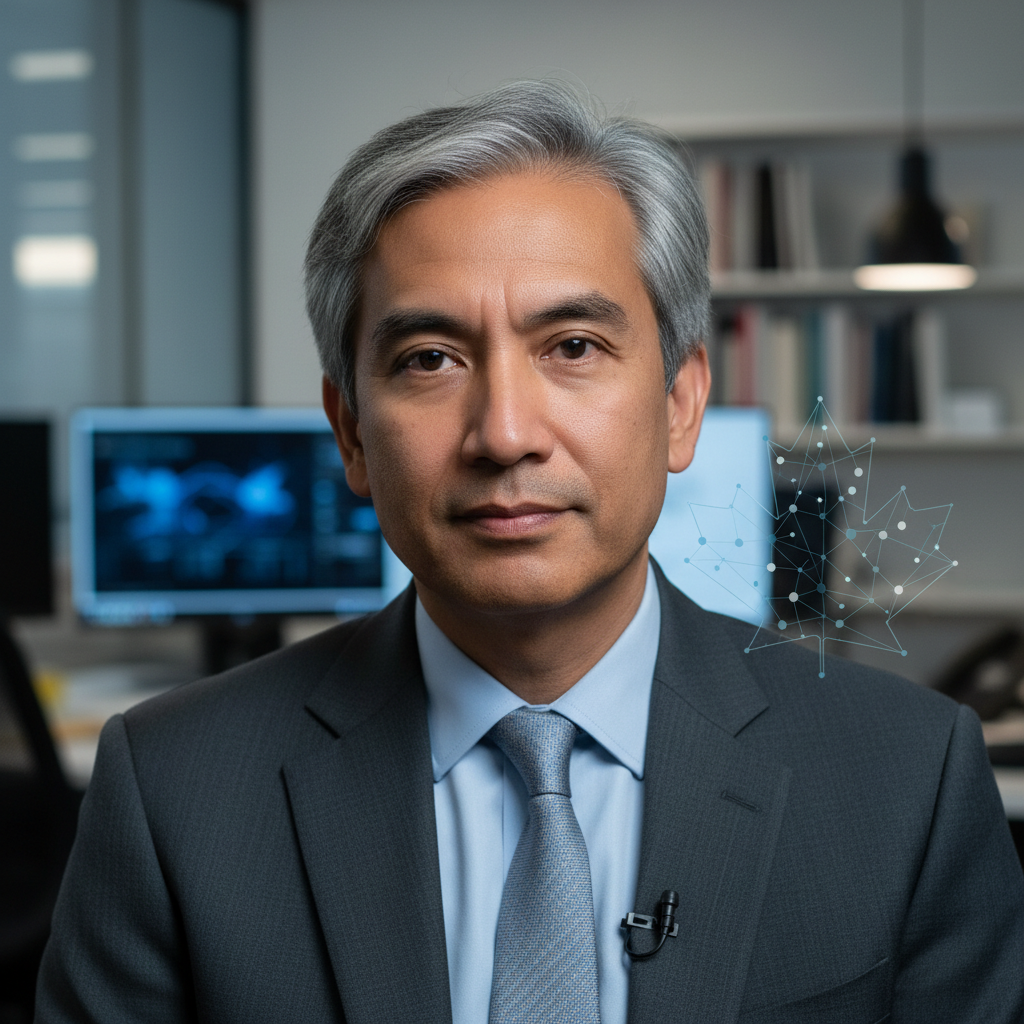
To dissect this complex challenge, I recently sought the insights of one of Canada's most distinguished minds in artificial intelligence, Dr. Yoshua Bengio. A Turing Award laureate and the scientific director of Mila, the Quebec Artificial Intelligence Institute, Bengio has been a vocal proponent of responsible AI development and a key figure in the global conversation on AI ethics. His work, rooted in Montreal, has not only advanced the fundamental science of deep learning but has also consistently pushed for a human-centric approach to its deployment. He is not merely an observer, but an architect of the AI future, making his perspective particularly salient.
Dr. Bengio’s career trajectory is a testament to Canadian ingenuity and collaborative spirit. Educated at McGill University and with postdoctoral work at MIT and Bell Labs, he returned to Montreal to build a world-class research hub. His contributions to neural networks, particularly in recurrent neural networks and generative adversarial networks, have been foundational to the current AI boom. Yet, despite his deep involvement in the technological advancements, he has consistently sounded alarms about the potential societal ramifications. This dual perspective, both builder and critic, lends considerable weight to his pronouncements on governance.
When we discuss the current state of global AI regulation, Dr. Bengio does not mince words. He has frequently emphasized the urgency of the situation, particularly regarding the potential for misuse and the need for robust safety mechanisms. “We need to make sure that we have strong safety measures in place, and that we train the AI systems to be aligned with human values,” Bengio stated in a past interview, a sentiment he reiterated in our conversation. This alignment, he argues, is not a trivial technical problem but a profound philosophical and societal one, requiring broad consensus.
His concerns extend beyond mere technical safeguards. He has been a prominent voice advocating for a global body to oversee AI development, drawing parallels to organizations like the International Atomic Energy Agency (iaea) for nuclear technology. “We need some kind of international organization that can monitor the most powerful AI systems, ensure their safety, and prevent their misuse,” he has publicly suggested. This vision directly confronts the current trend of nationalistic AI strategies, where countries like the United States, China, and the European Union are each crafting their own distinct regulatory frameworks. The Canadian approach deserves more scrutiny in this context, as our government has also been developing its own AI strategy, attempting to balance innovation with ethical considerations.
Dr. Bengio’s perspective is that fragmentation is not merely inefficient; it is dangerous. If each nation develops its own standards, without a common baseline, the risk of a “race to the bottom” in terms of safety and ethics becomes very real. Companies might gravitate towards jurisdictions with the weakest oversight, potentially leading to catastrophic outcomes. The data suggests a different conclusion than the current trajectory of isolated national efforts, pointing instead towards a need for unified action.
He has also been critical of the rapid deployment of powerful AI models without sufficient public discourse or regulatory guardrails. He has often pointed out the inherent risks of systems that can generate convincing misinformation or be weaponized. “The potential for harm is significant, and we need to be proactive, not reactive,” he has asserted. This proactive stance is particularly challenging given the pace of AI development, where breakthrough models from companies like OpenAI, Google DeepMind, and Anthropic are released with startling regularity, often outpacing legislative efforts.
In our discussion, Dr. Bengio highlighted the unique role Canada could play. As a middle power with a strong reputation for diplomacy and a significant AI research ecosystem, Canada could serve as a bridge builder in these international discussions. He believes that fostering collaboration among leading AI research institutions, such as Mila, the Vector Institute in Toronto, and the Alberta Machine Intelligence Institute (Amii), could help establish best practices that transcend national borders. These institutes, funded in part by the Canadian government, are already deeply integrated into the global research community, offering a natural platform for dialogue.
His vision for the future is not one of technological stagnation, but of responsible progress. He sees a future where AI can solve some of humanity’s most pressing problems, from climate change to disease, but only if developed with foresight and collective responsibility. This requires a shift in mindset, moving away from purely competitive national interests towards a shared global imperative. “This is not just about technology, it’s about our collective future,” he stated, emphasizing the moral dimension of the challenge. He advocates for transparency in AI development, open scientific collaboration, and public education to ensure that citizens understand both the promise and the peril.
Let's separate the marketing from the reality. While many governments speak of international cooperation, the practical implementation remains elusive. The European Union’s AI Act, for instance, represents a significant step, but it is a regional framework, not a global one. The United States has issued executive orders and voluntary commitments, and China has its own comprehensive regulatory approach. These efforts, while valuable individually, do not inherently coalesce into a unified global strategy. Dr. Bengio’s call for a truly international body, with enforcement capabilities and a mandate to monitor advanced AI, remains a distant goal, yet one he believes is absolutely essential.
The path forward, as articulated by Dr. Bengio, involves sustained diplomatic efforts, shared research agendas focused on safety and ethics, and a willingness from major powers to cede some degree of national autonomy for the greater good. It is a formidable task, but one that the stakes demand. The alternative, a fragmented and unregulated AI landscape, carries risks that far outweigh the challenges of cooperation. As Canada continues to navigate its own AI journey, listening to voices like Dr. Bengio’s becomes not just advisable, but imperative, for the sake of our collective future. For more on the technical aspects of AI safety, one might consult research publications on arXiv or analyses from MIT Technology Review. The global community must decide if it will build bridges or walls in the face of this transformative technology. The clock, it seems, is ticking. For broader industry insights, TechCrunch regularly covers developments in AI startups and major players.