
The fluorescent lights of the 'Beograd na Vodi' office tower hummed, casting a sterile glow on Marko Petrović's desk. He adjusted his glasses, a slight tremor in his hand as he reviewed the latest performance metrics. Not just his sales figures, mind you, but the 'efficiency report' generated by the new AI system, Soko, deployed across his company, Balkan Logistics. It tracked everything: time spent at his desk, breaks taken, even his perceived 'engagement' during video calls, all fed by the ubiquitous cameras now adorning every corner of the office and, increasingly, the city streets outside. Marko felt a knot in his stomach. He knew the system was meant to deter theft and improve security, but it felt more like a digital leash. This is the new reality in Belgrade, where the promise of smart city safety clashes daily with the quiet erosion of personal space.
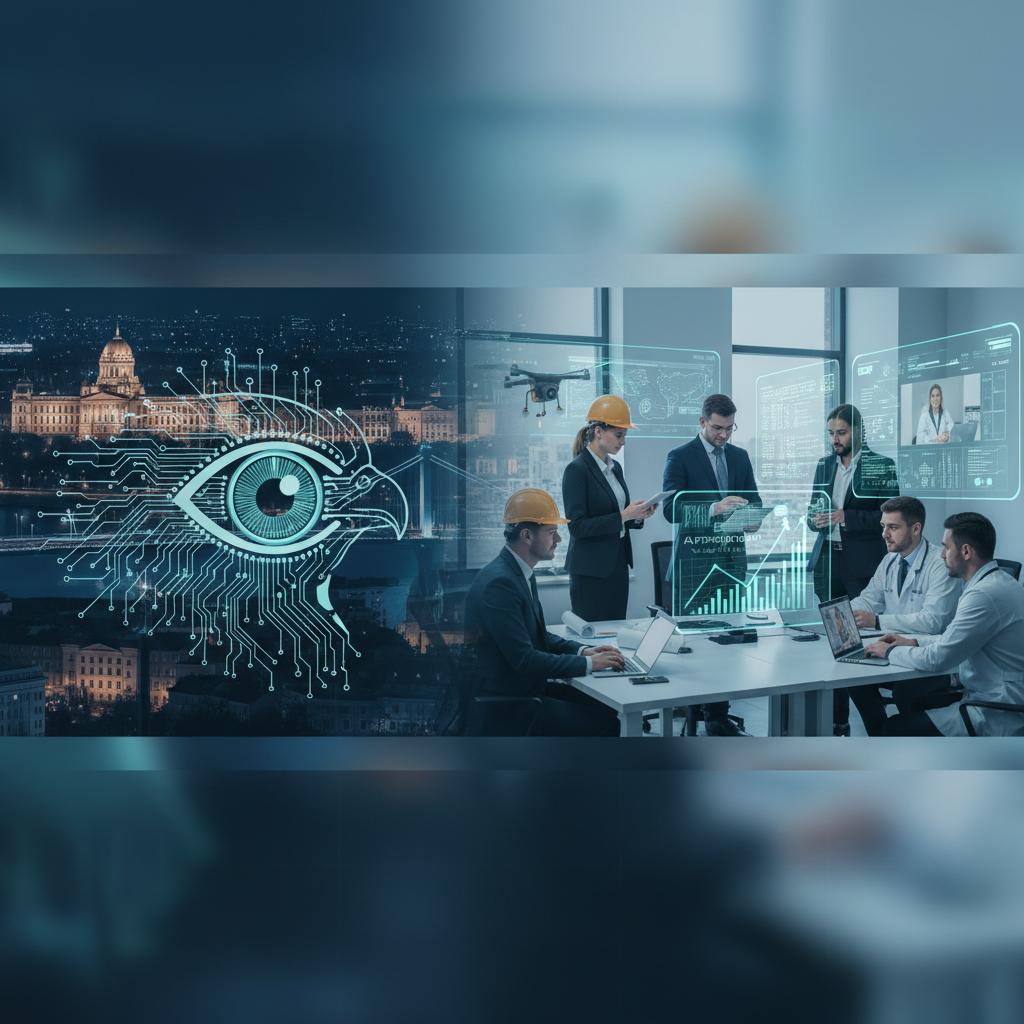
Belgrade's tech scene is real, not hype, and it is grappling with this duality. The adoption of AI-powered surveillance in Serbian smart cities, initially championed for public safety and traffic management, has rapidly seeped into the corporate world. Data from the Serbian Chamber of Commerce and Industry indicates that nearly 45% of large enterprises in Belgrade and Novi Sad have integrated some form of AI surveillance into their operations by early 2026, up from a mere 12% three years prior. This surge is driven by a perceived return on investment (ROI) in reducing shrinkage, improving operational efficiency, and enhancing employee accountability. A recent study by the Serbian Institute for Digital Transformation reported an average 18% reduction in internal theft and a 7% increase in documented productivity across companies that deployed advanced AI monitoring solutions like those from Hikvision or local startup VisionGuard.
However, this isn't a simple story of progress. For every winner, there's a company struggling to balance oversight with morale. Take 'Srbija Express,' a major delivery service. They implemented a comprehensive AI system, including vehicle telematics and facial recognition at depots, to combat package theft and optimize routes. Their operational costs dropped by 15% in the first year, a clear win. "The system has paid for itself twice over," stated Goran Ilić, CEO of Srbija Express. "We can identify bottlenecks, prevent losses, and ensure our drivers are adhering to safety protocols. It's about accountability, not just surveillance." Ilić's perspective reflects a common sentiment among executives, focusing on tangible gains and the clear benefits of data-driven decision making.
On the other hand, smaller firms, particularly in creative industries, have faced significant pushback. 'Kreativni Kvadrat,' a design agency in Dorćol, experimented with AI-powered 'focus tracking' software. Within six months, 30% of their staff, mostly younger designers, resigned. "It felt like we were being watched by Big Brother, not supported by our employer," explained Ana Jovanović, a former lead designer at Kreativni Kvadrat, now working remotely for a German firm. "The constant pressure to appear 'productive' on camera stifled creativity. We are not factory robots." This highlights a critical challenge: while AI can measure output, it often fails to understand the nuances of intellectual or creative work, leading to a chilling effect on innovation and employee well-being.
Worker perspectives are, predictably, polarized. A survey conducted by the Serbian Trade Unions Confederation in late 2025 found that 62% of employees in monitored workplaces felt increased stress and a lack of trust from their employers. Only 20% felt safer or more secure due to the surveillance. "The Balkans have a different relationship with technology," notes Dragan Nikolić, a labor rights advocate based in Niš. "We've seen enough control in our history to be wary of new forms of it, even when packaged as 'smart solutions.'" He argues that the legal framework for employee privacy in Serbia, while present, has not kept pace with the rapid deployment of these advanced AI systems. The European Union's AI Act, which came into full effect in early 2026, offers some guidance, but its implementation and enforcement locally remain a work in progress, particularly regarding private sector use of biometric and behavioral data.
Expert analysis suggests a difficult road ahead. Professor Jelena Marković, head of the AI Ethics Lab at the University of Belgrade, emphasizes the need for transparency and clear guidelines. "Companies often deploy these systems without fully understanding the ethical implications or engaging employees in the process," she explains. "The data might show an ROI, but it rarely accounts for the cost of eroded trust, increased turnover, or a decline in morale. We need a 'human-in-the-loop' approach, not just an 'AI-in-the-room' approach." She points to the potential for bias in AI algorithms, particularly in facial recognition and behavior analysis, which can disproportionately affect certain groups of workers. MIT Technology Review has extensively covered these biases in global contexts, and Serbia is not immune.
What's coming next? The trajectory suggests continued integration of AI surveillance, but with increasing pressure for regulation and ethical implementation. Companies like 'SmartCity Solutions,' a Serbian startup specializing in urban AI, are already developing more privacy-preserving technologies, such as edge AI that processes data locally and only sends anonymized alerts, rather than raw footage. This approach, which reduces the need for constant cloud connectivity and massive data storage, could offer a middle ground. The Serbian government, under pressure from civil society groups and in alignment with broader European trends, is expected to introduce stricter data protection amendments specifically addressing workplace AI surveillance by late 2026. This will likely mandate clearer consent mechanisms, regular impact assessments, and stronger oversight bodies.
Ultimately, let's talk about what's actually working. The technology itself is powerful, no doubt. Companies like Google and Microsoft are pouring billions into AI research, and their tools are becoming more sophisticated by the day. But the real challenge isn't the AI, it's us: how we choose to deploy it, how we balance efficiency with humanity, and how we ensure that our smart cities don't become surveillance states, especially in the workplace. For Marko Petrović and countless others in Serbia, the question isn't whether AI is coming, but whether it will empower or enslave. The answer, as always, lies in the choices we make today. We must ensure that the pursuit of safety does not come at the expense of fundamental freedoms and human dignity. For more on the global debate around AI ethics, see reports from Wired and Reuters. The conversation is far from over.