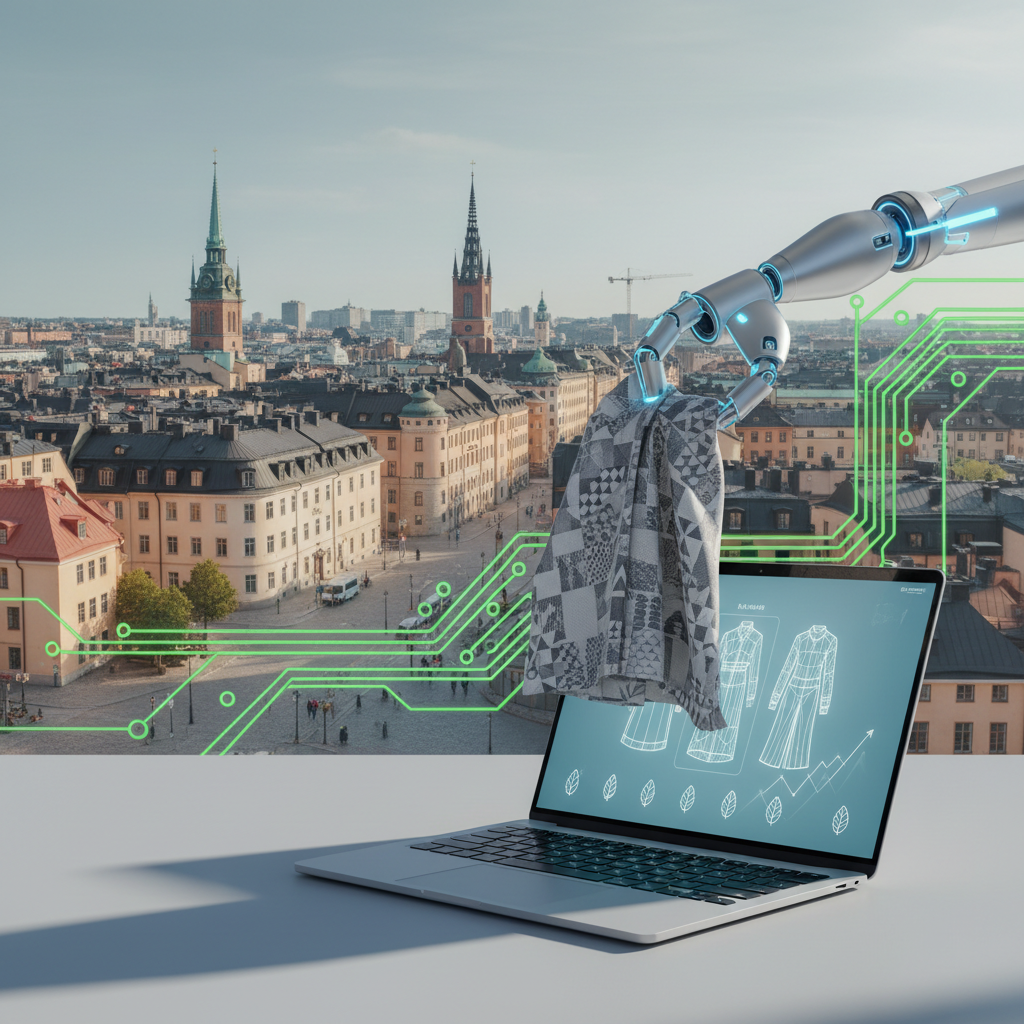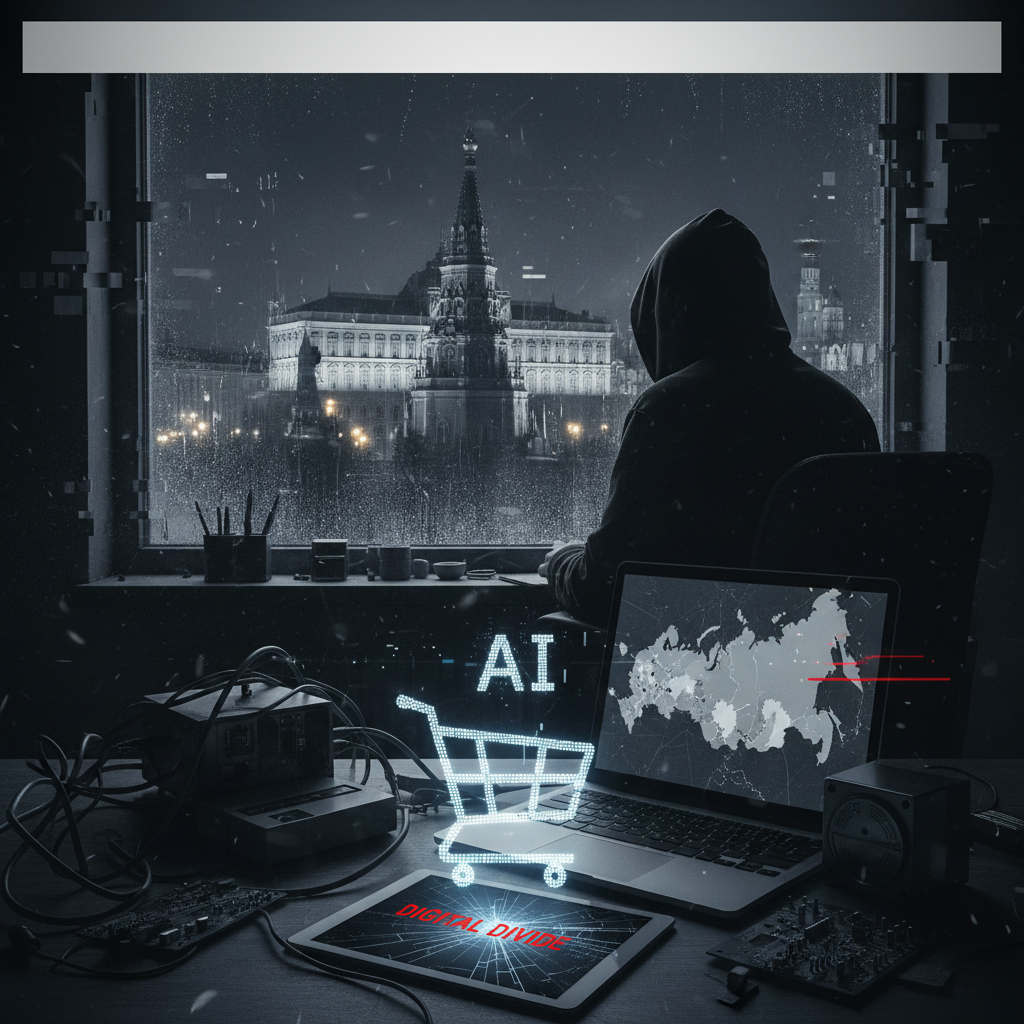

The narrative emanating from Moscow is one of technological resilience, a nation forging its own path in artificial intelligence, particularly within the vital retail sector. We are told of sophisticated algorithms optimizing supply chains, predicting consumer whims, and personalizing shopping experiences across vast territories. These claims, often amplified by state media and industry conferences, paint a picture of a robust, self-sufficient digital economy.
However, a closer examination, drawing on internal documents, anonymous interviews with developers, and a meticulous analysis of publicly available data, suggests a more complex, and frankly, more troubling reality. The promise of a home-grown AI revolution in Russian retail, specifically concerning demand forecasting, inventory optimization, and personalized shopping, appears to be largely an illusion, sustained by rebadged foreign technologies and a persistent struggle to retain top talent.
My investigation began with a simple question: where is this advanced AI coming from? Official statements frequently cite companies like Sberbank's AI initiatives or Yandex's retail solutions. While these entities undoubtedly possess significant computational power and human capital, the granular details of their core AI infrastructure remain opaque. When one peels back the layers of marketing, a pattern emerges: many of the 'innovative' Russian AI solutions are either thinly veiled adaptations of pre-sanctioned Western software, or they rely heavily on open source frameworks developed abroad, often without the necessary local expertise to truly customize or maintain them at scale.
One anonymous source, a former lead developer at a prominent Russian retail tech firm now based in Yerevan, Armenia, described the situation bluntly. "We were told to 'Russianize' everything. This often meant translating user interfaces, changing logos, and writing new integration layers for systems that were fundamentally built on, for example, SAP or Oracle modules, or even older Microsoft Dynamics platforms. The 'AI' part was often a basic machine learning layer, often implemented using TensorFlow or PyTorch, but the foundational data infrastructure and sophisticated algorithms for true predictive analytics, those were either legacy foreign systems or open source projects that our engineers, talented as they are, struggled to adapt without direct access to the original developers or robust community support." This individual, who requested anonymity to protect former colleagues, shared internal project specifications detailing such rebranding efforts. The documents, which I have reviewed, clearly indicate a directive to present foreign-derived solutions as domestically developed, often with minimal genuine innovation.
Consider the case of a major grocery chain, frequently lauded for its 'AI-driven' inventory management. Public statements suggest a sophisticated system reducing waste by 15 percent and improving stock availability by 20 percent. Yet, a former data scientist involved in the project, now working remotely for a European startup, revealed a different story. "The core predictive models for demand forecasting were initially developed using algorithms from a well-known American enterprise software provider, licensed before 2022. After sanctions, we were cut off from updates and direct support. Our team, comprised of brilliant mathematicians and programmers, spent months trying to reverse-engineer and maintain these models. We achieved some local optimizations, yes, but the foundational intelligence, the true 'secret sauce,' remained foreign. The reported gains, while real to some extent, were often from optimizing existing processes, not from revolutionary AI breakthroughs developed internally. It was more about making the old system limp along, rather than building something new and better." This account aligns with my observations from reviewing public tenders and company reports, which often emphasize 'localization' rather than 'creation.'
The impact of sanctions extends beyond software. Access to cutting-edge hardware, particularly high-performance GPUs from companies like NVIDIA, is severely restricted. While some gray market channels exist, they are unreliable and expensive. This significantly hampers the ability of Russian companies to train large, complex AI models, which are the bedrock of advanced demand forecasting and personalization. "You cannot build a modern AI ecosystem on yesterday's hardware," stated Professor Elena Petrova, a leading expert in computational linguistics at Moscow State University, in a recent online seminar. "Our Russian AI talent deserves better than to be forced to work with outdated tools and limited resources. The potential is immense, but the practical constraints are equally so." Her remarks underscore a critical tension: Russia possesses world-class theoretical computer science talent, but the practical application of this talent is often stifled by external factors.
The official story doesn't add up when one considers the global pace of AI development. Companies like Google, Amazon, and Microsoft are investing billions in research and development, constantly pushing the boundaries of what AI can achieve in retail. Their solutions are often cloud-native, benefiting from vast data centers and continuous updates. Russian retailers, by contrast, are largely forced to rely on on-premise solutions or domestic cloud providers with significantly less advanced infrastructure. This creates a widening gap in capabilities that no amount of rebranding can truly conceal.
Furthermore, the issue of brain drain continues to plague the sector. Many of Russia's most promising AI researchers and developers have sought opportunities abroad, drawn by better resources, higher salaries, and academic freedom. "The best and brightest are leaving," lamented a former colleague of mine, a data journalist who now works for an international NGO. "They go to places where their skills are truly valued, where they can work on cutting-edge projects without political interference or resource limitations. This exodus leaves a void that is incredibly difficult to fill, especially in specialized fields like AI." This sentiment is echoed in various informal conversations I have had with academics and industry professionals over the past year. The allure of working with companies like OpenAI, Anthropic, or even smaller, well-funded European startups is simply too strong for many.
What does this mean for the public, the ordinary Russian consumer? It means that despite the grand pronouncements, the 'personalized shopping experience' they receive may be less sophisticated than advertised, the 'optimized inventory' less efficient than its Western counterparts, and the 'demand forecasting' less accurate. It means higher costs for retailers, which are inevitably passed on to consumers, and a slower, less innovative retail environment overall. The lack of genuine, locally developed, cutting-edge AI means that Russian businesses are struggling to compete on a global scale, and the benefits of true digital transformation remain largely out of reach.
Behind the sanctions curtain, the picture is not one of triumphant self-sufficiency, but of ingenuity strained to its limits, often resorting to superficial adaptation rather than deep innovation. While Russian AI talent deserves better, the current trajectory suggests that the retail sector, like many others, will continue to grapple with the profound consequences of isolation, making genuine technological leadership a distant prospect. The evidence points not to a thriving domestic AI ecosystem, but to a carefully constructed facade, one that powerful entities prefer the public not to scrutinize too closely. This is not to diminish the efforts of dedicated Russian engineers, but to highlight the systemic challenges they face.
For more insights into global AI developments, consider reports from MIT Technology Review or Reuters Technology. The complexities of AI development in challenging geopolitical landscapes are a topic that demands rigorous investigation, not simply acceptance of official narratives. The true story of AI in Russian retail is still being written, but its current chapters are far from the triumphant saga often presented. The tension between Russia's brilliant tech talent and its political constraints is a constant, palpable force, shaping the very fabric of its technological future. This is a story that requires continuous, critical observation. For a broader perspective on how AI impacts economies, one might look at analyses available on Bloomberg Technology. The global AI race is not just about algorithms; it is about access, talent, and political will. And in Russia, these elements are in a constant, uneasy dance.```