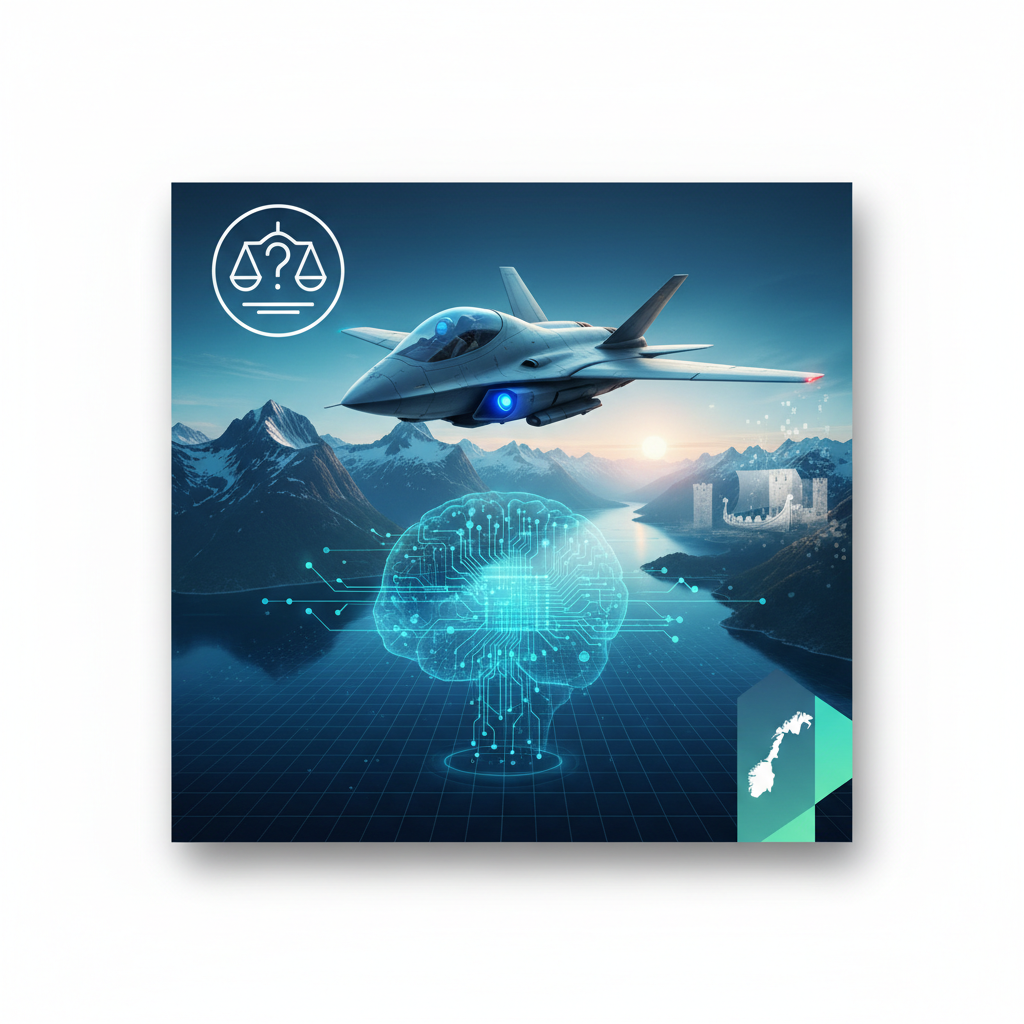

The fjords of Norway, with their ancient, unyielding rock formations, have always taught us a profound lesson: some changes are gradual, geological shifts, while others are sudden, seismic events. In the realm of global defense and artificial intelligence, a seismic event appears to be unfolding with the rapid ascent of Anduril Industries, the brainchild of Oculus VR co-founder Palmer Luckey. This startup is not merely participating in the defense sector; it is fundamentally reshaping it, securing multi-billion dollar contracts from the Pentagon and allied nations at an astonishing pace. The critical question for us at DataGlobal Hub, and indeed for nations like Norway, is whether this represents a new normal in military procurement and operational strategy, or merely a tactical mirage. Let me explain the engineering behind this query.
Historically, defense contractors were behemoths, slow-moving and often mired in decades-long development cycles for hardware-centric systems. Think of the traditional aerospace giants, their processes as intricate and deliberate as a finely woven tapestry. Then came the digital age, and with it, the recognition that software, data, and artificial intelligence would become the decisive factors in modern conflict. Yet, the defense establishment, accustomed to its legacy systems, struggled to adapt. This is where Anduril, founded in 2017, identified its strategic opening. Rather than building tanks or fighter jets, Anduril focuses on autonomous systems, sensor fusion, and AI-powered command and control, leveraging commercial technology development cycles to deliver capabilities at unprecedented speed.
Consider the numbers: Anduril's valuation surged past $8 billion by late 2023, attracting significant investment from venture capital firms like Andreessen Horowitz. In 2022, the company secured a $1 billion contract with the U.S. Special Operations Command for its counter-UAS (Unmanned Aerial System) capabilities, followed by a $967 million contract in early 2023 for its Lattice software platform, designed to integrate various sensors and autonomous assets. More recently, reports indicate a substantial contract with the Royal Australian Navy for autonomous underwater vehicles, underscoring its expanding international footprint. These are not small sums for a relatively young company, and they signal a profound shift in how defense capabilities are conceived, developed, and deployed. The Pentagon, once criticized for its glacial pace, is now actively seeking out agile tech companies.
This rapid adoption is driven by the urgent need for what military strategists term 'mosaic warfare' or 'distributed lethality,' where numerous smaller, interconnected, and often autonomous units can overwhelm an adversary, rather than relying on a few large, expensive platforms. Anduril's Lattice platform acts as the central nervous system for such a network, processing vast amounts of sensor data, identifying threats, and recommending actions with AI-driven precision. It is, in essence, an operating system for the battlefield of the 21st century.
However, the implications are complex, particularly for nations like Norway. Our approach to AI is rooted in trust, transparency, and ethical considerations, principles that extend deeply into any application of technology, especially in defense. The Nordic model extends to technology, emphasizing responsible innovation and societal benefit. This ethos naturally raises questions when confronted with the rapid militarization of AI.