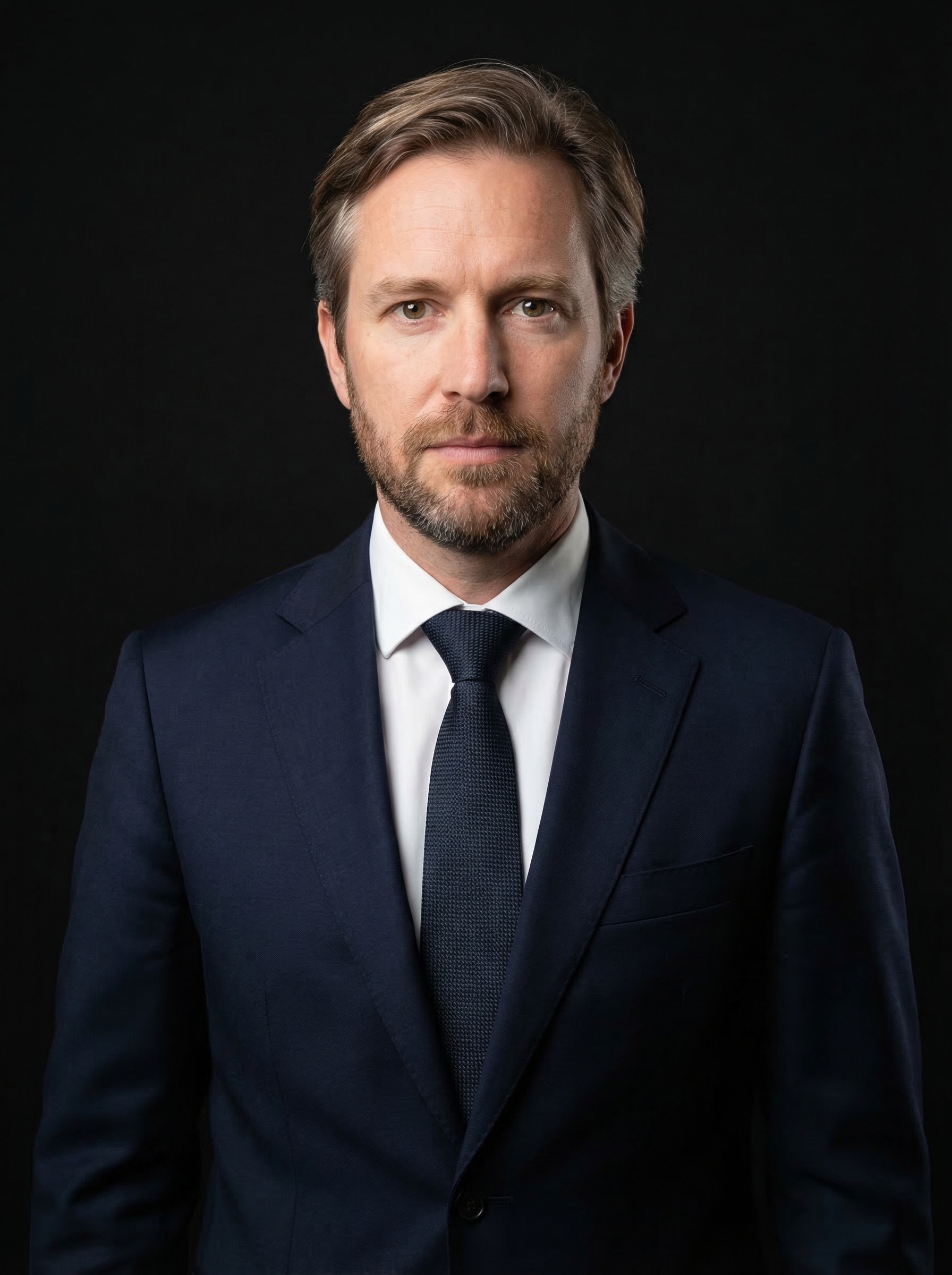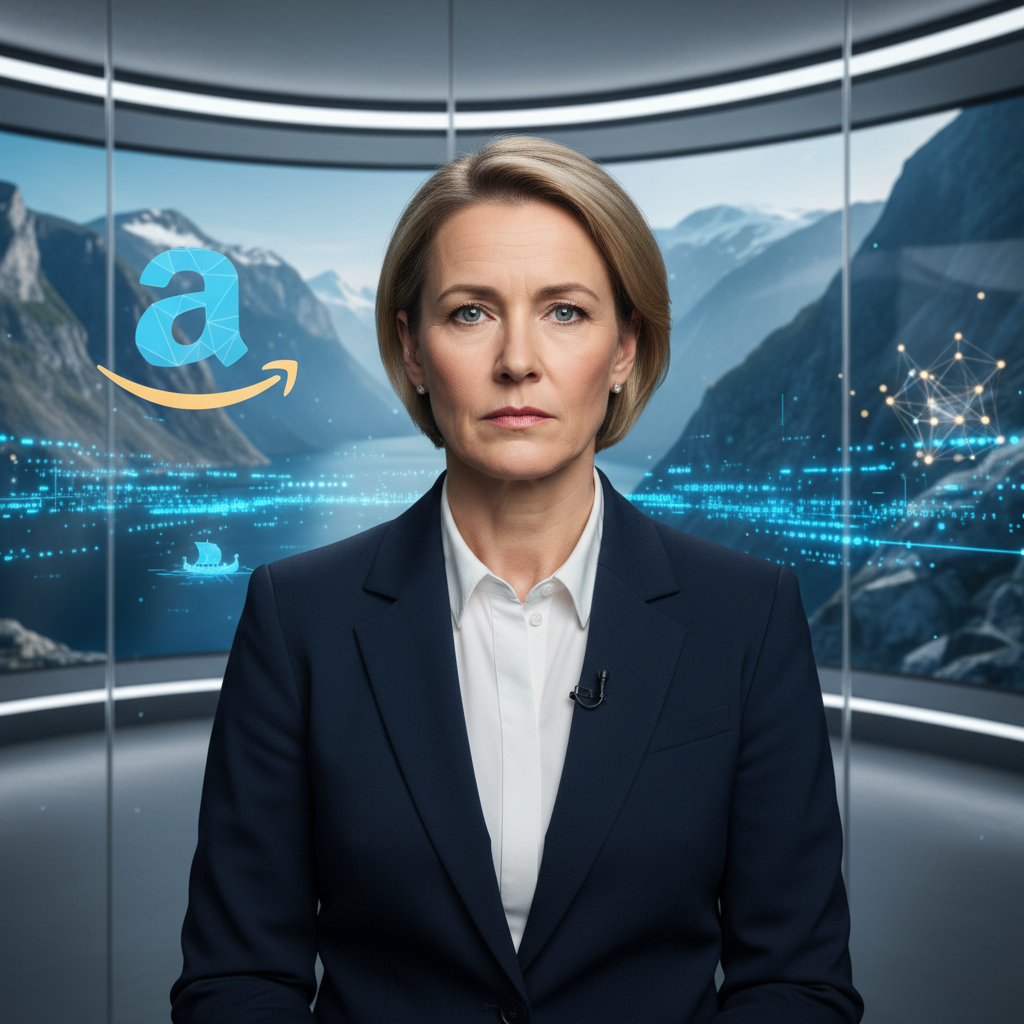

The late afternoon sun, a pale, persistent disc in the Oslo sky, cast long shadows across the polished concrete floors of the Norwegian Centre for Digital Innovation. Dr. Elara Jensen, her silver hair pulled back in a practical bun, greeted me with a firm handshake and a smile that belied the weighty topics we were about to discuss. Her office, overlooking the bustling Aker Brygge, was minimalist yet warm, a reflection of the Nordic design ethos: functional, clean, and deeply considered. As a journalist for DataGlobal Hub, I have traversed countless tech hubs, but Norway, with its unique blend of technological advancement and steadfast commitment to ethical governance, always offers a distinct perspective.
Our conversation began, as many do in this part of the world, with a recognition of foundational principles. "The advent of large language models like Anthropic's Claude represents a seismic shift, not merely an incremental improvement," Dr. Jensen began, gesturing towards a digital display showing a complex neural network architecture. "Its enterprise adoption, particularly within the Amazon Web Services ecosystem, is a powerful combination. However, for a nation like Norway, where data privacy and ethical AI development are not just regulatory checkboxes but deeply ingrained cultural values, this presents both immense promise and significant questions."
Dr. Jensen, a former lead researcher at Sintef and now a prominent voice on AI governance for the Norwegian Research Council, has been at the forefront of shaping the country's approach to emerging technologies. Her background, steeped in computational linguistics and philosophy, grants her a rare ability to bridge the technical and the ethical, explaining complex systems with the clarity of a fjord. "Consider the analogy of our sovereign wealth fund, the Government Pension Fund Global," she offered, leaning forward. "It is built on principles of long-term stewardship, transparency, and ethical investment. Our approach to AI is rooted in trust, and we must apply similar rigor to the digital assets that will power our future economy."
Anthropic's Claude, known for its constitutional AI approach and emphasis on safety, has seen a remarkable surge in enterprise interest. Recent reports indicate a 300 percent increase in enterprise API calls over the last six months, with Amazon Web Services providing the critical infrastructure for many of these deployments. This partnership, solidified by Amazon's substantial investment in Anthropic, creates a formidable offering for businesses seeking robust, scalable AI solutions.
"The technical capabilities of Claude 3 Opus, for instance, are undeniable," Dr. Jensen acknowledged. "Its contextual understanding and reasoning abilities are pushing boundaries. For Norwegian companies in sectors like energy, maritime, and aquaculture, where data volumes are immense and precision is paramount, the potential for efficiency gains is staggering. Imagine optimizing offshore wind farm maintenance schedules, predicting fish stock movements with greater accuracy, or streamlining complex logistics in our shipping industry. The economic upside is clear, potentially adding an estimated 2.5 percent to Norway's GDP by 2030, according to our internal projections, if deployed thoughtfully."
However, the 'thoughtfully' is where Dr. Jensen's focus sharpens. "The challenge, and indeed the opportunity, lies in how we integrate these powerful tools while upholding our values," she stated. "When an enterprise adopts a model like Claude, hosted on AWS, it's not just about processing data. It's about entrusting critical operational intelligence, and potentially sensitive national data, to external systems. The Nordic model extends to technology, meaning we prioritize collective well-being and robust regulatory frameworks alongside innovation."
I pressed her on the specifics of these concerns. "Data residency is a primary factor," she explained. "While AWS has a strong presence globally, including regions in Europe, ensuring that data processed by Claude for Norwegian entities remains within our jurisdictional control, or at least under robust European data protection standards, is non-negotiable. We are seeing a growing demand for sovereign cloud solutions, and this partnership needs to demonstrate clear pathways for that."
Another critical area is explainability and auditability. "Enterprises need to understand not just what Claude does, but how it arrives at its conclusions, particularly in regulated industries," Dr. Jensen elaborated. "If Claude is advising on, say, the optimal drilling strategy for a new oil field, or assessing the environmental impact of a new industrial project, the 'black box' problem becomes a significant governance issue. We need transparency, not just in the model's training data, but in its inference process. Let me explain the engineering: it's about dissecting the decision pathways, not just observing the output."
Dr. Jensen cited a recent case where a major Norwegian financial institution, exploring Claude for fraud detection, encountered friction. "They found Claude's accuracy impressive, achieving a 92 percent detection rate on synthetic data, but the lack of granular explainability for individual decisions was a hurdle for compliance officers," she revealed. "They needed to justify every flagged transaction to regulators, and a probabilistic 'I think this is fraud' was insufficient. Anthropic and Amazon are working on solutions, of course, but it highlights the gap between cutting-edge AI and existing regulatory realities."
The conversation shifted to the broader implications of such powerful AI partnerships. "There is a critical need for local expertise," Dr. Jensen stressed. "We cannot simply import these technologies; we must cultivate the talent to understand, adapt, and govern them. The Norwegian government, through initiatives like the National AI Strategy, is investing heavily in AI education and research, aiming to produce 5,000 new AI specialists by 2028. This is not just about technical skills, but about fostering a deep understanding of the ethical and societal implications."
Her vision for the future was pragmatic and hopeful. "I believe that partnerships like Anthropic and Amazon's can thrive in Norway, but it requires a collaborative approach," she concluded, as the Oslo lights began to twinkle outside. "It means Anthropic continuing to prioritize safety and constitutional AI principles, and Amazon providing the secure, transparent, and regionally compliant infrastructure that allows Norwegian enterprises to innovate responsibly. It's about building trust, byte by byte, and ensuring that these powerful tools serve our society's long-term interests, not just short-term gains. The digital future must be built on solid ground, much like our Viking ancestors built their longships: with precision, foresight, and an unwavering respect for the forces they sought to harness." The path ahead is not without its navigational hazards, but Norway, with its characteristic blend of caution and ambition, appears ready to chart its course through the evolving AI landscape. For more insights into how European nations are navigating AI governance, readers might find this overview from MIT Technology Review insightful, or explore the latest industry trends on TechCrunch. The ongoing dialogue between innovation and regulation is a global one, and Norway's contributions are proving increasingly vital. For further reading on Anthropic's specific approaches, their official website provides detailed documentation.