
AI's Gendered Impact: Norwegian Women Navigate the Digital Economy's Shifting Tides
As AI reshapes the European economy, Norwegian women face unique challenges and opportunities. Experts warn against exacerbating existing gender disparities while highlighting potential for new, inclusive growth.
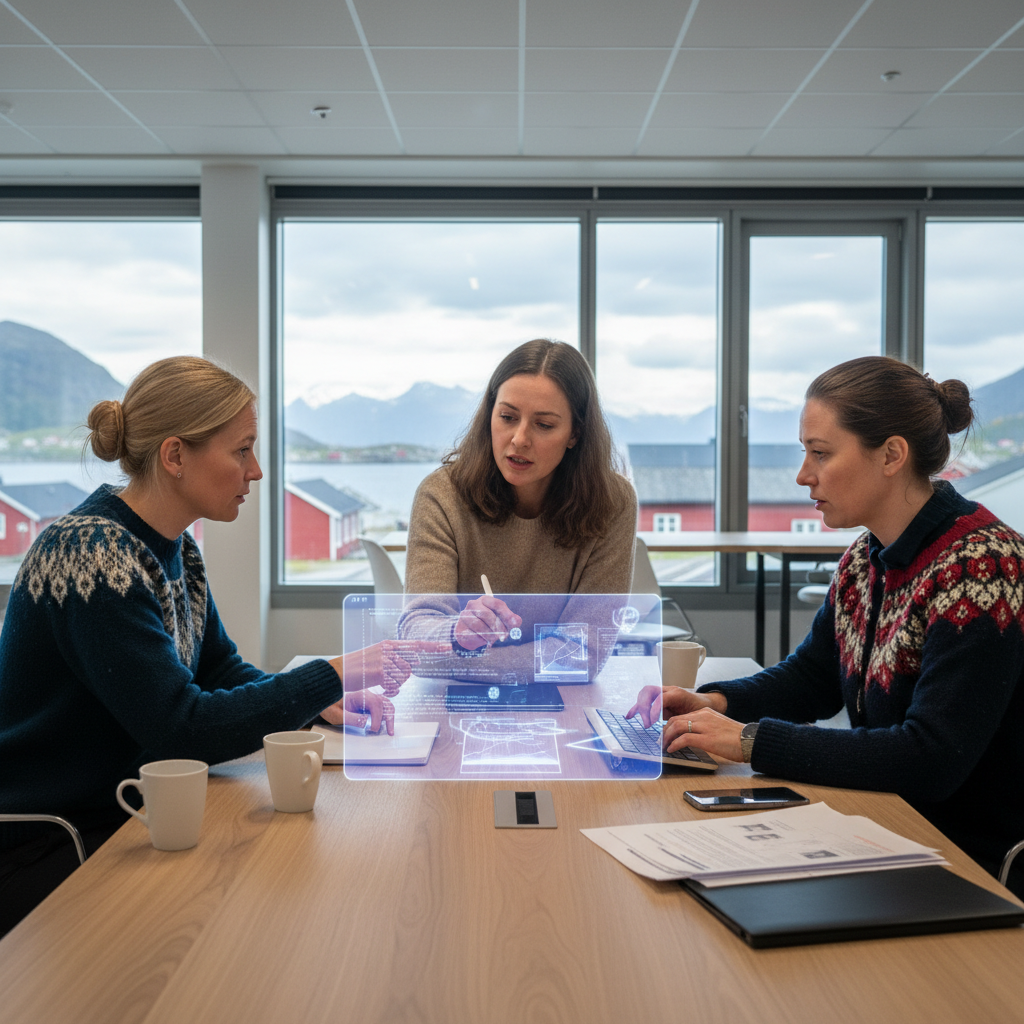

OSLO – The rapid integration of Artificial Intelligence into the European economic landscape is prompting both excitement and apprehension, particularly for Norway's workforce. While the potential for increased productivity and innovation is undeniable, a closer look through the lens of gender reveals a complex picture, one that Norwegian policymakers and industry leaders are now grappling with.
According to a recent report from Statistics Norway (SSB), sectors traditionally dominated by women, such as healthcare, education, and administrative services, are ripe for AI-driven automation. "We are seeing a significant acceleration in the adoption of AI tools in these areas," states Dr. Liv Bjerke, a senior economist at the Norwegian Institute for Urban and Regional Research (NIBR). "While this can free up time for more complex, human-centric tasks, there's a real risk of job displacement if upskilling initiatives don't keep pace, particularly for women who often hold these roles."
My reporting has consistently highlighted the robust participation of Norwegian women in the labor force, a cornerstone of our egalitarian society. However, the digital transformation presents a new frontier. The European Commission's latest Digital Economy and Society Index (DESI) data, while showing Norway's strong overall digital performance, also points to persistent gender gaps in ICT specialist roles. This disparity could leave women disproportionately vulnerable to economic shifts as AI becomes more pervasive.
"It's not just about job losses; it's about the quality of new jobs created," explains Anne-Marie Solberg, CEO of 'Kvinner i Tech' (Women in Tech), a prominent Norwegian advocacy group. "Are we ensuring that women have access to the advanced AI development and management roles, or are they being relegated to data labeling and oversight tasks? We must actively work to prevent the 'gigification' of AI-related work that could undermine our hard-won labor rights and social safety nets for women."
The Norwegian government, through initiatives like 'Norge Digitalt' and funding via Innovation Norway, is attempting to address these challenges. Minister of Digitalisation and Public Administration, Karianne Tung, recently announced a new national strategy emphasizing lifelong learning and digital literacy, with a specific focus on gender-inclusive pathways into AI careers. "Our goal is to ensure that the AI revolution benefits all Norwegians, not just a select few," Minister Tung stated in a recent press conference. "This means actively recruiting and training women for the jobs of tomorrow, from data science to ethical AI development."
However, the path forward is not without hurdles. The cultural shift required to encourage more young women into STEM fields, coupled with ensuring equitable access to reskilling programs for older workers, demands sustained effort. As Norway navigates this transformative era, the imperative to maintain and enhance gender equality in the digital economy remains a critical national priority, one that will define the future prosperity and inclusivity of our society.
Related Articles

España Lidera el Debate Ético en IA: Un Enfoque Feminista para el Futuro Digital
 Marisolò Garcíà
Nordic AI Strategy: Bridging the Gender Gap in Tech Leadership
Ingridè Hansèn
Czech Universities Grapple with AI: A New Era for Academic Integrity and Pedagogy
 Vladimìr Novàk
Italy's AI Ambitions: Can Digital Transformation Revitalize the 'Made in Italy' Economy?
 Mattèo Ferrarì