AI's 'Aloha' Economy: Blending Tech with Traditional Values for Sustainable Growth
Hawaii explores AI integration into its economy, focusing on sustainable practices and cultural preservation. Experts debate how 'pono' AI development can benefit local communities and industries without sacrificing island values.
Click play to listen to this article read aloud using text-to-speech.
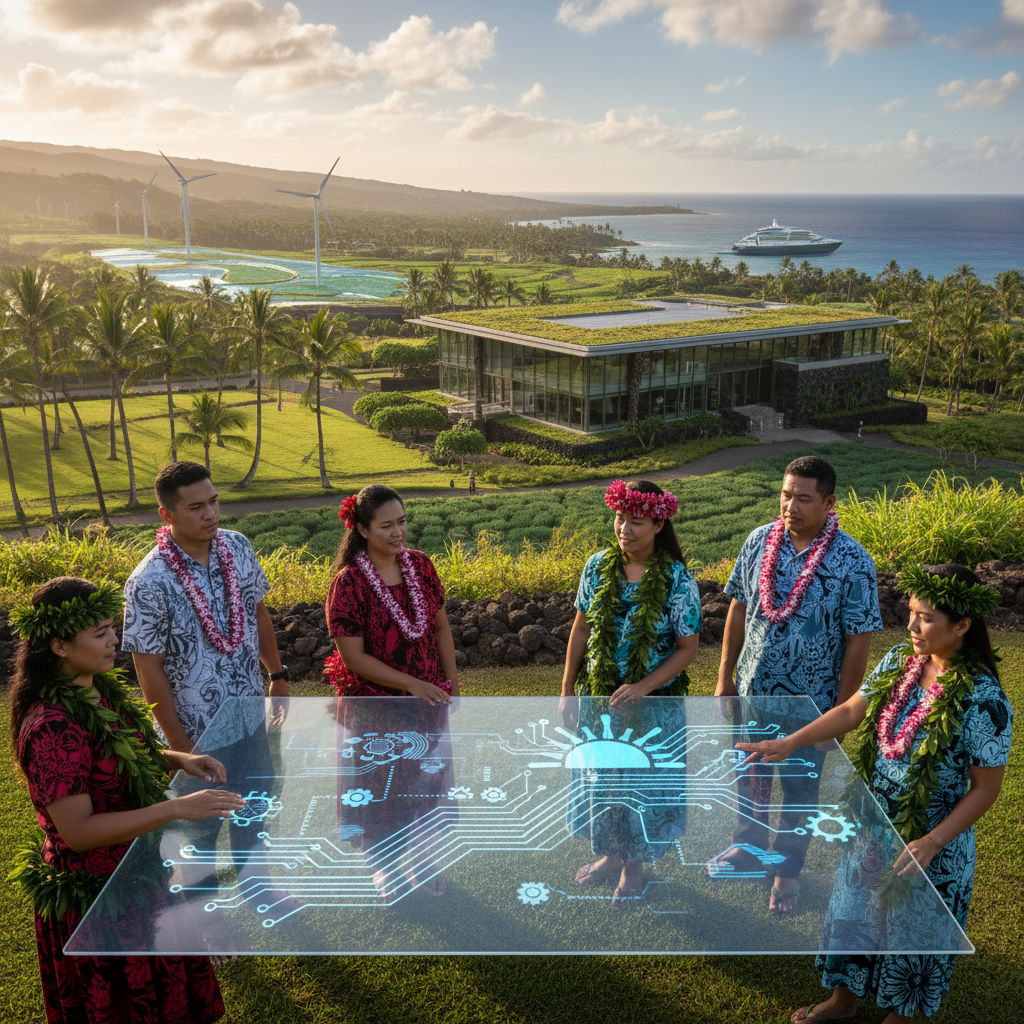
HONOLULU, O'ahu – As the digital tide continues its relentless surge across the globe, Hawai'i finds itself at a critical juncture, contemplating how Artificial Intelligence (AI) can be woven into the fabric of its unique 'āina and mo'olelo. The conversation isn't just about economic growth; it's about pono growth – development that is righteous, balanced, and culturally resonant.
This past month, the Hawai'i State Legislature held a series of community consultations, or hō'ike, across the islands, inviting tech leaders, cultural practitioners, and community members to discuss the future of AI in the 808 state. The focus: how AI can bolster key sectors like sustainable tourism, renewable energy, and ocean resource management, all while upholding the principles of mālama 'āina (to care for the land).
Dr. Leilani Ka'anā'anā, a leading ethnobotanist and director of the Institute for Hawaiian Knowledge at the University of Hawai'i at Mānoa, emphasized the importance of a culturally informed approach. "We're not just importing technology; we're indigenizing it," she stated during a panel discussion at the Hawai'i Convention Center. "Imagine AI models that predict invasive species spread based on traditional ecological knowledge, or algorithms that optimize energy grids for our remote communities, prioritizing local food production. This is about using AI as an mea kōkua – a helpful tool – not a replacement for our human connection to the land and sea."
The economic implications are vast. The Hawai'i Economic Development Board (HEDB) recently released a white paper, "AI in Paradise: A Blueprint for a Resilient Island Economy," outlining potential AI applications. These include smart tourism platforms that disperse visitors more evenly, reducing environmental impact; AI-driven precision agriculture to enhance food security; and predictive analytics for disaster preparedness, a crucial need in our vulnerable island chain.
However, concerns about data sovereignty and the potential for AI to exacerbate existing inequalities were also voiced. Kumu Hula Ponoikapono Kū, a respected cultural advisor from Moloka'i, articulated these anxieties. "Our stories, our mo'olelo, are not data points to be commodified. We must ensure that any AI developed here respects our intellectual property and doesn't extract value without returning it to the source – our people, our culture, our 'āina. This is about kuleana, responsibility, not just profit."
Governor David Ige's administration has signaled strong support for a balanced approach. "We are committed to fostering an innovation ecosystem that is uniquely Hawaiian," said Keoni Akana, the state's Chief Technology Officer, in a recent press conference. "Our goal is to build a 'digital bridge' that connects our rich heritage with future opportunities, ensuring that the benefits of AI are shared equitably across all our mokupuni (islands) and for all our kanaka (people)."
As Hawai'i navigates this complex technological landscape, the hope is that AI can be a tool for empowerment, helping to preserve the islands' natural beauty and cultural integrity, rather than eroding it. The challenge lies in developing AI that truly embodies the spirit of aloha – one that is inclusive, respectful, and ultimately, serves the well-being of the entire community.
Related Articles
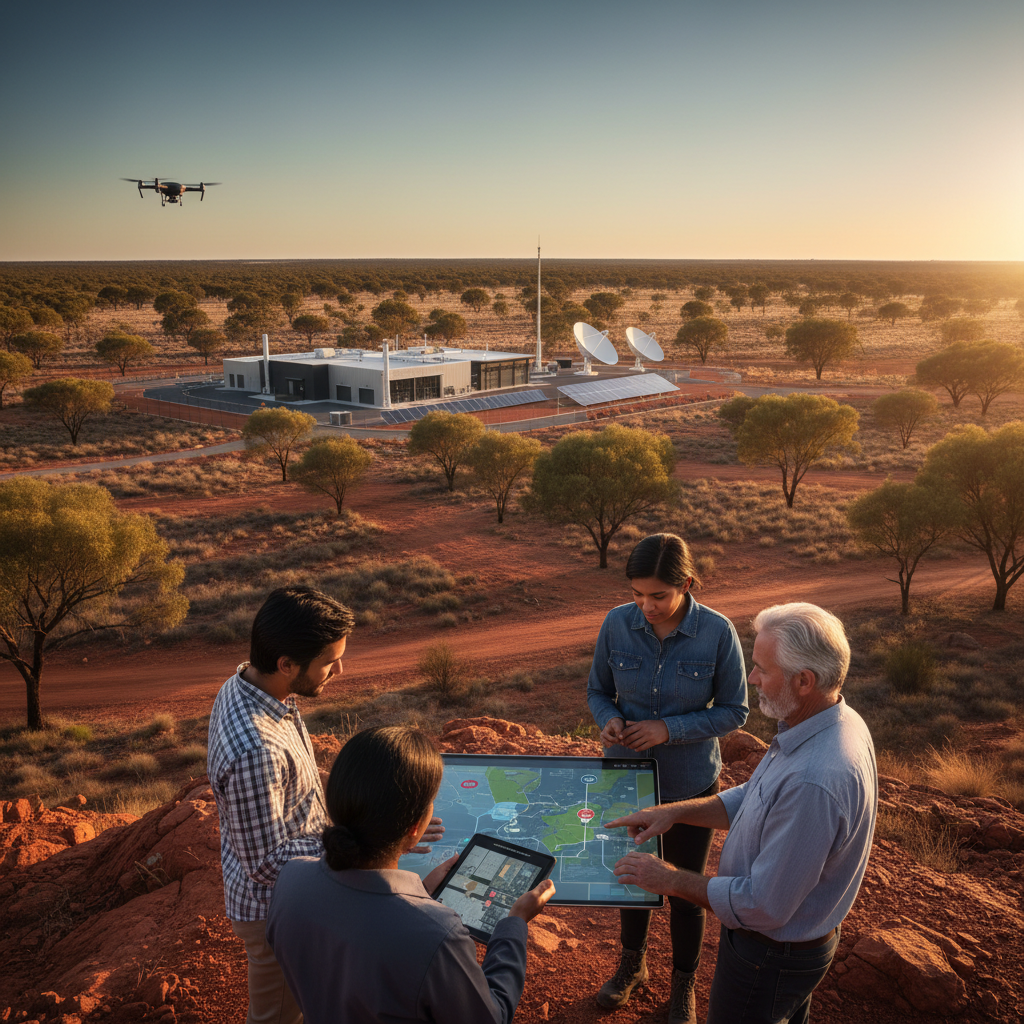
AI's Outback Ascent: Regional Australia Embraces Digital Transformation for Economic Resilience
 Lachlaneè Mitchèll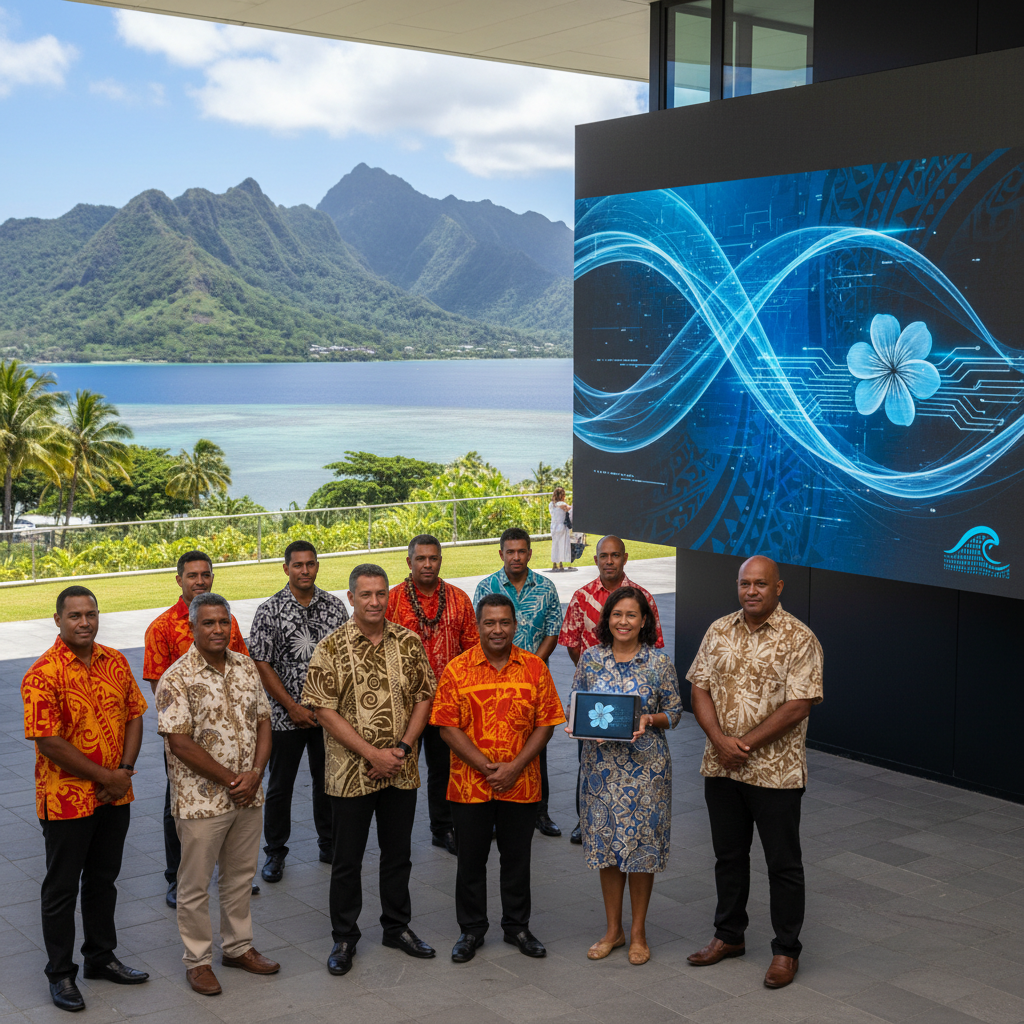
Tahiti Embraces AI: Digital Sovereignty and Cultural Preservation at Forefront of New Policy
 Tiàre Teriifaàtia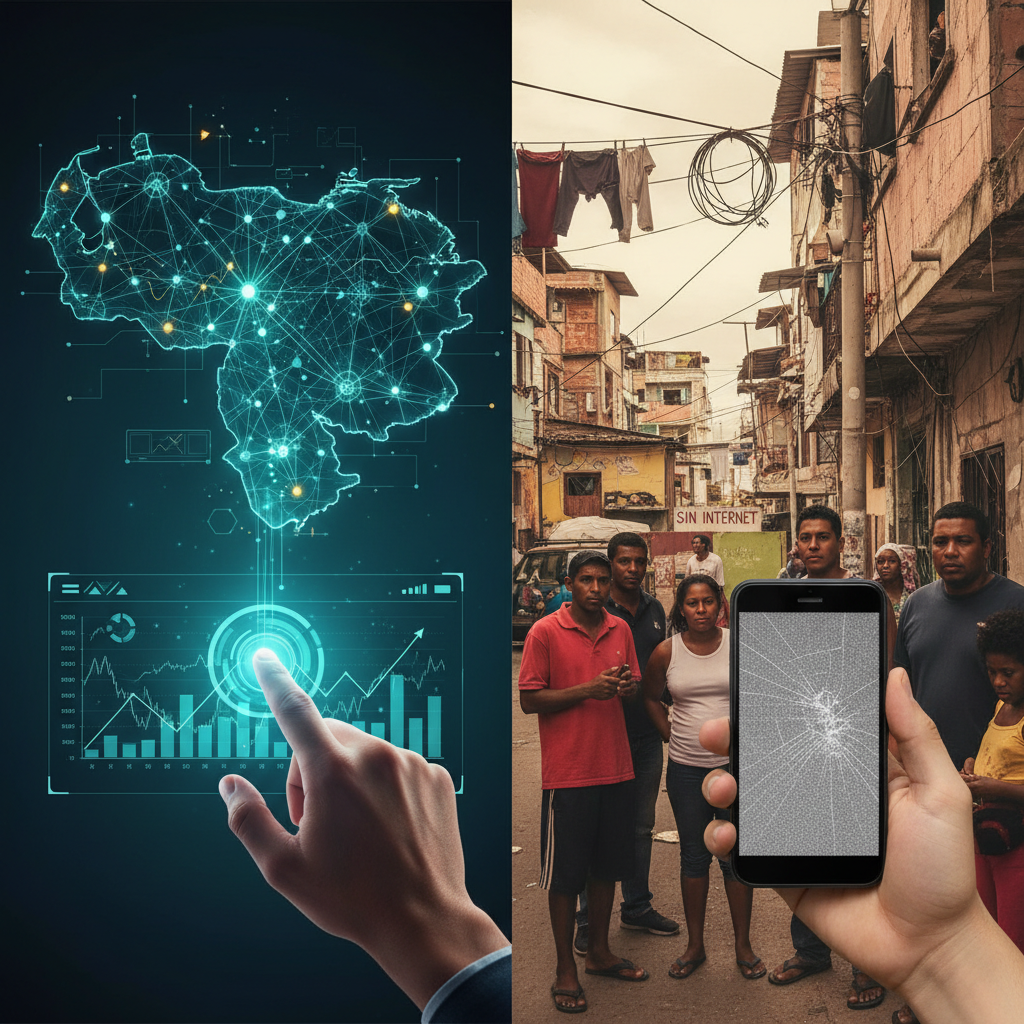
IA en Venezuela: ¿Un Motor para la Recuperación o un Lujo Inaccesible?
 Sebastiàn Vargàs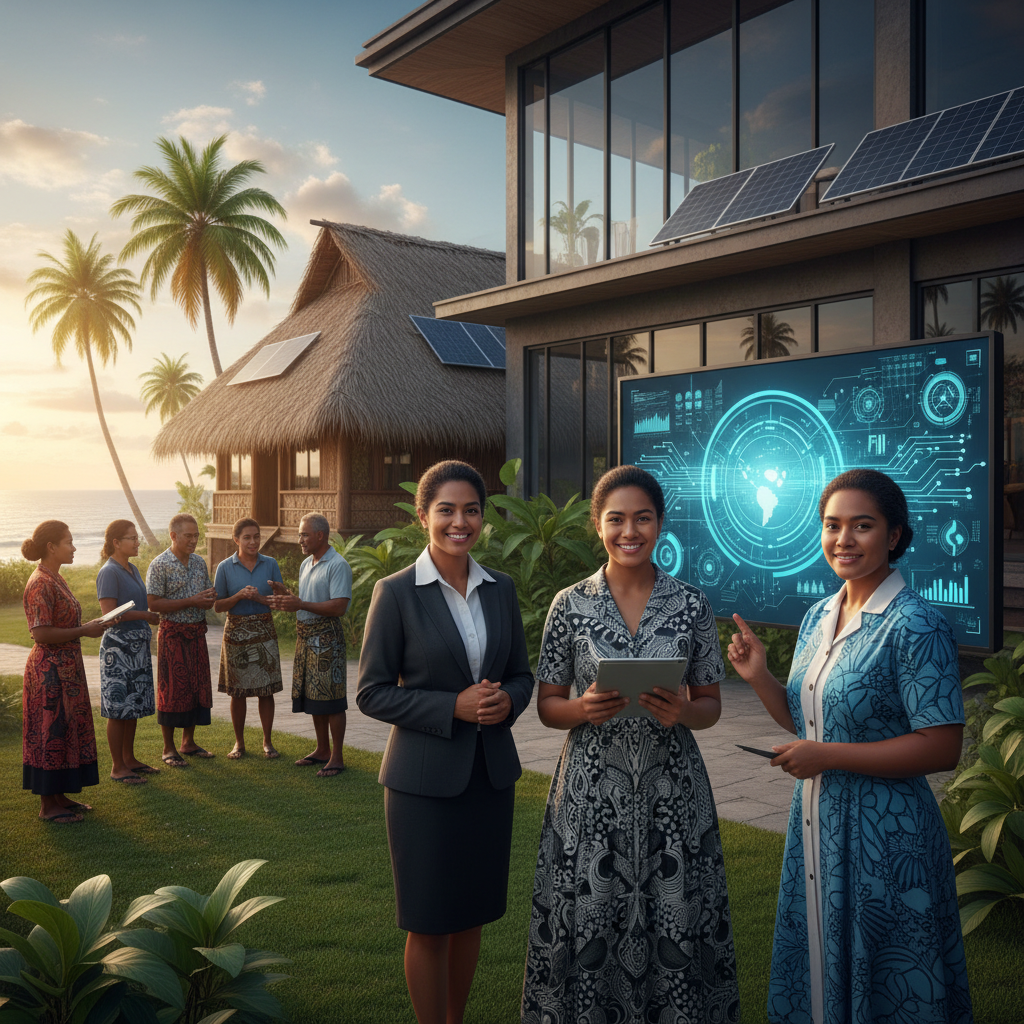
Fiji's AI Strategy: Balancing Innovation with Indigenous Values and Women's Empowerment
 Merelaisà Tuivagà