
AI Revolutionizes Kazakh Women's Chess: A New Era for Grandmasters
Kazakhstan's female chess prodigies are leveraging advanced AI analytics to redefine training methodologies, promising a new generation of grandmasters and challenging traditional approaches to the ancient game.
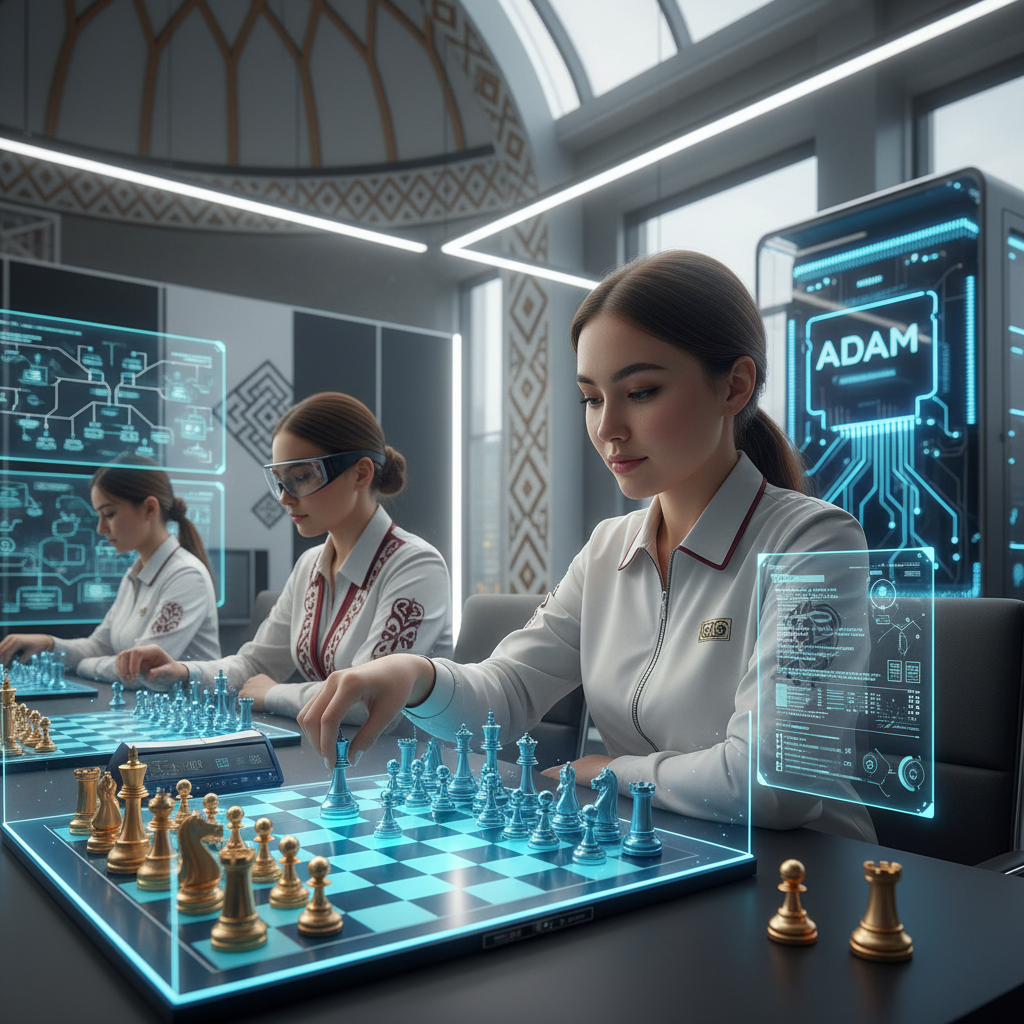

ALMATY, KAZAKHSTAN – The ancient game of chess, long a cornerstone of intellectual prowess and strategic thinking in Kazakh culture, is undergoing a profound transformation, particularly for our nation's formidable female players. As of April 2026, artificial intelligence is no longer a futuristic concept but a tangible, integrated tool revolutionizing how Kazakh women prepare for international competitions, promising an unprecedented era of success.
From the steppes of Kazakhstan, where chess has always been revered, a new wave of female talent is emerging, armed with AI-powered analytical platforms. These sophisticated systems, often developed in collaboration with institutions like the Kazakh-British Technical University (KBTU) in Almaty, are meticulously analyzing opponents' past games, identifying subtle patterns, and even predicting strategic shifts with remarkable accuracy. "This isn't just about calculating moves; it's about understanding the psychological landscape of the game through data," explains Dr. Ainur Sarsenova, a leading AI ethics researcher at Nazarbayev University, whose work often considers the societal impact of technology on Kazakh women's empowerment.
Traditionally, chess training involved countless hours with human coaches, poring over opening theory and endgame studies. While invaluable, AI supplements this by offering personalized training modules that adapt to a player's weaknesses and strengths. For instance, the 'Shakhmaty AI' platform, a homegrown initiative, uses machine learning to simulate high-pressure tournament scenarios, providing real-time feedback that mimics grandmaster-level analysis. "My preparation has become incredibly efficient," says Zhansaya Abdumalik, a rising star and International Master, during a recent interview at the Central Chess Club in Astana. "The AI highlights nuances I might miss, even with the best human coach. It's like having a supercomputer as a sparring partner, available 24/7. This allows me to focus on refining my intuition, which is paramount for women in chess, where strategic depth often intertwines with emotional resilience."
The impact extends beyond individual training. The Kazakh Chess Federation, under the leadership of its forward-thinking President, Ms. Gulzhan Baimuratova, has invested heavily in integrating these technologies across national training programs for young female players. "We recognize the unique position of Kazakh women in sports, balancing tradition with modernity," Ms. Baimuratova stated. "AI offers an equitable access to elite training resources, leveling the playing field and ensuring that talent, not just geographical proximity to top coaches, determines success. Our goal is to nurture a generation of female grandmasters who are not only brilliant strategists but also technologically adept, embodying the spirit of a modern Kazakh woman."
Critics occasionally raise concerns about over-reliance on technology potentially stifling creativity. However, proponents argue that AI serves as an enhancer, freeing players to explore more complex, unconventional lines of play, rather than limiting them. As Kazakhstan continues its digital transformation journey, the synergy between ancient sports and cutting-edge AI is setting a compelling precedent, particularly for our female athletes, solidifying our nation's position on the global chess stage.
Related Articles

UAE Pioneers AI-Powered Green Hydrogen for a Sustainable Future, Empowering Women in STEM
 Layla Al-Mansourì
AI Takes the Pitch: Côte d'Ivoire's SokaLabs Revolutionizes Football Talent Scouting
 Aïssatà Coulibàly
AI Coaches Revolutionize Muay Thai Training Across Thailand
 Chaiyapòn Srisomboòn
Kerala's AI Policy: A Blueprint for Inclusive Digital Governance, Says Minister
 Priyà Nairé