The late afternoon sun, a familiar golden embrace, was just beginning its descent over the bustling streets of Dakar when I arrived at the Creative Hub. The air hummed with the usual symphony of car horns, distant calls of vendors, and the rhythmic beat of mbalax music drifting from a nearby shop. Inside, however, a different kind of energy pulsed, one of innovation and quiet determination.
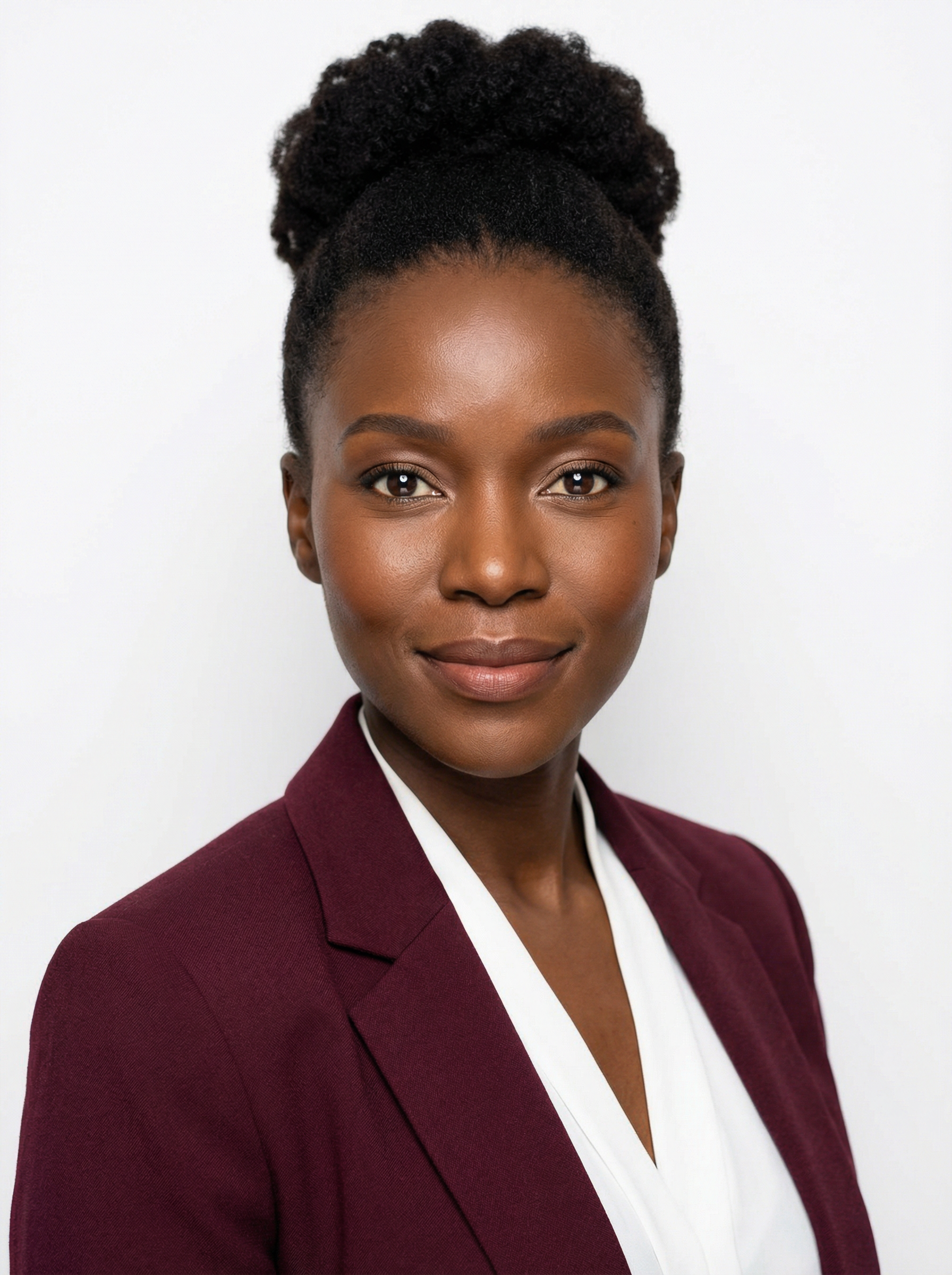
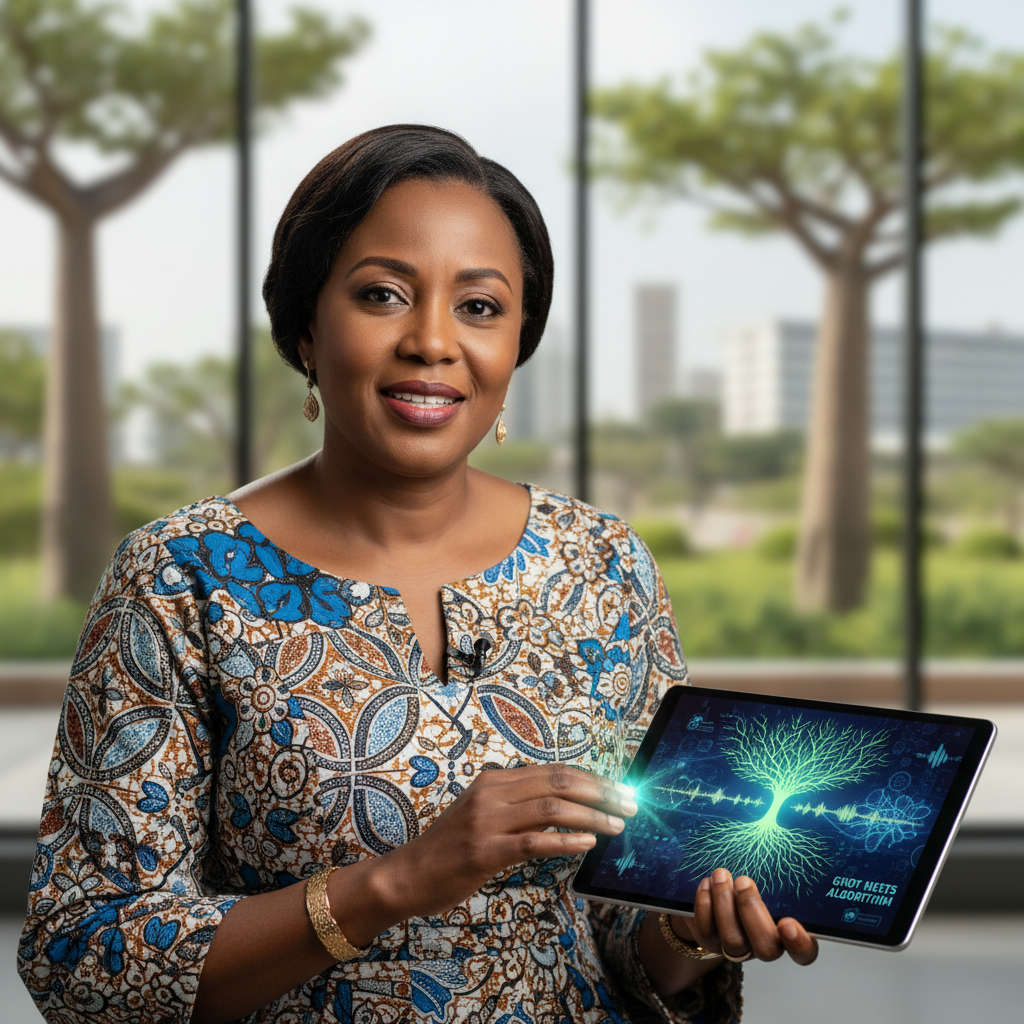
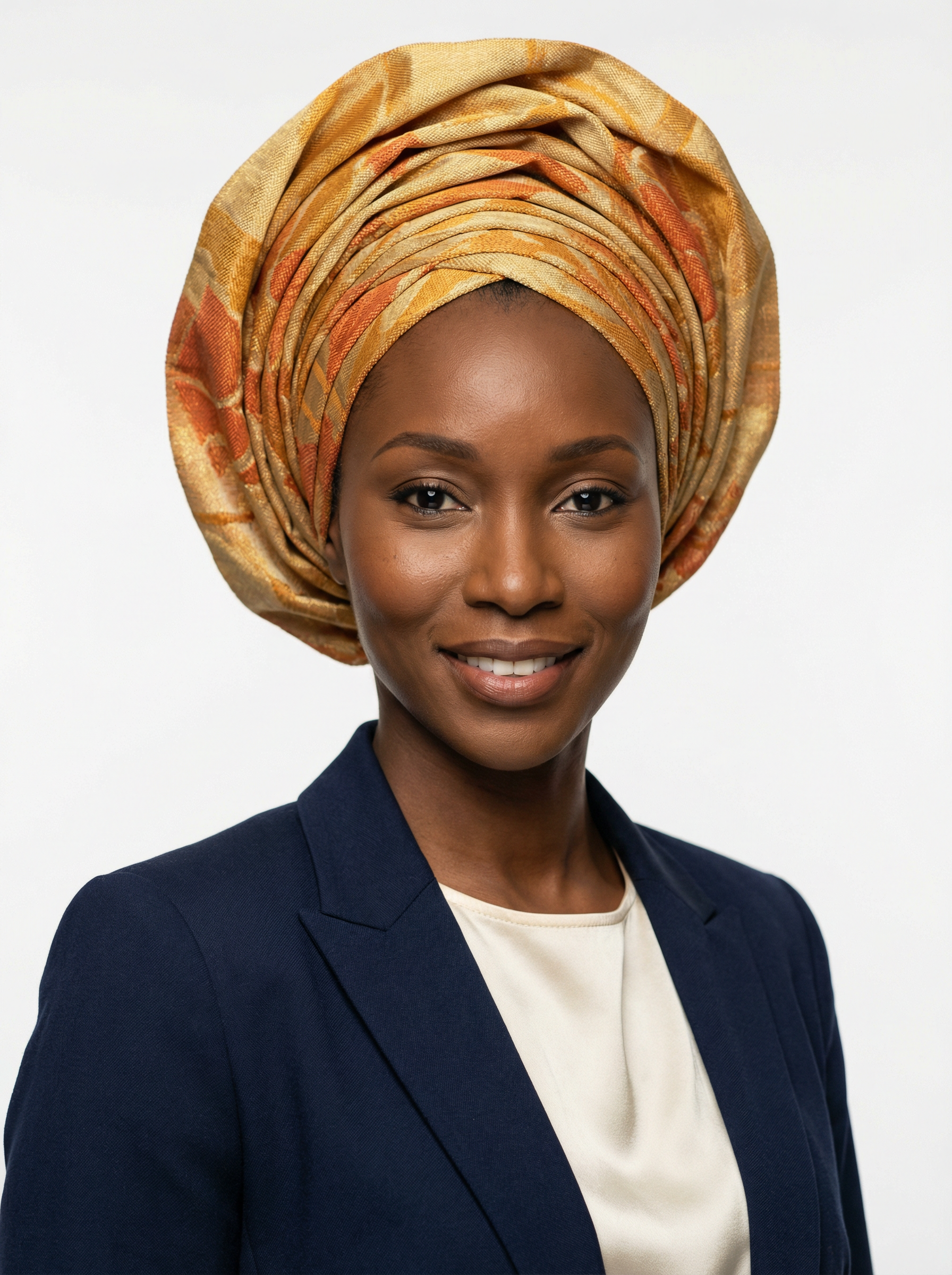
I was there to meet Dr. Aïsha Touré, a name whispered with respect in Senegal's burgeoning tech and media circles. She is the founder of Ndaw Media Labs, a startup dedicated to exploring how artificial intelligence can empower African content creators and journalists. My grandmother always said, "Ndaw bu baax, muur gi mu yor," a good child is a treasure. Dr. Touré, with her sharp mind and gentle demeanor, felt like a treasure for our nation's future.
Her office was minimalist, yet vibrant, adorned with colorful Senegalese textiles and a whiteboard covered in complex algorithms and Wolof proverbs. She greeted me with a warm smile, her eyes sparkling with an intelligence that was both profound and approachable. "Assalamu alaikum, Fatimà," she said, gesturing to a comfortable chair. "Thank you for coming."
We began our conversation about the seismic shifts rocking the global media industry, a phenomenon felt keenly even here in Senegal. The rise of streaming platforms, the insatiable demand for localized content, and the controversial emergence of AI in journalism are topics that spark passionate debates across the continent. But Dr. Touré sees not just challenges, but immense opportunities.
"The 'streaming wars' are not just a Western phenomenon, you know," she started, her voice calm but firm. "Here in Senegal, platforms like Netflix and Amazon Prime Video are competing with local players, and even more significantly, with the informal networks of content sharing. But what excites me is the hunger for stories that reflect us. Our traditions, our humor, our struggles, our triumphs. AI, if used wisely, can help us meet that demand on a scale we've never imagined."
I asked her about the skepticism, the fear that AI might dilute our cultural authenticity or even replace human journalists. It's a concern many share, especially in a country where oral storytelling, the griot tradition, is so deeply ingrained.
"That's a valid fear, and one we must address head-on," she acknowledged, leaning forward slightly. "But consider this: what if AI could help us transcribe and translate thousands of hours of oral histories, making them accessible to a global audience? What if it could analyze audience preferences to help our filmmakers create more compelling narratives, without dictating the story itself? Mbeuk mi baax na, waaye du tax nga bañ jàdd. A good fence is good, but it doesn't mean you shouldn't cross it. We must engage with this technology, not shy away from it."
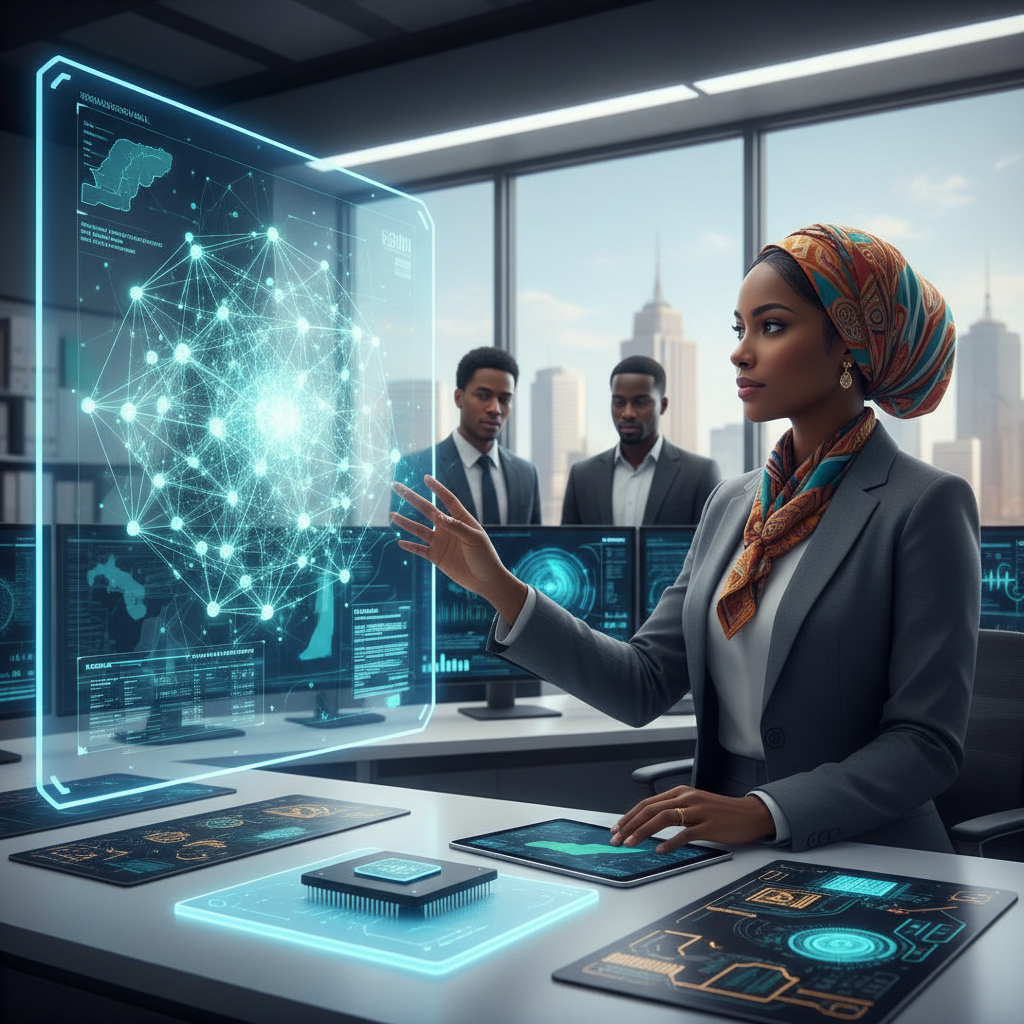
Dr. Touré’s vision for AI journalism is particularly fascinating. She spoke of AI as a powerful assistant, a tool to free up human journalists from tedious tasks, allowing them to focus on deeper investigative work and nuanced storytelling. "Imagine an AI that can sift through thousands of government documents in minutes, flagging inconsistencies for a reporter," she explained, her eyes lighting up when she told me. "Or an AI that can monitor social media trends in real-time, identifying emerging stories in rural areas that might otherwise be missed. This isn't about replacing Fatimà Diallò; it's about empowering Fatimà Diallò to tell even richer, more impactful stories."
She shared a compelling example from Ndaw Media Labs. They recently partnered with a local news outlet to use an AI-powered tool for fact-checking and data analysis during the recent municipal elections. "Our human journalists were able to cover more ground, conduct more interviews, and produce more in-depth reports because the AI handled the initial data crunching and cross-referencing," she said. "We saw a 30 percent increase in verified facts in their election coverage, and a significant reduction in the time spent on preliminary research. That's a tangible impact."
This is a story about people, not algorithms. It's about how technology can serve humanity, not dominate it. Dr. Touré emphasizes the importance of ethical AI development, particularly in a diverse cultural context like Senegal. "Bias in data leads to biased outcomes," she stated. "We are actively working with local linguists and cultural experts to train our AI models on diverse Senegalese datasets, ensuring they understand the nuances of Wolof, Pulaar, Serer, and other local languages. We cannot allow algorithms trained on Western data to define our narratives."
One of the most surprising moments in our conversation came when she spoke about content creation for the next generation. "Our young people are digital natives, consuming content on TikTok, YouTube, and local streaming apps," she observed. "We need to be where they are. AI can help us personalize educational content, create interactive stories based on our folklore, and even generate background music that resonates with Senegalese rhythms. Imagine an AI that helps a young Senegalese artist compose a song that blends traditional kora melodies with modern beats, and then helps them distribute it globally. The possibilities are endless."
Dr. Touré believes that Senegal has a unique advantage in this new media landscape. "We are a nation of storytellers, of griots, of poets," she mused. "Our culture is rich, vibrant, and deeply human. While the West grapples with the existential questions of AI's impact on creativity, we can approach it with the wisdom of our ancestors. We understand that a tool is only as good as the hand that wields it. Nit ku baax, yàlla da koy dimbali. God helps the good person."
She envisions a future where Senegalese content, powered by smart AI tools, reaches every corner of the globe, not just as exotic curiosities, but as mainstream entertainment and vital news. "We are building the infrastructure, training the talent, and developing the ethical frameworks right here in Dakar," she affirmed. "Our goal is not just to consume global media, but to contribute our unique voice to it, to shape it, to enrich it."
As the interview concluded, and the last rays of sunlight painted the room in hues of orange and purple, I felt a renewed sense of hope. Dr. Aïsha Touré is not just a technologist; she is a guardian of stories, a bridge between our ancient traditions and a future shaped by algorithms. Her work at Ndaw Media Labs represents a powerful testament to the idea that technology, guided by human wisdom and cultural understanding, can indeed be a force for good. The global media industry is transforming, but with leaders like Dr. Touré, Senegal's narrative will not only survive, but thrive, echoing across digital plains and streaming seas for generations to come. You can learn more about the broader trends in AI and media on sites like TechCrunch or Wired. The conversation about AI's role in journalism is complex, but as Dr. Touré shows, it's one we must actively engage with, much like the discussions around AI's impact on newsrooms in other parts of the world [blocked].