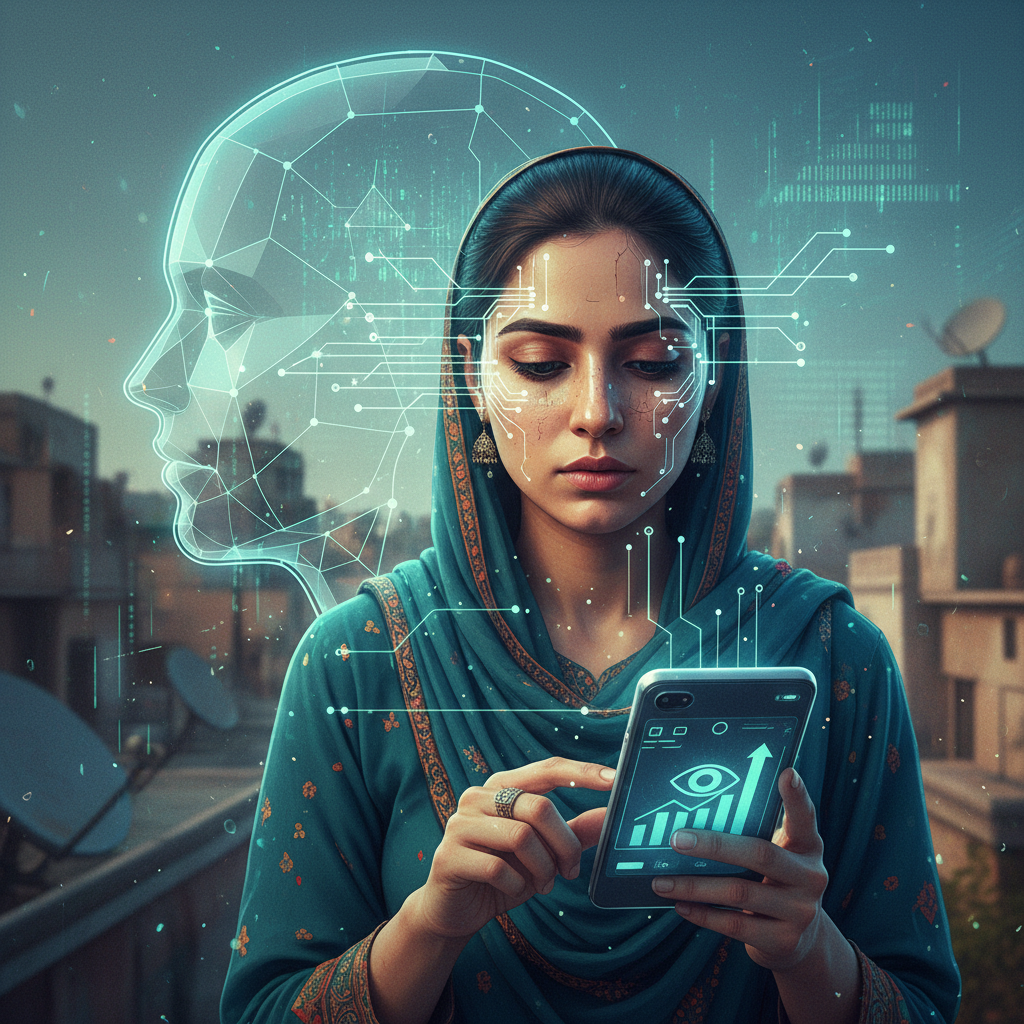

For many of us in Myanmar, the internet is not a given. It is a fragile thread, often cut without warning, a tool of control as much as connection. When the power goes out, or the military junta decides to pull the plug on data services, our digital world vanishes. This reality shapes how I see technology, especially something as transformative as artificial intelligence. It makes me ask: what good is AI if it needs constant, reliable internet to function? This is where 'Edge AI' steps in, offering a vision of intelligence that works right where it is needed, without relying on distant servers or stable connections. It is a concept that, for places like Myanmar, feels less like a technological upgrade and more like a fundamental necessity.
What Exactly Is Edge AI and On-Device Intelligence?
Imagine you have a smart device, perhaps a camera or a sensor, that needs to make a quick decision. In the traditional way, this device would capture data, send it over the internet to a powerful cloud server far away, the server would process it using complex AI algorithms, and then send the decision back to your device. This journey takes time, consumes bandwidth, and requires a constant, stable internet connection.
Edge AI, or on-device intelligence, flips this model. Instead of sending all the data to the cloud, the AI processing happens directly on the device itself, or on a local server very close to the data source, at the 'edge' of the network. Think of it like this: instead of sending a letter to a central post office in a big city to be read and understood, you have a local village elder who can read and understand it right there, on the spot. The intelligence is distributed, decentralized, and immediate. This is about survival, not convenience, especially when connectivity is unpredictable.
Why Should We Care? Relevance to Daily Life, Especially in Myanmar
Why does this matter? For people living in places with robust infrastructure, it might mean slightly faster responses from their smart home devices or more private data processing. But in Myanmar, the stakes are different. Here, Edge AI can be a lifeline. When internet blackouts plunge entire regions into digital darkness, or when data costs are prohibitively high, having AI that works offline means the difference between a farm failing and thriving, or a community being informed versus isolated. It means empowering individuals and local groups to use advanced tools without being beholden to external infrastructure or surveillance. It is about digital sovereignty, about putting power back into the hands of the people.
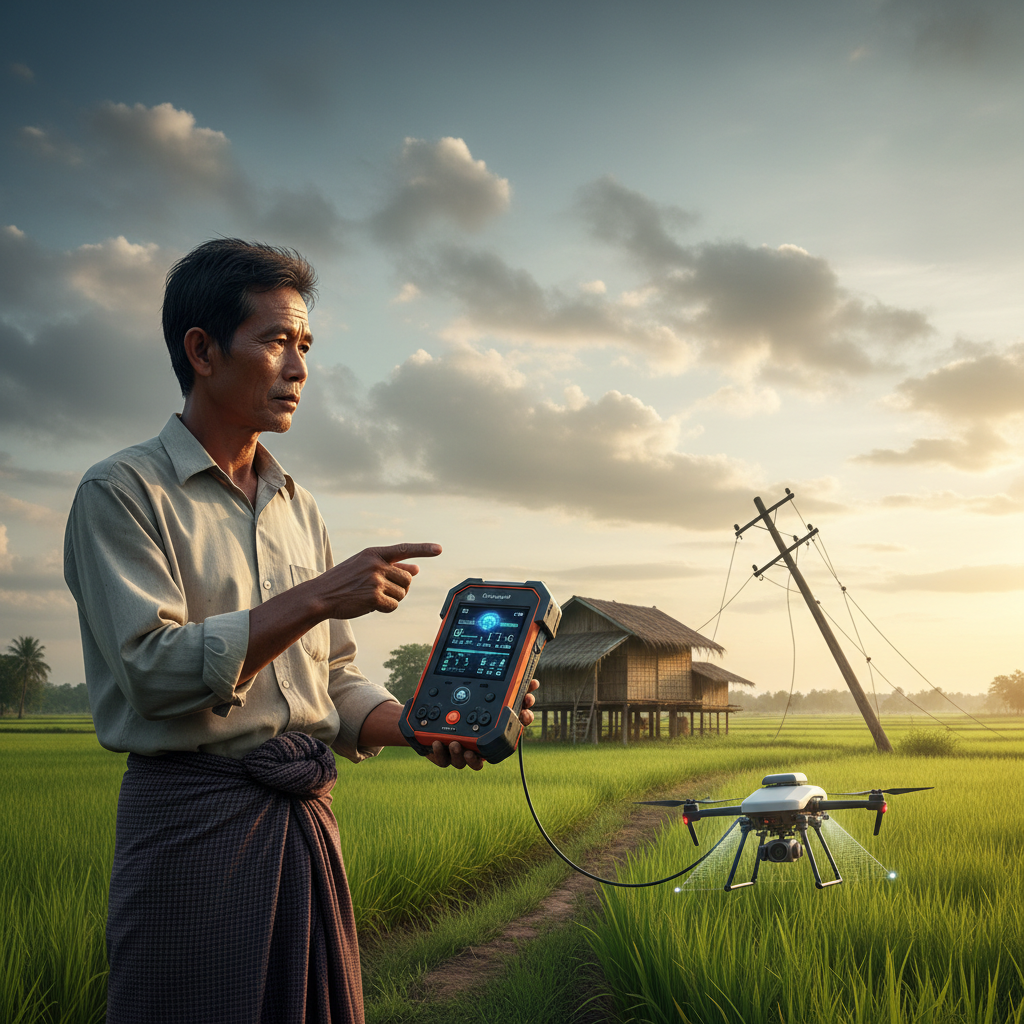
Consider our agricultural sector, the backbone of our economy. Farmers often work in remote areas with limited or no internet access. If a device can analyze crop health, predict pest outbreaks, or optimize irrigation on the spot, without needing to connect to a distant server, it transforms their capabilities. This isn't just about efficiency, it's about food security and economic stability for families. According to a recent report by the Myanmar Agriculture Development Bank, only 18% of rural farmers have consistent, reliable internet access, yet 65% own a smartphone. This gap is where Edge AI shines.
How Did It Develop? A Brief History and Context
The journey to Edge AI began with the realization that centralized cloud computing, while powerful, has limitations. As AI models grew more complex and data generation exploded, sending everything to the cloud became inefficient, expensive, and slow. Imagine millions of security cameras all streaming high-definition video to a central server constantly; it's a logistical nightmare.
Early AI systems were often too large and power-hungry to run on small devices. But advancements in microchip technology, specialized AI processors (like those from NVIDIA, for example, which are getting smaller and more efficient), and optimized AI algorithms have made it possible to shrink these powerful models. Companies like Google and Apple have been integrating on-device AI into their smartphones for years, handling tasks like facial recognition, voice assistants, and photo processing locally. This push for efficiency and privacy in consumer electronics laid much of the groundwork for what we now call Edge AI.
How Does It Work in Simple Terms? Analogies and Examples
Let's go back to our village elder analogy. In traditional cloud AI, you'd send all your village's questions to a wise scholar in a distant city. He'd read them, think, and send back answers. This works, but it takes time, and if the messenger path is blocked, no answers come.
With Edge AI, it's like training many village elders, each with a specific expertise, and placing them directly in the communities where their knowledge is needed. A farmer needs to know if his rice plants are diseased? A small device, trained by an AI 'elder' on images of healthy and diseased plants, can look at a photo and tell him instantly, right there in the paddy field. No need to send the photo to the city, no waiting for a reply, no internet required.
The 'training' of these AI elders still often happens in the cloud, where vast amounts of data and powerful computers are used to create the initial knowledge. But once trained, the essential 'brain' of the AI is compressed and deployed to the smaller, less powerful device at the edge. It's like a student learning complex lessons at a university, then returning to their village to apply that knowledge locally. The device doesn't learn new things on its own usually, but it applies what it has already learned.
Real-World Examples: Bringing Intelligence to the Frontlines
-
Climate Monitoring in Remote Areas: Imagine sensors deployed in the Ayeyarwady Delta, monitoring water levels, soil salinity, and weather patterns. With Edge AI, these sensors can process data locally, identify anomalies like impending floods or droughts, and send critical alerts to local communities via SMS or even flashing lights, all without relying on a central internet connection. This empowers communities to prepare and adapt to climate change impacts more effectively. MIT Technology Review often covers such innovative climate tech solutions.
-
Wildlife Conservation and Anti-Poaching: In our national parks, cameras equipped with Edge AI can identify poachers or endangered species in real-time. Instead of streaming hours of footage to a central command, the camera processes the images on the device, flags suspicious activity, and alerts rangers immediately. This drastically reduces response times and conserves bandwidth, which is often scarce in these remote areas. This is a powerful application of technology for good, protecting our precious natural heritage.
-
Decentralized Healthcare Diagnostics: In rural clinics, where doctors are scarce and internet is unreliable, Edge AI-powered devices could assist in basic diagnostics. A portable ultrasound machine, for instance, could use on-device AI to analyze images for common conditions, providing immediate preliminary assessments to local health workers. This can bridge critical gaps in medical access, especially for our ethnic minority populations in hard-to-reach regions.
-
Smart Agriculture for Smallholders: Beyond just crop health, Edge AI can optimize irrigation systems based on real-time local weather and soil data, control smart traps for pests, or even sort agricultural produce by quality right on the farm. This improves yields, reduces waste, and boosts the income of smallholder farmers, who are often the most vulnerable to market fluctuations and climate shifts.
Common Misconceptions About Edge AI
One common misconception is that Edge AI is less powerful or less capable than cloud AI. While it's true that individual edge devices have less computational power than massive cloud servers, the goal of Edge AI is not to replace cloud AI entirely. Instead, it's about intelligent division of labor. The cloud handles the heavy training and complex, general tasks, while the edge handles specific, immediate, and localized inference. They complement each other. Another myth is that it's only for high-tech gadgets; as we've seen, it's increasingly being applied to practical, low-cost solutions for everyday problems.
Some also worry about security and privacy, thinking that processing data locally might make it more vulnerable. In many cases, the opposite is true. By processing data on the device and only sending anonymized results or specific alerts, less raw, sensitive data travels across networks, potentially enhancing privacy and reducing the risk of large-scale data breaches. This is particularly important in contexts where digital surveillance is a concern.
What to Watch For Next
The future of Edge AI is bright, especially for regions like ours. We will see smaller, more energy-efficient AI chips, allowing even simpler devices to become 'smart.' The integration of 5G and eventually 6G networks, while not always reliable here, will further enhance the capabilities of edge devices by providing faster local communication. We will also see more federated learning, where devices collaboratively train AI models without sharing their raw data, further boosting privacy and efficiency.
For Myanmar, the development of Edge AI is not just a trend to observe; it is a critical opportunity. It offers a path to digital empowerment that bypasses the vulnerabilities of centralized infrastructure. It means that even when the internet is cut, when the lights go out, our communities can still leverage the power of intelligent tools to manage their farms, protect their environment, and safeguard their health. Technology can be a lifeline, and Edge AI is proving to be one of the strongest threads in that lifeline for those who need it most. It's a testament to human ingenuity, finding ways to bring advanced technology to the places where it can make the most profound difference, even in the most challenging of circumstances. The promise of AI, for me, lies not in its ability to connect us to distant servers, but in its power to empower us right where we stand, rooted in our own communities. We must ensure this technology serves the people, not just the powerful. Perhaps this technology can even help us better understand the dynamics of power and control, as explored in articles like When the Banyan Tree Meets Silicon Valley: Why AI's Billion-Dollar Bets Matter to Myanmar's Struggle [blocked].
"The ability to process data locally, without sending it to the cloud, is revolutionary for developing nations," explains Dr. Hla Myint, a leading computer science professor at Yangon Technological University. "It drastically reduces costs, improves privacy, and most importantly, ensures functionality even in areas with poor or non-existent connectivity. This is not just about efficiency, it's about resilience."
Daw Aye Aye Than, a community leader from a village in Magway Region, echoed this sentiment during a recent workshop on digital literacy. "When the internet stops, our world stops," she told me, her voice firm. "But if our tools can think for themselves, then we can keep going. That is true independence." Her words resonate deeply. Edge AI is not just about algorithms; it is about autonomy, about giving communities the tools to navigate their own futures, regardless of external forces. It is about building a more equitable digital world, one device at a time.