The sea breeze here in Glyfada, just south of Athens, carries the scent of salt and possibility. It also carries the murmur of a question that echoes from the ancient agora to the digital forums of today: Who is responsible? This isn't a new query, my friends, not by a long shot. Our philosophers debated aition and aitia, cause and blame, millennia ago. But now, with artificial intelligence increasingly woven into the very fabric of our lives, from self-driving cars navigating narrow village streets to diagnostic tools in our hospitals, the stakes have never been higher, nor the answers more elusive.
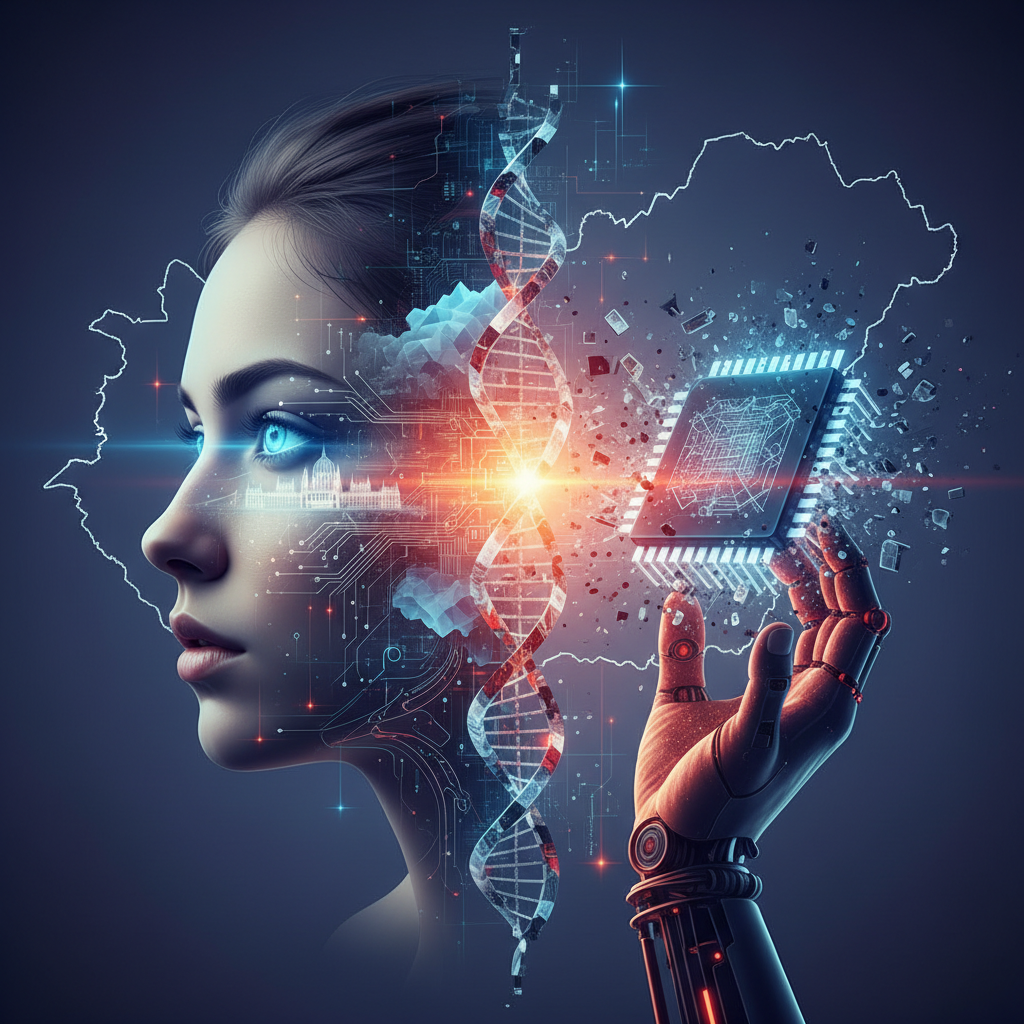
We are living through a technological transformation that, for all its dazzling promise, brings with it a profound legal and ethical quandary: the AI liability question. When an AI system, perhaps an autonomous drone inspecting olive groves or a predictive model guiding financial investments, causes harm, whose door do we knock on? Is it the developer who coded the algorithm, the company that deployed it, the user who relied on it, or the data that trained it? This is not a theoretical exercise for academics in their ivory towers. This is a very real, very urgent concern that is shaping legislation and corporate strategy across Europe and beyond.
Consider the European Union's ambitious AI Act, a landmark piece of legislation that, after years of debate, is finally moving towards full implementation. It's a grand attempt to bring order to the digital wild west, and a significant portion of its focus is on high-risk AI systems. These are the systems that can have a substantial impact on people's lives, health, safety, or fundamental rights. Think medical devices, critical infrastructure management, or even certain aspects of law enforcement. The Act introduces a tiered approach to risk, placing stringent obligations on providers and deployers of these high-risk systems. But even with this regulatory framework, the practicalities of assigning blame remain a Gordian knot.
I spoke recently with Dr. Eleni Kosta, a leading expert in technology law at Tilburg University, who has been closely following these developments. "The EU AI Act is a monumental step, but it's just the beginning," she told me. "Establishing liability for AI systems is incredibly complex because of their opacity, autonomy, and the distributed nature of their development and deployment. It challenges our traditional notions of causation and intent." Her words resonate deeply, reminding me of the ancient Greek playwrights who grappled with fate versus free will, and how much of our modern legal system is built on understanding human agency.
For us here in Greece, a nation with a deep connection to its maritime heritage and a burgeoning tourism sector, the implications are particularly acute. Imagine autonomous ships navigating the Aegean, or AI-powered personalized travel assistants guiding tourists through ancient ruins. The potential for efficiency and innovation is immense, but so is the potential for unforeseen consequences. If an autonomous vessel causes a collision, or a faulty AI recommendation leads to a serious accident, the economic and human cost could be staggering. The Mediterranean approach to AI is fundamentally different, I believe, emphasizing human well-being and societal integration over pure technological advancement. We are not just building tools, we are building a future, and that future must be accountable.
Globally, the conversation is heating up. In the United States, discussions often revolve around existing product liability laws, attempting to fit AI into frameworks designed for tangible goods. Companies like Tesla, for instance, face ongoing scrutiny and lawsuits regarding their Autopilot and Full Self-Driving systems. Each incident, each accident, adds another layer to the complex legal tapestry. Meanwhile, major AI developers like OpenAI, Google DeepMind, and Anthropic are pouring billions into research, pushing the boundaries of what AI can do, but perhaps not always with a full grasp of the legal quagmire they are creating. Their terms of service often attempt to shift responsibility, but courts and regulators are unlikely to simply accept such disclaimers when significant harm occurs.
Consider the 'black box' problem: many advanced AI models, particularly deep neural networks, operate in ways that are not easily interpretable by humans. We can see the inputs and the outputs, but the precise reasoning process in between can be opaque. This makes it incredibly difficult to pinpoint where an error originated. Was it a bias in the training data, a flaw in the model's architecture, or an unexpected interaction with the environment? This lack of transparency undermines traditional legal principles of fault and negligence.
Dr. Andreas G. Tzakis, a prominent Greek legal scholar specializing in digital rights, recently articulated this challenge. "Our legal systems are designed for human actors and human intent. AI introduces a new category of 'agency' that doesn't fit neatly into our existing boxes," he explained during a recent symposium in Thessaloniki. "We need to evolve our jurisprudence, perhaps even create entirely new legal concepts, to address this." This is precisely why Athens was the birthplace of democracy, now it's reimagining AI governance, because the fundamental questions of justice and societal order are being challenged anew.
The EU's proposed AI Liability Directive, which complements the AI Act, aims to simplify the process for victims to claim damages caused by AI systems. It introduces a presumption of causality for high-risk AI systems, meaning that if harm occurs, the victim might not have to prove the specific fault of the provider or deployer, shifting the burden of proof. This is a significant move, acknowledging the inherent difficulty in proving fault with complex AI systems. It seeks to protect individuals and ensure that innovation does not come at the cost of justice.
But this also raises concerns among AI developers and companies. They argue that overly strict liability rules could stifle innovation, particularly for smaller startups that lack the resources to absorb massive legal risks. The balance between fostering innovation and ensuring accountability is a delicate one. Large tech players like Microsoft and Meta, with their vast legal departments and financial muscle, can navigate these waters more easily than a nascent Greek startup trying to bring a novel AI solution to market.
We must also consider the role of data. AI models are only as good, or as biased, as the data they are trained on. If an AI system makes discriminatory decisions because it was trained on biased historical data, who is responsible for the harm caused? Is it the data provider, the model developer, or the deployer who failed to audit the system for bias? The European Data Protection Board, alongside national data protection authorities like the Hellenic Data Protection Authority, are increasingly scrutinizing how data is collected, processed, and used in AI systems, adding another layer of regulatory complexity.
Ultimately, this is a conversation about trust. For AI to truly flourish and integrate into our societies, people must trust that these systems are safe, fair, and accountable. Without clear liability frameworks, that trust will erode, and the potential benefits of AI could be overshadowed by fear and uncertainty. Greece has something Silicon Valley doesn't: a deep, historical understanding of societal responsibility and the long view of civilization. We understand that technology, however advanced, must serve humanity, not the other way around.
The path forward will require ongoing dialogue between policymakers, technologists, legal experts, and the public. It will demand flexibility, adaptation, and perhaps a willingness to rethink some of our most fundamental legal concepts. The EU's efforts are a crucial step, but the global nature of AI means that international cooperation will be essential. We cannot allow a patchwork of conflicting liability regimes to emerge, creating safe harbors for irresponsible AI development in one jurisdiction while stifling progress in another. The future of AI, and our relationship with it, depends on our ability to answer this ancient question with modern wisdom. For more insights on the legal landscape of AI, you might find articles on Reuters Technology or Wired's AI section particularly illuminating. The journey to accountability is long, but it is one we must undertake with clarity and courage. The oracle has spoken, and it demands our attention. {{youtube:bZQun8Y4L2A}}