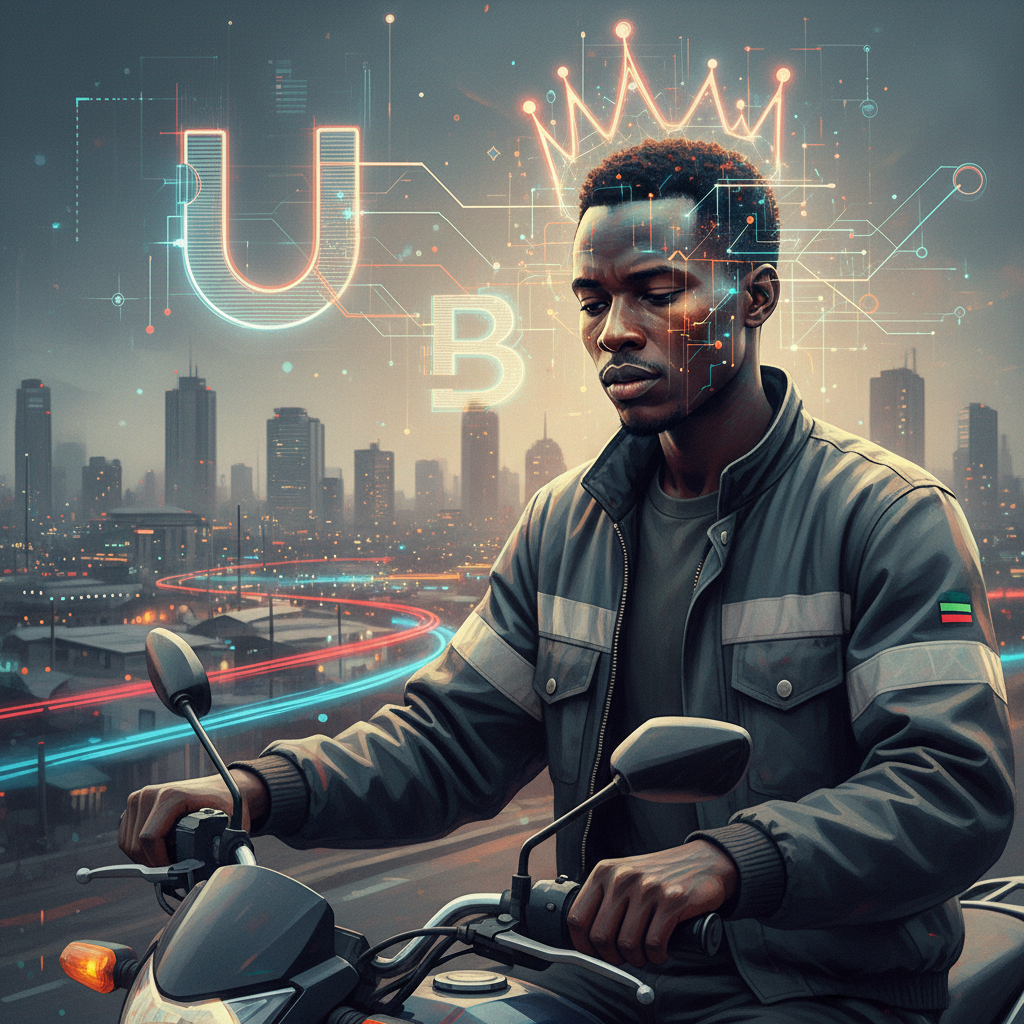

The sun beats down on Dar es Salaam, as it always does. The air is thick with the scent of spices, exhaust fumes, and the relentless hum of a city that never truly sleeps. But amidst this familiar chaos, a new kind of rhythm has taken hold, one dictated not by the ebb and flow of traffic or the market’s shouts, but by an invisible hand: the algorithm.
Meet Juma, a man whose life used to be his own. He drove a daladala, navigated the city by instinct and experience, and haggled fares with a smile. Now, he’s a Bolt driver, and his smile is often strained. His phone, a lifeline and a leash, pings constantly. "Go here, pick up there, accept this fare, your rating is dropping." He feels like a cog, a data point in a vast, unseen machine. His mind, once a map of Dar es Salaam's shortcuts and hidden alleys, is now a slave to the GPS and the relentless pursuit of a five-star rating. This isn't just a job, it's a psychological tightrope walk. You can't make this stuff up, can you?
The gig economy, powered by artificial intelligence, promised flexibility and entrepreneurship. For many in Tanzania, it offered a lifeline, a way to earn a living when formal employment was scarce. Platforms like Uber and Bolt have become ubiquitous, transforming urban transport and delivery services. But beneath the veneer of convenience and opportunity lies a complex web of algorithmic control that is subtly, yet profoundly, impacting the cognition, behavior, and relationships of its workers.
Research from institutions like the University of Oxford’s Internet Institute has consistently highlighted how these algorithms, designed for efficiency and profit maximization, often exert significant control over workers. They dictate routes, set prices, monitor performance, and even manage incentives and penalties. This constant surveillance and micro-management can lead to a phenomenon known as 'algorithmic management,' where human autonomy is gradually eroded. "Workers are increasingly managed by software, not people," noted Dr. Vili Lehdonvirta, a leading researcher on the gig economy, in a recent interview. "This shift has profound implications for worker rights, well-being, and even their sense of self-worth." His work, often cited in publications like MIT Technology Review, paints a stark picture of a future where human agency is increasingly outsourced to code.
The psychological toll is significant. Imagine being constantly evaluated, your livelihood hanging on a star rating or an acceptance rate determined by a non-human entity. This creates immense pressure, fostering anxiety and stress. Drivers, like Juma, report feeling a constant need to optimize their behavior to please the algorithm, leading to cognitive overload. They are always calculating, always strategizing, always trying to outsmart a system that is designed to be opaque. This hyper-vigilance can lead to burnout, sleep deprivation, and a diminished capacity for independent decision-making.
Dr. Aisha Mchunga, a Tanzanian psychologist specializing in occupational stress, explains the local context. "In our culture, there's a strong emphasis on community and personal relationships, even in business. The algorithm strips that away. It replaces human interaction, negotiation, and empathy with cold, hard data points. This can be incredibly isolating and dehumanizing for our people." She added, "We are seeing increased reports of drivers experiencing depression and anxiety, feeling like they are disposable cogs in a machine they don't understand." This disconnect from traditional social structures, where one might appeal to a manager or negotiate terms, leaves workers feeling powerless and unheard.
The behavioral changes are equally striking. Drivers often find themselves making decisions that prioritize algorithmic approval over personal safety or ethical considerations. For instance, accepting fares in unsafe areas or driving excessively long hours to meet algorithmic targets, simply to avoid penalties or maintain a 'good standing.' The gamification of work, with its badges, bonuses, and leaderboards, taps into primal human desires for achievement and recognition, but it does so in a way that can be manipulative, pushing workers to compete against each other and against themselves.
Relationships suffer too. The constant pressure to be online, to accept every ride, means less time for family and community. The traditional Tanzanian evening, spent with neighbors over chai, is replaced by the glow of a smartphone screen, waiting for the next ping. This erosion of social capital is a silent but potent consequence. Families report drivers becoming more irritable, withdrawn, and preoccupied with their phone. The line between work and personal life blurs into non-existence, a phenomenon exacerbated by the 24/7 nature of the gig economy.
Economically, the promise of flexibility often translates into precarity. While workers can technically choose their hours, the algorithms often manipulate demand and supply, pushing down wages during peak supply and increasing competition. This leaves many working longer hours for less pay, trapped in a cycle of needing to earn more to simply stay afloat. "The platforms have perfected the art of dynamic pricing, but it's often at the expense of the worker," stated Professor David Autor, an economist from MIT, whose research on labor markets is frequently featured on TechCrunch. "They use AI to optimize for their bottom line, not for worker welfare." This power imbalance is stark, and in a country like Tanzania, where economic alternatives can be limited, workers have little leverage.
So, what's to be done? The answer isn't simple, but it starts with acknowledging the problem. Regulators in Tanzania and across Africa need to understand that these platforms are not just technology companies; they are employers, albeit ones with a very clever way of avoiding traditional employer responsibilities. Policies need to be developed that protect gig workers, ensuring fair wages, reasonable working conditions, and transparency in algorithmic decision-making. This could involve setting minimum earnings per hour, providing avenues for appeal against unfair deactivations, and mandating clearer communication about how algorithms impact earnings and performance.
Worker collectives and unions, though nascent in the gig economy, are also crucial. By organizing, drivers can collectively bargain for better terms and challenge the unchecked power of the algorithms. Imagine a 'dereva' cooperative, using its own app, where the rules are set by the drivers themselves. It's a long shot, but not impossible. Only in East Africa would such a grassroots movement truly challenge the digital giants.
For individuals, understanding how these algorithms work is the first step towards regaining some control. Being aware of the psychological manipulation, setting firm boundaries between work and personal life, and seeking support from family and community are vital coping mechanisms. It’s about recognizing that the machine is designed to extract maximum labor, and consciously pushing back against that pressure.
Welcome to the future, because it's weird. The algorithms that power our convenience are quietly reshaping human behavior, particularly in the gig economy. In Dar es Salaam, Juma and thousands like him are living this reality every day. The question is, will we allow the digital bwana to completely dictate our lives, or will we find a way to reclaim our autonomy in this brave, new, algorithmically managed world? The answer will define not just the future of work, but the very essence of human agency in the digital age. The stakes, as they say, couldn't be higher. For more insights into the broader implications of AI on society, consider exploring articles on Wired.