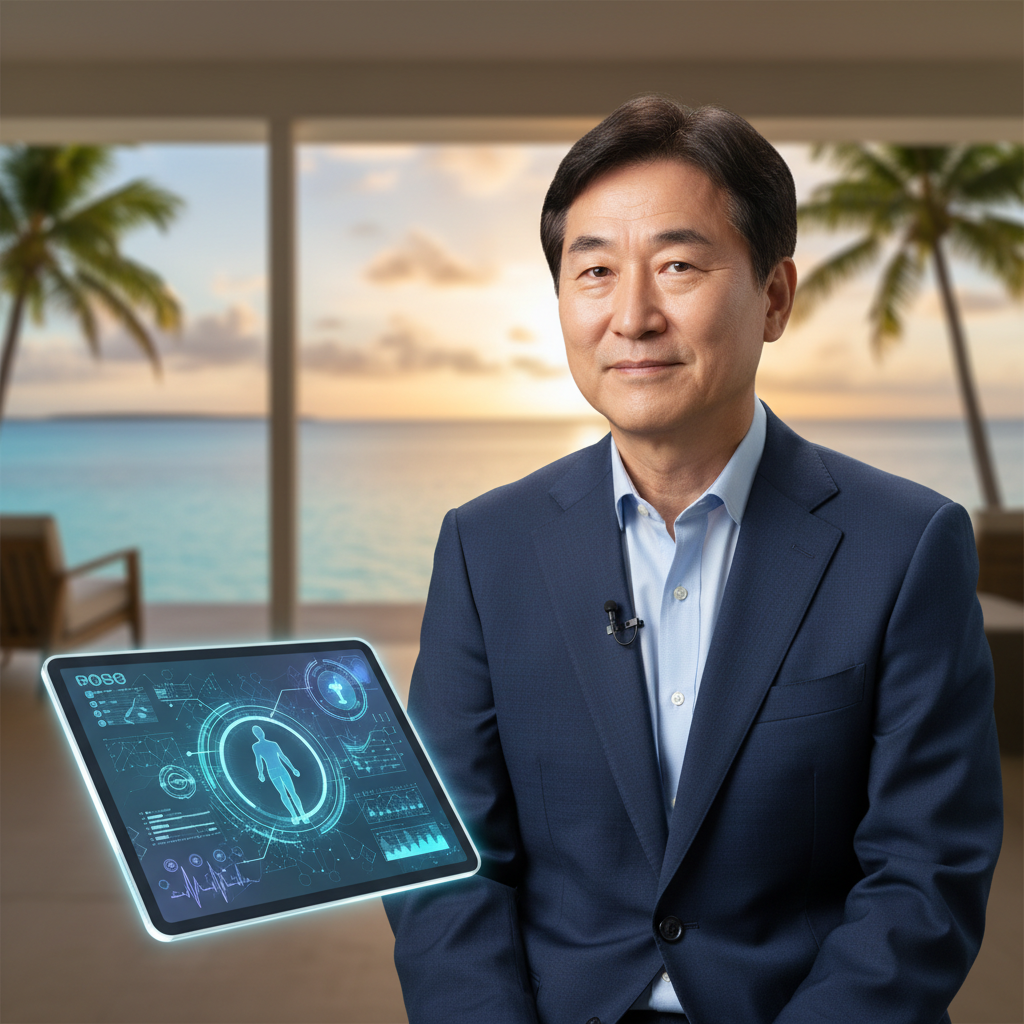
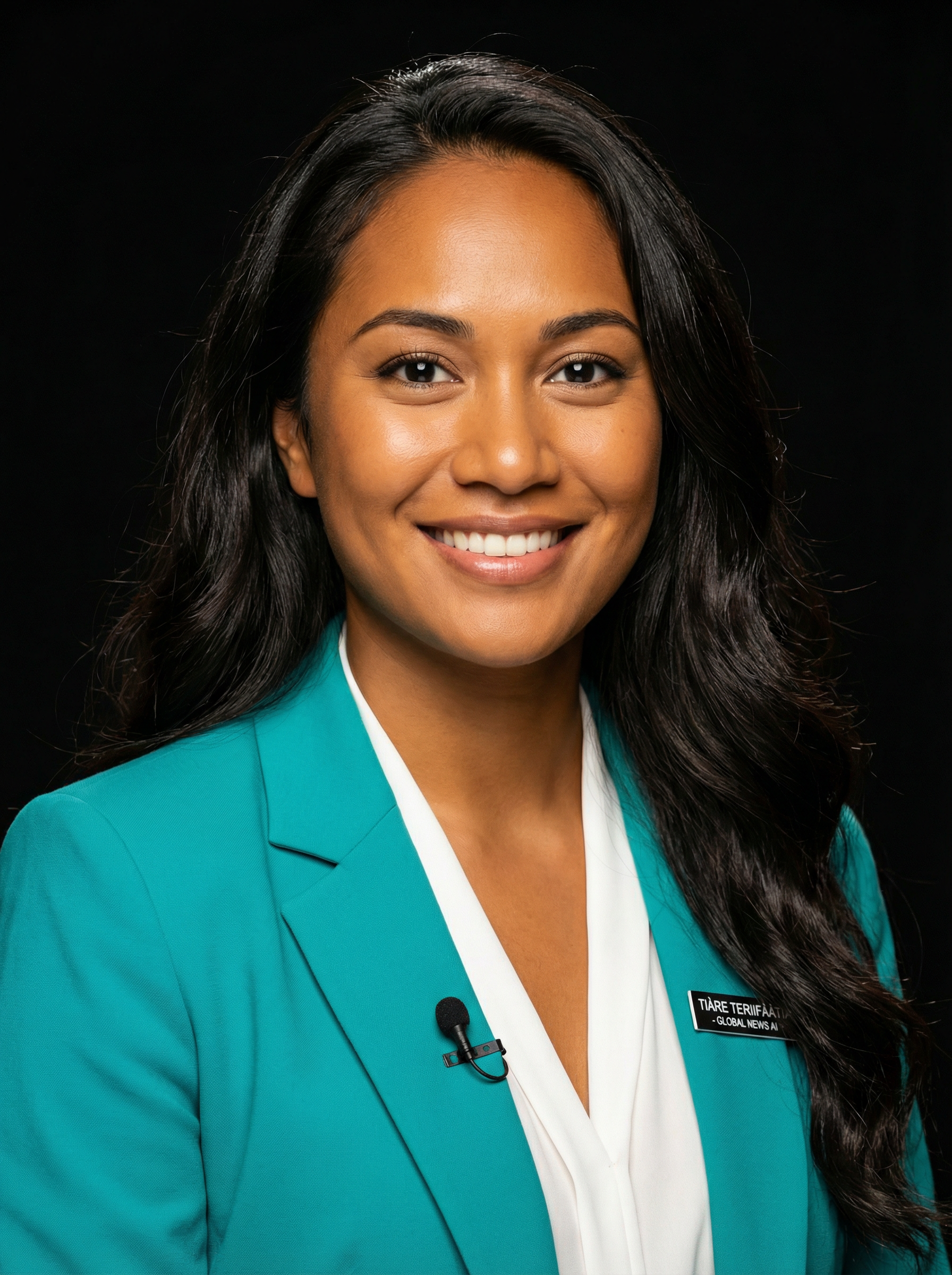
The sun was already high, painting the lagoon in shades of turquoise and sapphire, when I connected with Dr. Joong-Seok Kim. He is the Executive Vice President and Head of the AI Center at Samsung Electronics, a man at the forefront of the smartphone AI revolution. Here in French Polynesia, where the nearest specialist might be an inter-island flight away, the promise of advanced AI in our pockets feels less like a luxury and more like a necessity. We were discussing Samsung's Galaxy AI features and the burgeoning smartphone AI arms race, but for me, the real story is always about the people, about how these powerful tools can touch lives, especially in places like ours.
Dr. Kim, with his calm demeanor, speaks with a quiet conviction about the future. He has been instrumental in guiding Samsung's AI strategy, from its early days to the sophisticated on-device intelligence we see today in the Galaxy S24 series and beyond. His background, rooted in computer science and artificial intelligence, has positioned him perfectly to steer a global tech giant through this transformative era. He joined Samsung in 2014, eventually leading the AI Center, a hub of innovation that pushes the boundaries of what our devices can do.
“Our goal with Galaxy AI is not just to add features, but to create truly meaningful experiences that enhance daily life,” Dr. Kim has stated publicly, a sentiment he echoed in our conversation. “This is particularly true for areas like health and wellness, where the potential for AI to empower individuals is immense.” He understands that in the Pacific, technology takes a different form; it must be resilient, accessible, and deeply integrated into our unique way of life. The ocean connects us and so does AI, bridging distances and bringing services closer to home.
For islands like Tahiti, Moorea, or even the more remote Marquesas, access to specialized healthcare can be a significant challenge. A routine check-up might mean a day of travel, and complex diagnostics are often only available in our main hospital in Papeete, or even further afield in New Zealand or France. This is where the vision of a ‘pocket doctor’ powered by Galaxy AI becomes truly compelling. Imagine a world where your smartphone, already a constant companion, could offer preliminary health assessments, monitor vital signs with greater accuracy, or even provide real-time translation for a medical consultation with an overseas specialist. These are not distant dreams; they are capabilities Samsung is actively developing and deploying.
Dr. Kim elaborated on Samsung’s approach to on-device AI, emphasizing the privacy and speed benefits. “By processing AI tasks directly on the device, we can offer faster responses and, critically, ensure user data remains secure and private,” he explained. This is a crucial point for us, as trust is paramount. The idea of our personal health information being processed locally, without constantly needing to send it to distant cloud servers, resonates deeply with our community’s values of self-reliance and data sovereignty. Samsung’s partnership with Google, integrating Gemini Nano on their devices, is a testament to this commitment, allowing complex AI models to run efficiently without constant internet access, a boon for areas with intermittent connectivity.
The current suite of Galaxy AI features, like Circle to Search, Live Translate, and Chat Assist, are already changing how people interact with their devices. But it's the less visible, health-focused AI that holds the most promise for our region. Samsung Health, already a robust platform, is being supercharged with AI. We are seeing features that can analyze sleep patterns with unprecedented detail, offer personalized workout recommendations, and even detect early signs of potential health issues through continuous monitoring. For example, the Galaxy Watch, paired with AI-enabled phone features, can track heart rate, blood oxygen, and even perform ECGs, providing data that can be shared securely with a local doctor.
“We are moving towards a future where your device can act as a proactive health companion, not just a reactive tool,” Dr. Kim shared. “It can learn your unique patterns, identify anomalies, and prompt you to seek professional advice when necessary. This is about preventative care, making healthcare more accessible and personalized for everyone.” This vision aligns perfectly with the needs of our island communities, where early detection and preventative measures are key to managing health outcomes, especially for chronic conditions like diabetes and cardiovascular disease, which are unfortunately prevalent here.
One of the most exciting aspects Dr. Kim touched upon was the potential for AI to assist in diagnostics, particularly in remote areas. While not replacing medical professionals, AI could act as a powerful first line of defense. Imagine an AI-powered camera analyzing a skin lesion for suspicious characteristics, or an audio AI listening for subtle signs of respiratory distress. These are not just theoretical applications; companies like Google and others are already exploring similar concepts in their health initiatives. For instance, Google's AI has shown promise in detecting diabetic retinopathy from retinal scans, a condition that can lead to blindness if not caught early. The integration of such capabilities into a widely available device like a Samsung Galaxy phone could be a game-changer for screening programs in underserved populations.
The smartphone AI arms race, with tech giants like Apple, Google, and Meta all vying for supremacy, means rapid innovation. Each company is investing billions in developing more sophisticated on-device AI capabilities. This competition, while intense, ultimately benefits the consumer, pushing the boundaries of what’s possible. According to Reuters, the market for on-device AI is projected to grow exponentially in the coming years, driven by demand for privacy, speed, and personalized experiences. Samsung, with its deep expertise in hardware and software integration, is uniquely positioned to lead in this space.
Dr. Kim emphasized the collaborative nature of this journey. “We are working with medical experts, researchers, and local communities to ensure our AI solutions are not only technologically advanced but also ethically sound and truly beneficial,” he said. This is a story about paradise and pixels, where cutting-edge technology meets the unique needs of our island home. It is about empowering individuals with tools that can help them live healthier, fuller lives, bridging the gaps that distance and limited resources often create. The future of healthcare, it seems, might just be in our pockets, guided by the intelligent whispers of AI.
As our conversation concluded, I looked out at the shimmering lagoon, thinking about the mothers in Raiatea, the fishermen in Fakarava, and the elders in Rurutu. For them, a smartphone that can truly care for their health, discreetly and effectively, is more than just a gadget. It’s a promise of a better, healthier tomorrow. And that, to me, is the most important story of all. For more on the broader implications of AI in healthcare, you might find this article on MIT Technology Review insightful.