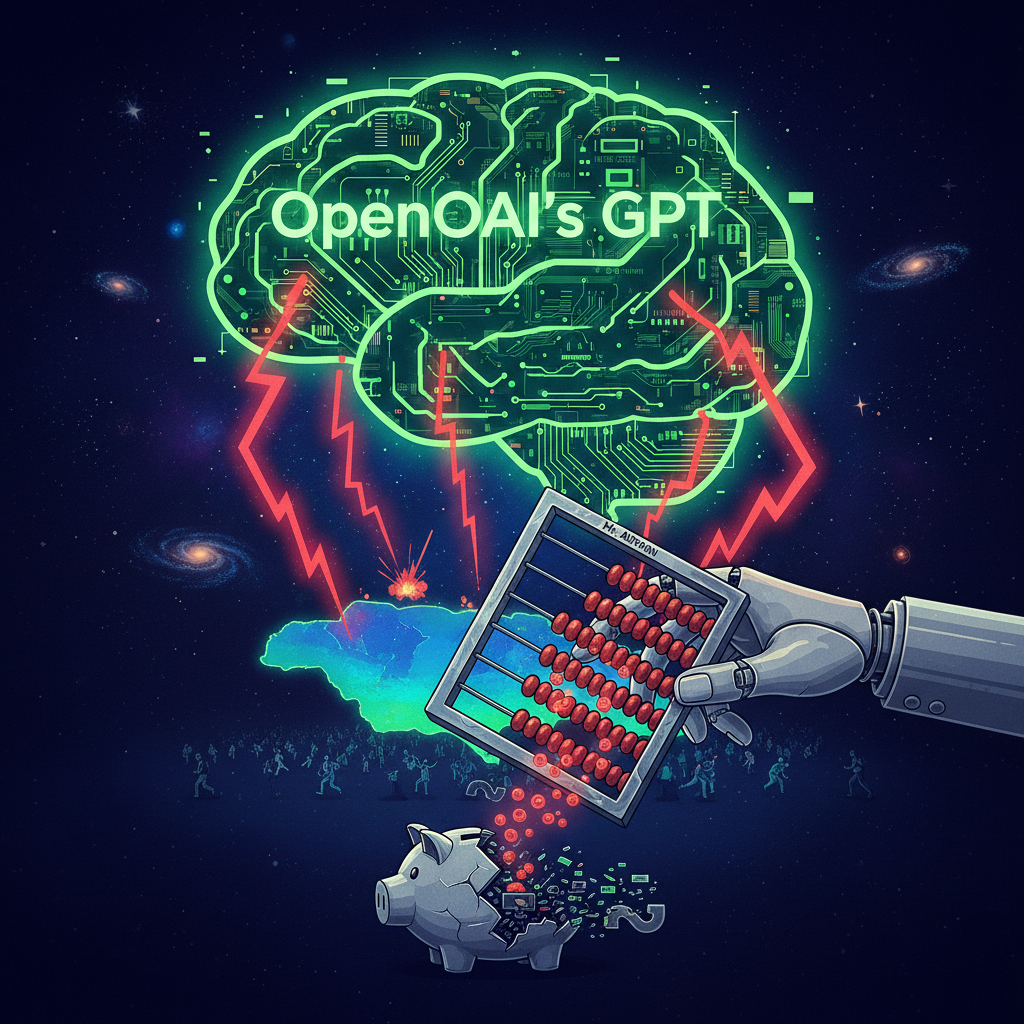
Alright, let's talk about something that keeps me up at night, not because of a noisy neighbour or a particularly spicy plate of jerk chicken, but because of algorithms. Specifically, the algorithms powering this AI revolution everyone's raving about. We're all busy marveling at what OpenAI's GPT can do, or how Google's Gemini is getting smarter by the minute, but nobody seems to be asking the really inconvenient question: When these digital brains mess up, who is going to pay the bill?
Because make no mistake, they will mess up. They already have. We've seen AI misdiagnose illnesses, make biased hiring decisions, and even generate defamatory content. In Jamaica, where our digital infrastructure is still developing and our legal frameworks are often playing catch-up, this isn't just a distant Silicon Valley problem. This is a very real, very present danger. The Caribbean has entered the chat, and we need answers.
My position is clear: the primary responsibility for harm caused by AI systems must lie with the developers and deployers of that technology. It cannot be shifted onto the end-user, especially not when the intricacies of these models are as opaque as a Kingston fog. These companies, the likes of OpenAI, Google, Microsoft, and Anthropic, are the ones building these powerful tools, profiting immensely from their adoption, and holding the keys to understanding their inner workings. They have the resources, the expertise, and frankly, the moral obligation to ensure their creations are safe and reliable.
Think about it. If a car manufacturer releases a vehicle with a known defect that causes an accident, we don't blame the driver entirely. We hold the manufacturer accountable. Why should AI be any different? The complexity of AI systems, particularly large language models like GPT-4 or Claude 3, makes it nearly impossible for a regular user, or even a small business, to fully comprehend their potential failure modes or inherent biases. These aren't simple tools; they are sophisticated, often black-box systems that can operate with a degree of autonomy that we've never seen before.
Sam Altman, OpenAI's CEO, has often spoken about the transformative power of AI, and rightly so. But with great power comes, well, you know the rest. He himself has acknowledged the risks. In a recent interview, he stated, "We need to be careful about the risks, and there are many, many risks." While acknowledging risks is a start, it's not enough. We need concrete frameworks for accountability, not just cautious statements. The potential for AI to cause significant economic, social, and even physical harm is not a hypothetical for a sci-fi movie; it is a present reality.
Some will argue that holding developers solely responsible will stifle innovation. They'll say it's too burdensome, too complex, and will slow down the rapid pace of AI development. They might point to the open-source movement, suggesting that if anyone can modify and deploy these models, then responsibility becomes a tangled web. Jensen Huang, NVIDIA's CEO, a man who knows a thing or two about driving technological progress, has often emphasized the need for speed in AI development to stay competitive. However, speed at the cost of safety and accountability is a Faustian bargain we cannot afford. We cannot allow the pursuit of the next big thing to overshadow the fundamental principles of justice and consumer protection.
My rebuttal to that is simple: good innovation is responsible innovation. If a company cannot ensure a reasonable level of safety and predictability for its product, then perhaps that product isn't ready for widespread deployment. Moreover, the argument about open-source models is a red herring. While open-source models present their own set of challenges, the major players we're discussing here, the ones creating the foundational models that others build upon, are largely closed-source and proprietary. They maintain control over the core technology, the training data, and the development processes. That control comes with responsibility. The European Union, for example, is already moving with its AI Act to categorize AI systems by risk level, imposing stricter requirements on high-risk applications. This is a sensible approach that other nations, including those in the Caribbean, should be watching closely.
Consider the economic impact. What happens when an AI-powered financial system makes erroneous trades that wipe out pension funds? Or an AI-driven medical device gives a faulty diagnosis leading to severe health consequences? Who compensates the victims? In a small island nation like Jamaica, where our economy is delicately balanced, such incidents could be catastrophic. We don't have the deep pockets or the sprawling legal infrastructure to absorb massive, AI-induced liabilities without significant strain. We need clear lines of accountability drawn before the floodgates open.
Furthermore, the argument that users should be responsible for understanding AI's limitations is often disingenuous. How can a small business owner in Montego Bay, trying to use an AI tool for marketing, be expected to understand the nuances of a transformer model's hallucination tendencies or its propensity for algorithmic bias based on its training data? That's like expecting every car owner to be a certified mechanic capable of diagnosing engine faults. It's unrealistic and unfair.
We need regulators, both locally and internationally, to step up. We need clear legal frameworks that define liability, establish standards for AI safety and transparency, and provide avenues for redress when things go wrong. This isn't about stifling progress; it's about building a future where AI serves humanity responsibly, not one where we're constantly cleaning up its messes. As Dr. Joy Buolamwini, founder of the Algorithmic Justice League, has eloquently stated, "We need to ensure that AI systems are not just smart, but also just." Her work highlights the critical need for ethical considerations to be baked into AI development from the ground up, not as an afterthought.
Until these frameworks are firmly in place, the tech giants developing these powerful AI systems must bear the brunt of the responsibility. They are the ones with the resources to invest in robust testing, ethical AI teams, and comprehensive insurance. They are the ones shaping this new digital world, and they must be held accountable for its consequences. Jamaica's tech scene is like reggae, it'll surprise you with its ingenuity, but we also know when to call out a bad rhythm. And this lack of clear AI liability? It’s a discordant note that needs fixing, fast. When AI causes harm, the buck stops with those who built and deployed it. Anything less is a cop-out, and frankly, a dangerous precedent for our collective future. The time for hand-wringing is over; it's time for accountability.
Learn more about AI ethics and governance