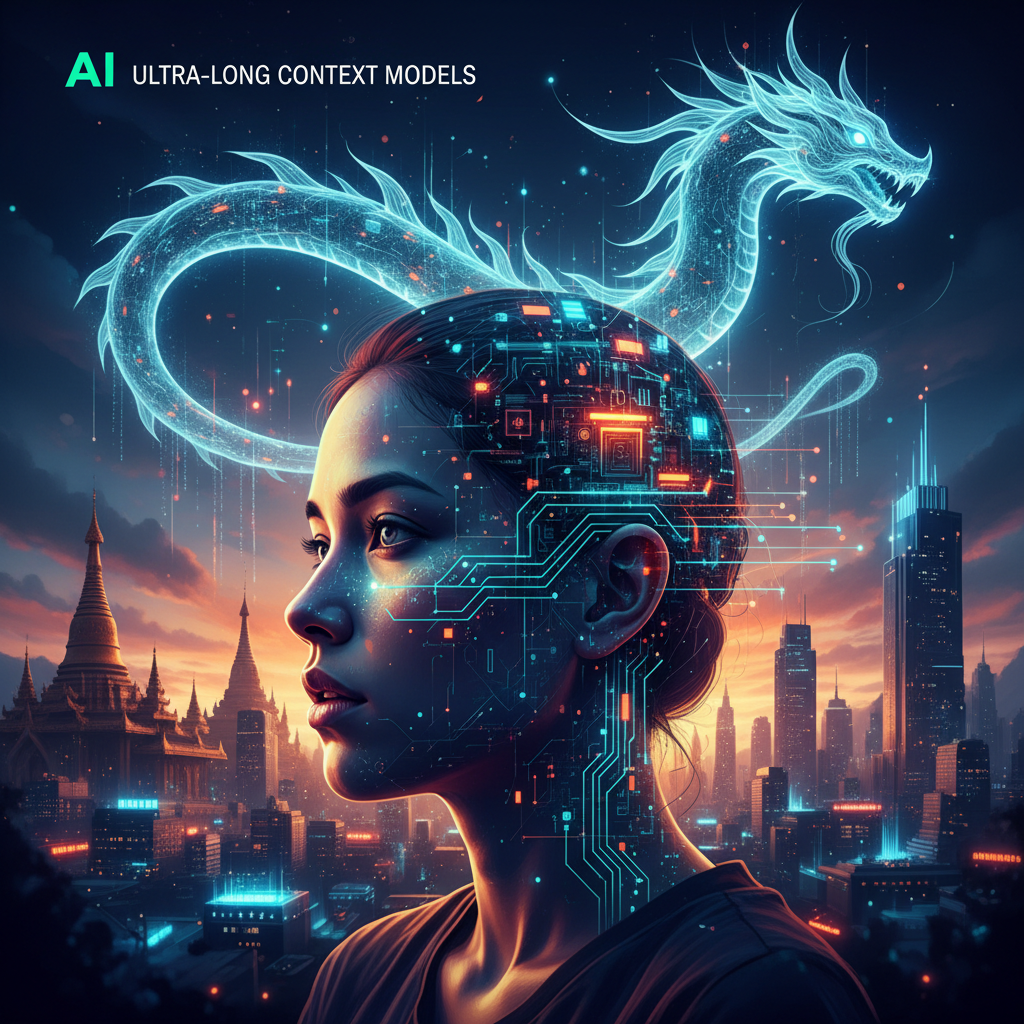

The flickering fluorescent light of Ko Hlaing’s small internet cafe in Yangon casts long shadows across the faces of young coders hunched over their screens. They are Myanmar’s digital dreamers, often self-taught, navigating a world of unstable internet and limited resources. Ko Hlaing, a man whose kindness is as vast as the Irrawaddy River, often watches them, a quiet pride in his eyes. Lately, however, a new kind of tool has entered their conversations: Magic AI’s ultra-long context models, promising to rewrite the rules of software development. But as these powerful AI systems begin to seep into our nascent tech ecosystem, I find myself asking: what happens to the human mind, to our ways of thinking and creating, when the machine can hold entire libraries of code in its digital grasp?
Imagine a young developer, let’s call her Ma Ei, struggling with a complex bug in an open-source project. Before, she would spend hours, days even, meticulously tracing code, consulting forums, and perhaps asking Ko Hlaing for advice. This process, while arduous, built deep cognitive pathways. It honed her problem-solving skills, her memory, and her ability to connect disparate pieces of information. Now, with Magic AI’s latest models, she can feed an entire codebase, thousands upon thousands of lines, into the AI. The system processes it, understands the intricate relationships, and often, spits out a solution or a refined piece of code in minutes. The immediate benefit is undeniable: faster development, fewer errors, increased productivity. But what is the hidden cost?
Research from institutions like the MIT Technology Review has begun to explore the cognitive impacts of such advanced AI. Studies indicate that while AI can augment human capabilities, over-reliance on these tools, particularly those with ultra-long context windows, can lead to a phenomenon some psychologists call 'cognitive offloading.' This is where our brains delegate complex tasks, like memory retention or intricate problem-solving, to external tools. While efficient in the short term, it can potentially atrophy our innate cognitive muscles. Dr. Anya Sharma, a cognitive psychologist at the University of California, Berkeley, recently noted, “Our brains are incredibly adaptive. If a tool consistently performs complex synthesis for us, the neural pathways for that specific type of synthesis may weaken. We risk becoming excellent prompt engineers, but perhaps less adept at the foundational reasoning that underpins the AI’s output.” This isn't about making us 'stupid,' but rather reshaping the very nature of intelligence and skill development.
In Myanmar, the stakes are different. Here, access to quality education and resources is often fragmented. Many young people learn to code out of sheer necessity, a path to economic stability in a challenging environment. For them, technology can be a lifeline. If AI tools accelerate their ability to produce, that’s a powerful advantage. However, if these tools inadvertently prevent the development of deep, critical thinking skills, skills that are essential for true innovation and resilience, then we must proceed with caution. We need developers who can not only use tools but also understand their limitations, debug them, and critically evaluate their outputs. Without that foundational understanding, they risk becoming mere operators, dependent on systems they don't fully comprehend.
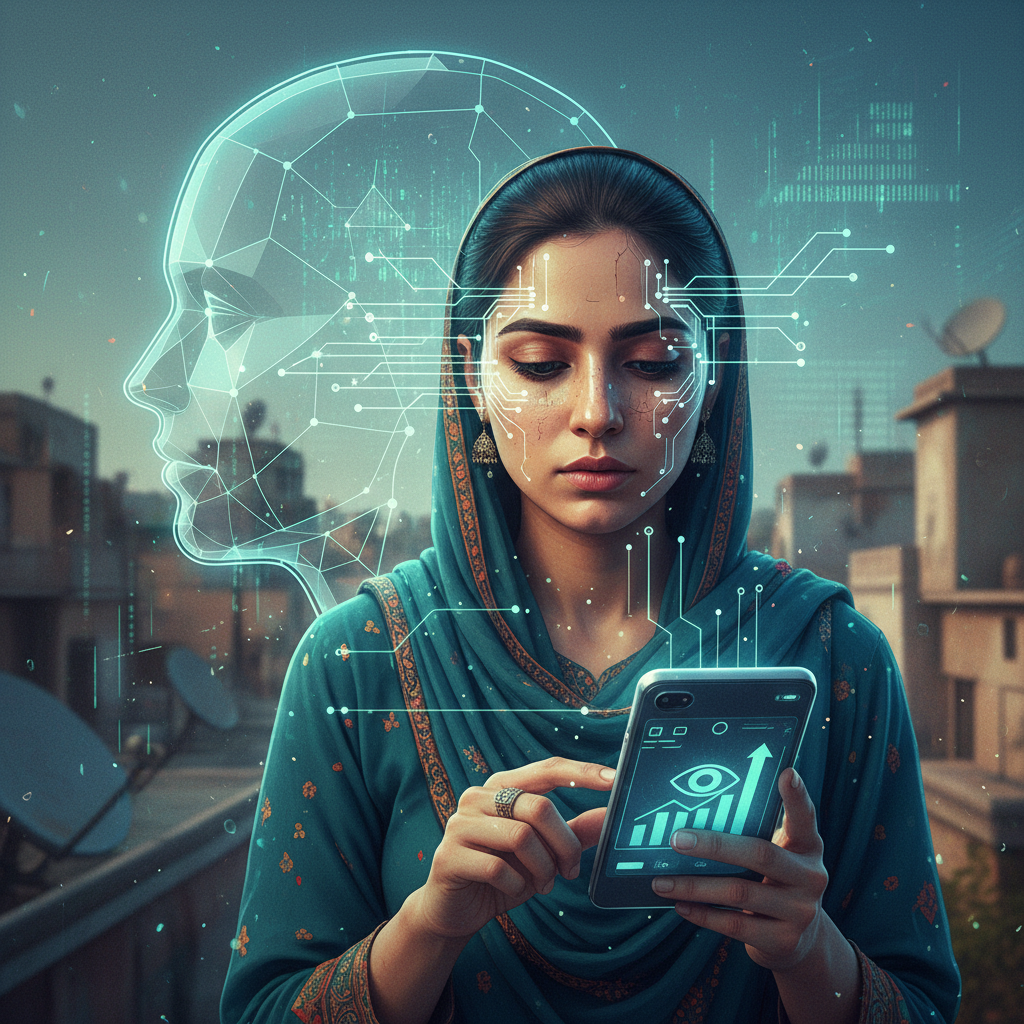
Expert psychological analysis suggests that the human-AI interaction with ultra-long context models creates a unique feedback loop. The AI provides rapid, comprehensive solutions, which reinforces its utility. This positive reinforcement can subtly shift human behavior, leading to less independent critical analysis and more trust in the AI's judgment. Dr. Hla Myint, a sociologist studying technology adoption in Southeast Asia, articulated this concern in a recent panel, stating, “We see a pattern where the convenience of AI can overshadow the necessity of human verification. In contexts like ours, where information literacy is still developing, this creates vulnerabilities. We need to cultivate a culture of healthy skepticism, even when facing incredibly powerful AI.” This isn't just about coding; it's about how we approach knowledge itself.
The broader societal implications are profound. If software engineering becomes primarily about feeding prompts to an AI, what happens to the entry barriers for the profession? While it might democratize access in some ways, it could also create a new elite: those who truly understand the underlying principles versus those who merely operate the AI. This could exacerbate existing inequalities, rather than alleviate them. Moreover, the sheer volume of code generated by these models, often without deep human oversight, raises questions about quality, security, and ethical considerations. Who is truly responsible when an AI-generated solution fails, or worse, introduces vulnerabilities? The human-in-the-loop becomes not just a quality control measure but a moral imperative.
For our young coders like Ma Ei, the advice is not to shun these powerful tools, but to engage with them thoughtfully. First, treat AI as a mentor, not a replacement. When the AI offers a solution, take the time to understand why it works. Dissect the code, trace its logic, and try to replicate the reasoning yourself. This active engagement transforms passive consumption into active learning. Second, focus on developing meta-skills: critical thinking, problem decomposition, and understanding system architecture. These are the cognitive abilities that AI currently struggles with and where human ingenuity remains irreplaceable. Third, diversify your learning. Don't rely solely on AI for knowledge acquisition. Read books, engage in discussions, and participate in collaborative projects where human interaction is key. Resources like TechCrunch's AI section can keep you informed about the latest developments, but true understanding comes from deeper engagement.
This is about survival, not convenience, for many in Myanmar. The ability to innovate, to adapt, and to build our own digital future depends on fostering human intelligence, not just leveraging artificial intelligence. As Magic AI and others push the boundaries of what machines can do, we must fiercely protect and cultivate what makes us uniquely human: our capacity for deep understanding, critical inquiry, and creative problem-solving. Otherwise, we risk building a future where our tools are brilliant, but our minds are dulled, and that is a price Myanmar cannot afford to pay. We must ensure that as the digital tide rises, it lifts all boats, and doesn't leave our cognitive capacities stranded. The future of our nation, in many ways, hinges on this delicate balance. We must learn to dance with the machines, not just follow their lead. It's a challenging path, but one we must walk with our eyes wide open, and our minds sharper than ever. Perhaps, an article on South Korea's AI Transparency Law: Is Seoul Really Protecting Us, or Just Playing Catch-Up to Silicon Valley's Shenanigans? [blocked] might offer some lessons on regulation and oversight, something we desperately need to consider here as well.