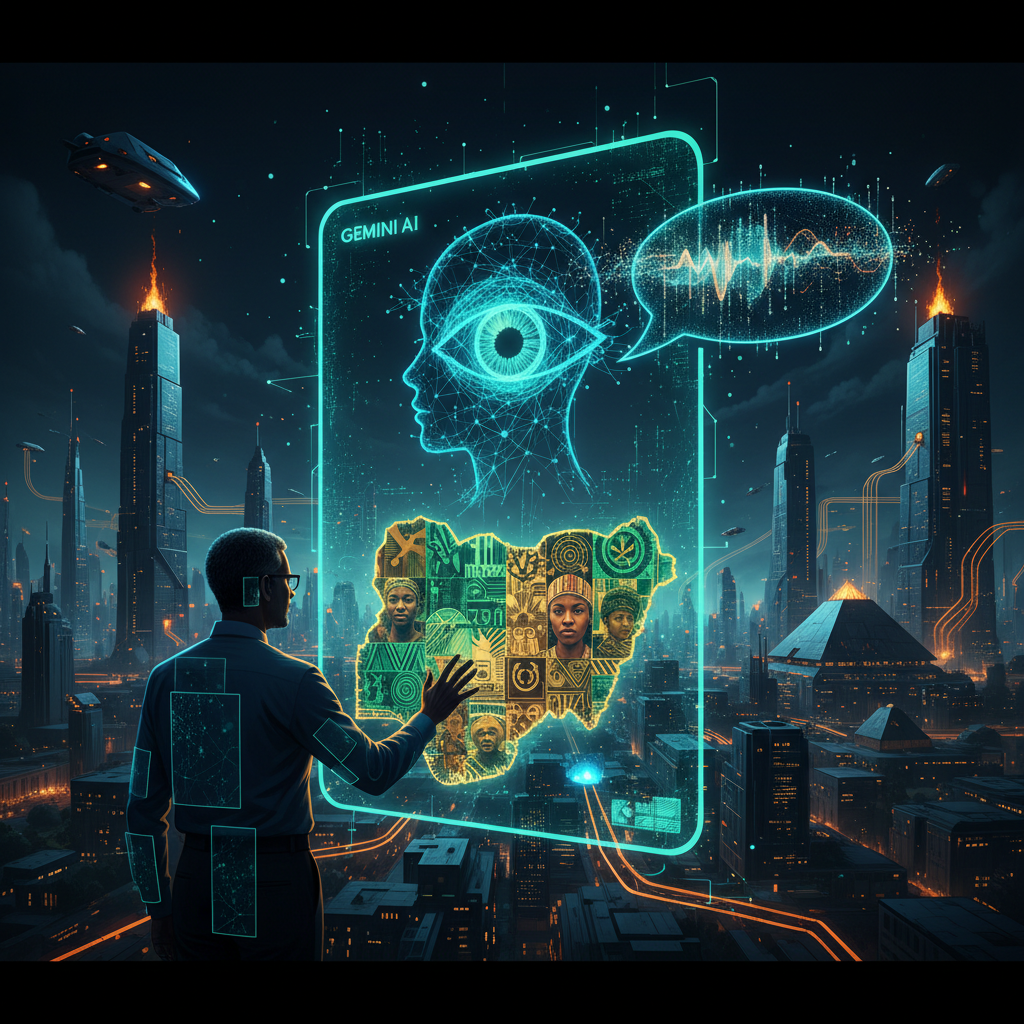
Picture this: it’s April 2031. The bustling markets of Onitsha are still vibrant, but they’ve undergone a silent revolution. A young hawker, Chinedu, no longer shouts his wares. Instead, his smartphone, powered by a localized version of Google Gemini, listens to the nuances of customer conversations, analyzes their facial expressions through its camera, and suggests optimal pricing strategies or even cross-sells related goods in Igbo, Yoruba, or Hausa. It’s a seamless blend of sight, sound, and language, all processed by AI that understands the unique rhythm of Nigerian commerce. This isn't science fiction, my friends, it’s the future Google and OpenAI are building, right now, with their multimodal behemoths. But the question that keeps me up at night is this: whose future is it, really?
The race between Google Gemini and OpenAI’s GPT models has intensified, pushing the boundaries of what AI can perceive and generate. We’re talking about systems that can interpret complex visual scenes, understand spoken language with unprecedented accuracy, and generate creative content across various modalities. For the global North, this is about efficiency, entertainment, and perhaps, a new frontier of digital existence. For us in Nigeria, and across Africa, it’s a double-edged sword, promising unparalleled opportunities while simultaneously threatening to deepen existing digital colonial structures.
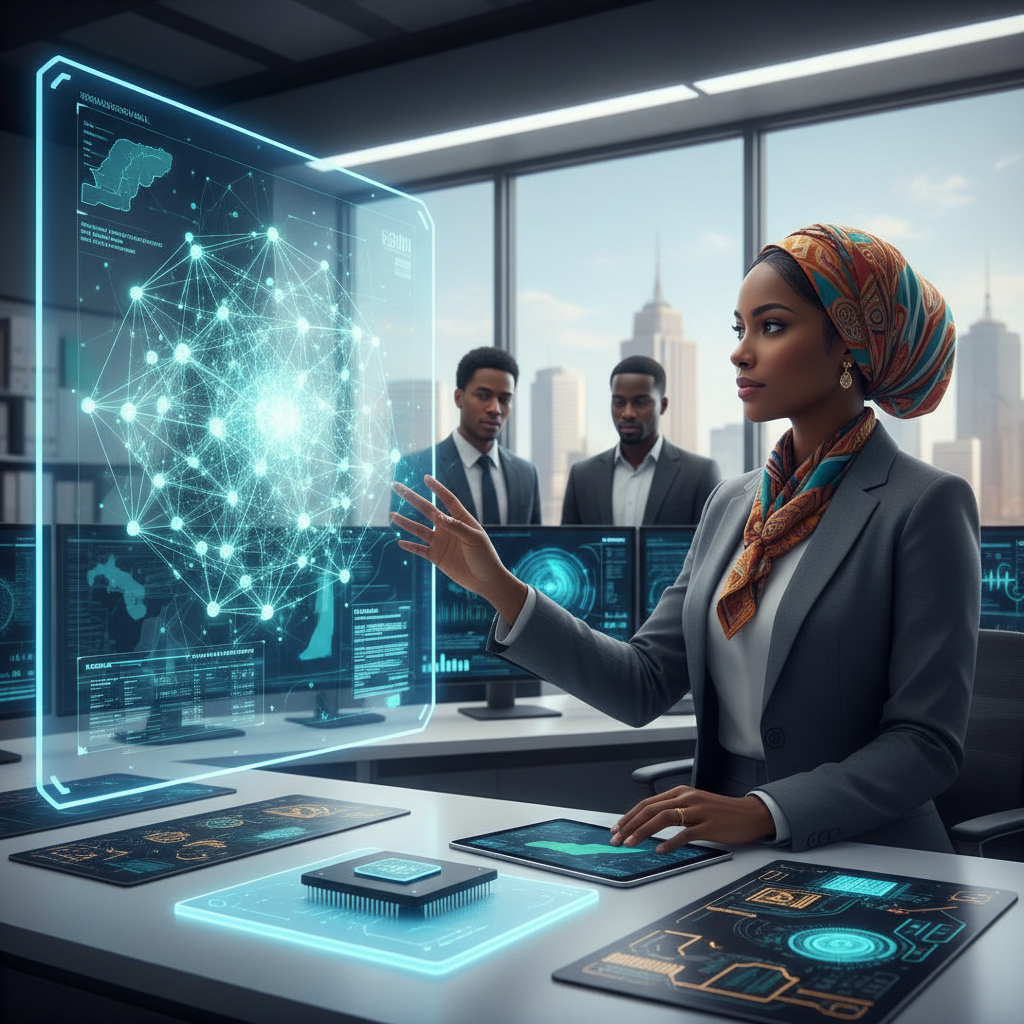
In the next five to ten years, these multimodal capabilities will infiltrate every facet of our lives. Imagine medical diagnostics in rural clinics, where a Gemini-powered device can analyze a patient’s symptoms, interpret medical images, and communicate findings to a doctor in their local dialect, bridging language and expertise gaps. Consider education, where AI tutors can visually explain complex scientific concepts, listen to a student’s questions, and respond with personalized, culturally relevant examples. The potential for leapfrogging traditional development hurdles is immense. “We are already seeing early prototypes of AI-powered agricultural tools that can analyze crop health from drone imagery and provide real-time advice to farmers,” says Dr. Ngozi Okoro, a Senior AI Researcher at the African Institute for Artificial Intelligence in Abuja. “With advanced multimodal models, this will become incredibly sophisticated, understanding soil composition from video and farmer’s questions in spoken Hausa.”
But how do we get there from today, without simply becoming data colonies for Silicon Valley giants? The key milestones will involve massive data collection and annotation efforts, particularly for African languages and visual contexts. This is where the battle for digital sovereignty will be won or lost. Currently, much of the data used to train these foundational models is skewed towards Western contexts. If our local data is not adequately represented, or worse, if we merely provide the raw material without sharing in the ownership or benefit, then this technological advancement becomes another form of extraction. "Unpopular opinion, but if we are not actively building our own datasets and models, we are simply enriching foreign corporations with our intellectual and cultural heritage," argues Professor Emeka Nnamdi, a legal scholar specializing in digital rights at the University of Lagos. "The terms of data sharing and model deployment must be non-negotiable."
The implications for our workforce are profound. While some fear job displacement, I see a shift. The market hawker, Chinedu, might evolve into a ‘digital commerce assistant,’ leveraging AI to expand his reach. Artisans in Kano could use multimodal AI to generate marketing content for their crafts, instantly translating descriptions and images for global audiences. But this requires massive investment in digital literacy and infrastructure. The government, local tech hubs, and educational institutions must collaborate to equip our youth with the skills to not just use, but to build with these technologies. “We need to move beyond being mere consumers of technology,” states Aisha Bello, CEO of a Lagos-based AI startup focused on local language processing. “We must be creators, innovators, and owners. That’s the only way to ensure these advancements truly serve our people.”
Who wins and who loses in this race? Without proactive measures, the winners will be the tech giants who control the foundational models and the data pipelines. The losers will be nations that fail to assert their digital sovereignty, whose cultural narratives are diluted, and whose economic opportunities are siphoned off by external forces. We risk a future where our reality is interpreted and mediated by algorithms trained on data that doesn't fully understand us. This isn't just about technology; it’s about power, identity, and self-determination. Wired has often highlighted the ethical quandaries, but for us, it's an existential one.
Let's talk about what nobody wants to discuss: the ethical frameworks and governance models. Are we waiting for Silicon Valley to dictate the rules of engagement for AI in Africa? Or are we, as a continent, going to forge our own path, grounded in our values of community, equity, and shared prosperity? The African Union’s nascent AI strategy is a good start, but it needs teeth, and it needs to be implemented with urgency. We need policies that protect our data, promote local innovation, and ensure equitable access to these powerful tools.
For readers, what should you do now? First, understand the technology. Don't let the hype or the fear paralyze you. Explore how tools like Google Gemini and OpenAI’s GPT-4o are evolving. Second, demand accountability from both global tech companies and your local leaders. Ask the hard questions about data ownership, bias, and accessibility. Support local AI initiatives and startups that are building solutions tailored to our unique contexts. Invest in digital education, for yourself and your community. The future is not a destination; it is a construction site, and we must all be active builders. Everyone's celebrating, but I have questions, and so should you. The digital story of Nigeria, and Africa, is still being written. Let’s make sure we hold the pen. The stakes are too high to be passive observers. According to a recent report by Reuters Technology, investments in African AI startups are projected to grow by 40% annually over the next five years, indicating a growing local appetite for innovation, but also a critical need for strategic direction to ensure that growth benefits Africans directly.
In the grand tapestry of global AI development, Africa must weave its own threads, vibrant and distinct. We cannot afford to be merely a backdrop for someone else's digital masterpiece. We must be the artists, the storytellers, and the beneficiaries of this revolution. The multimodal capabilities of AI are powerful, but their direction is still ours to influence, if we choose to seize the moment. The time for polite requests is over; the time for assertive demands for digital equity is now. Our future depends on it. The MIT Technology Review often covers global AI policy, but our policy needs to be African-centric. We cannot afford to wait for others to define our technological destiny.