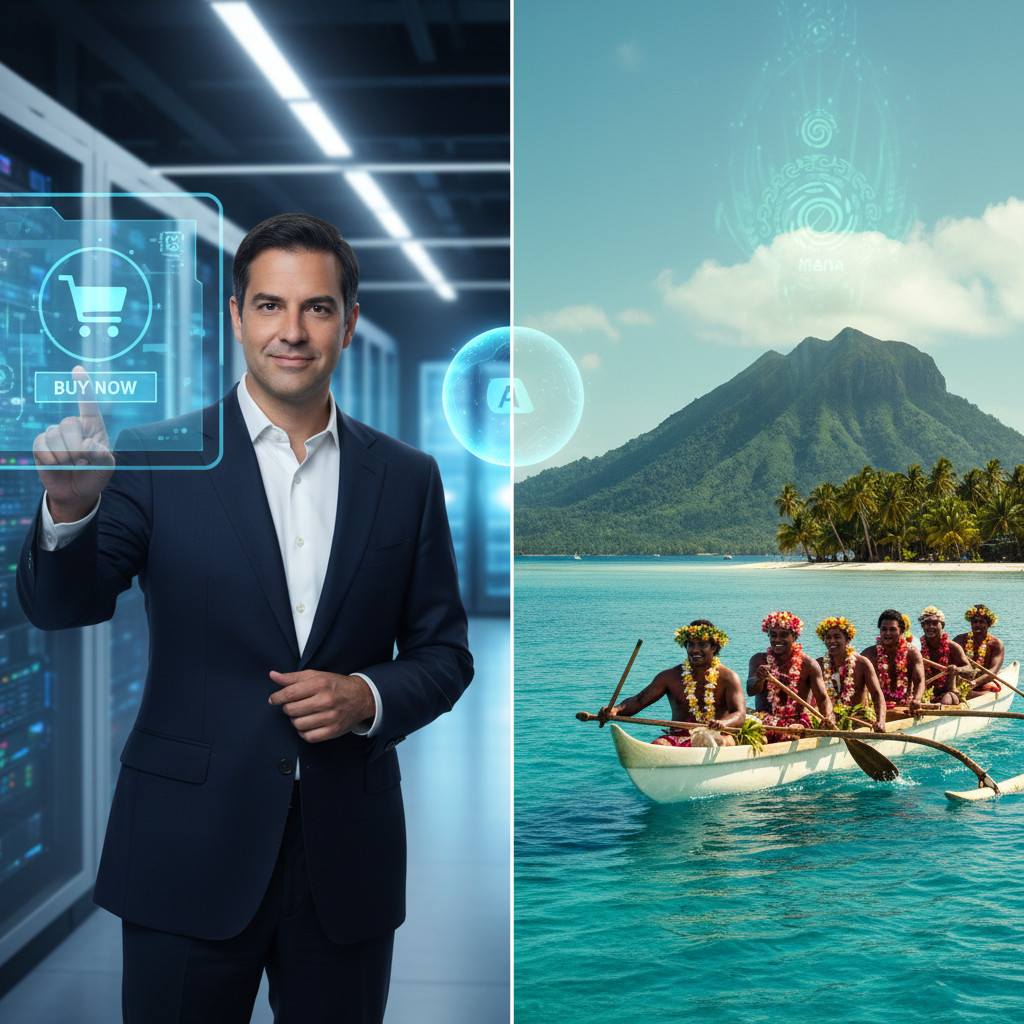

The scent of tiare flowers, the rhythm of the waves on the reef, the quiet hum of conversation in Tahitian. These are the textures of my home, French Polynesia. We live in a place where connection is paramount, not just to each other, but to our land and our ocean. So when I hear about Amazon's latest AI shopping assistant, a technology designed to anticipate our every desire and streamline our purchases, I cannot help but wonder: How will this digital tide wash upon our shores, and what will it carry with it?
Andy Jassy, Amazon's CEO, has been quite vocal about the company's deep dive into generative AI, particularly its potential to revolutionize the shopping experience. He envisions a world where Alexa, or a more advanced AI iteration, understands not just what you want, but why you want it, offering personalized recommendations that feel almost clairvoyant. Imagine saying, 'Alexa, I need a gift for my cousin, she loves gardening and lives in a tropical climate,' and receiving a curated list of local seed packets, sustainable gardening tools, or even a book on Polynesian ethnobotany. This is the promise, a world of hyper-personalization powered by vast datasets and sophisticated algorithms.
For many in the bustling metropolises of the world, this is exciting. It is convenience personified, a digital concierge for consumption. But in the Pacific, technology takes a different form. Our relationship with goods is often less about instant gratification and more about connection, sustainability, and supporting our local artisans. We value the story behind an item, the hands that crafted it, the materials sourced from our islands. Can an AI truly understand the mana behind a hand-carved tiki or the cultural significance of a finely woven pandanus mat?
"The potential for AI to enhance customer experience is undeniable," explains Dr. Alana Kai, a digital anthropologist based at the University of the South Pacific in Fiji. "However, we must critically examine whether these global technologies are built with an understanding of diverse cultural contexts. A recommendation algorithm optimized for a Seattle suburb might completely miss the mark, or worse, inadvertently undermine local economies and traditional practices in a place like Tahiti." Her words resonate deeply with me, echoing concerns I have heard from many across our islands. Will Amazon's AI push globalized products, or can it be trained to champion local, sustainable options?
Amazon's investment in AI is staggering. The company is reportedly pouring billions into its AI initiatives, from large language models to advanced robotics in its fulfillment centers. Their goal is not just to sell more products, but to make the act of buying almost invisible, seamless, and deeply integrated into our daily lives. This AI assistant is not merely a search engine; it is designed to be a proactive partner, learning our habits, predicting our needs, and even suggesting purchases before we consciously realize we want them. This level of predictive analytics, while impressive, raises questions about consumer autonomy and the subtle ways our choices might be guided.
Consider the logistics. Even with Amazon's formidable global supply chain, delivering to remote islands like those in French Polynesia presents unique challenges. Shipping costs can be exorbitant, and delivery times long. While AI can optimize routes and inventory, the fundamental geographical realities remain. Will this AI assistant truly benefit those in the most isolated communities, or will it primarily serve those already well-connected to global shipping lanes? This is a story about paradise and pixels, where the digital frontier meets the ancient rhythms of island life.
"We are not immune to global trends, nor should we be," says Teva Marama, a local entrepreneur who runs an e-commerce platform for Tahitian black pearls. "But our adoption of technology must be intentional, serving our people and preserving our culture. If Amazon's AI can help tourists discover authentic, locally made products, that's a positive. If it simply pushes mass-produced alternatives, then it becomes a threat." Teva's perspective highlights a crucial point: the impact of this technology hinges on its design and implementation. Can Amazon's AI be a bridge, connecting global consumers to unique island crafts, or will it be a barrier, overshadowing local businesses with its sheer scale?
There is a glimmer of hope in the idea of AI as a tool for cultural preservation. Imagine an AI assistant that, instead of just recommending products, could educate consumers about the provenance of an item, the cultural significance of its design, or the traditional methods used in its creation. This could transform a simple purchase into a meaningful cultural exchange. The ocean connects us and so does AI, but only if we guide its currents wisely. If Amazon's AI could be trained on datasets rich with Pacific knowledge, collaborating with local communities and experts, it could become a powerful advocate for our heritage.
The challenge for Amazon and other tech giants is to move beyond a one-size-fits-all approach. As reported by TechCrunch, the conversation around ethical AI and localized solutions is gaining traction globally. It is not enough to simply deploy powerful algorithms; there must be a conscious effort to understand the diverse human experiences they touch. For us in the Pacific, this means an AI that respects our sovereignty, supports our local economies, and understands that the value of an item is not just its price, but its story, its connection to the land, and its place in our shared heritage.
The future of e-commerce personalization, driven by Amazon's ambitious AI, is undoubtedly here. But as it takes shape, we must ensure that its algorithms are not blind to the vibrant tapestry of human culture, especially in places like our islands, where every object, every interaction, carries a deeper meaning. The question remains: will this AI truly personalize our experience, or will it merely homogenize it? The answer will unfold in the choices made by tech giants and the voices raised by communities like ours, demanding that technology serves humanity, in all its beautiful diversity. For more on how AI is impacting global commerce, you might find this article on Amazon's Bedrock Gambit [blocked] interesting, though it focuses more on enterprise AI than direct consumer impact.