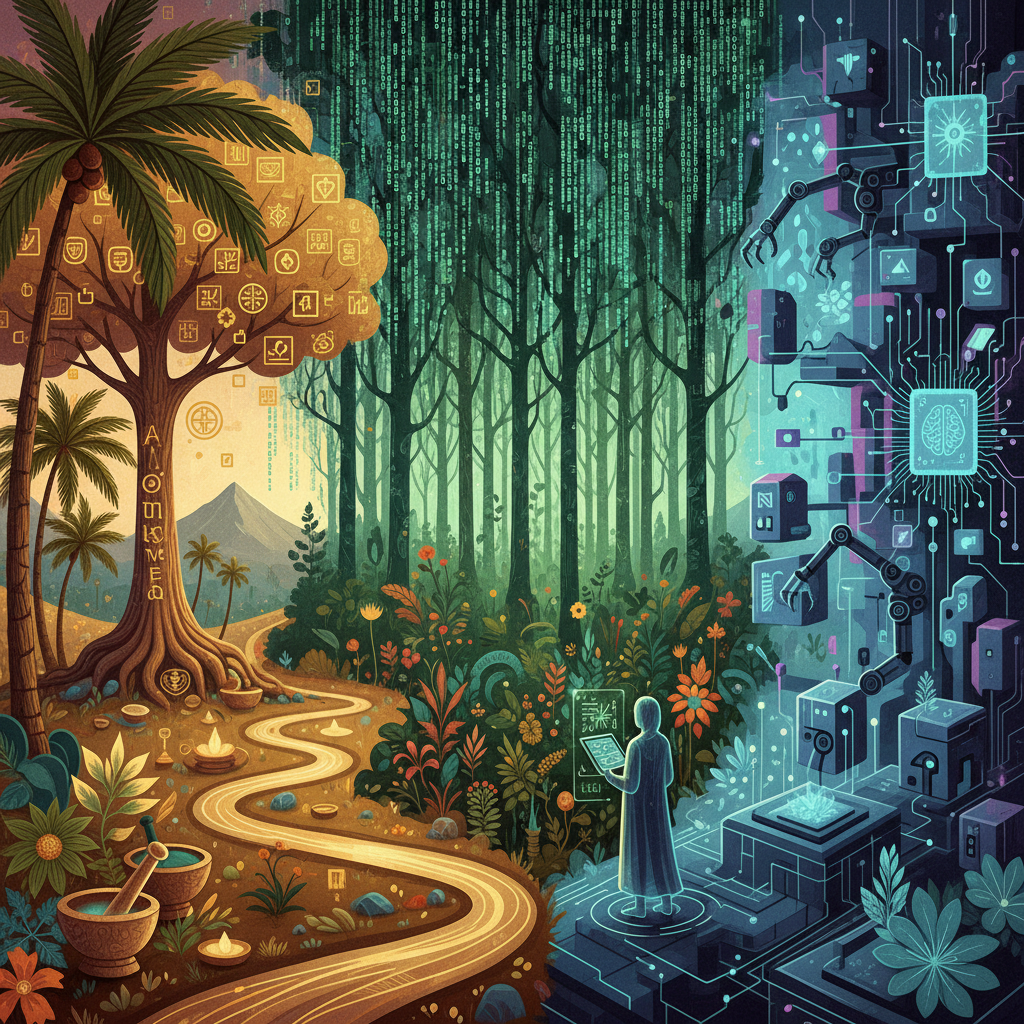

The digital hum of our lives has grown louder, more insistent, and nowhere is this more apparent than in the realm of human connection. We swipe, we like, we match, all guided by unseen hands, by algorithms humming away in data centers far from our shores. Here in Aotearoa, New Zealand, where community and connection, or whanaungatanga, are cornerstones of our society, the rise of AI in dating apps presents a fascinating, and at times troubling, paradox.
For years, dating apps have promised to streamline the search for partnership. Now, with the advent of more sophisticated AI, these platforms are evolving rapidly. Companies like Match Group, which owns Tinder and Hinge, and Bumble are investing heavily in advanced machine learning models. These models go beyond simple preferences, analyzing user behavior, communication patterns, and even subtle cues in profile photos to suggest increasingly 'compatible' matches. The idea is compelling: let the machines do the heavy lifting, sifting through millions of profiles to find your perfect hoa rangatira, your soulmate.
Yet, beneath the glossy veneer of efficiency and endless options, a disquieting trend is emerging. Despite the proliferation of digital avenues for connection, a significant number of people, particularly younger generations, report feeling more isolated than ever. Is it possible that the very technology designed to bring us together is inadvertently pushing us further apart? This is a question we must grapple with, especially in a country like ours, where the fabric of society is woven with threads of collective well-being.
Dr. Sarah O'Brien, a sociologist at the University of Auckland, has been studying this phenomenon. “We've seen a dramatic shift in how people initiate relationships,” she told me recently. “While AI can certainly identify patterns and make recommendations, it often optimizes for engagement metrics, not necessarily for deep, meaningful connection. The gamification of dating, driven by these algorithms, can lead to superficial interactions and a constant search for the next best thing, rather than investing in what's already there.” Her research suggests that the endless scroll, fueled by AI's recommendations, can create a paradox of choice, leaving users overwhelmed and ultimately dissatisfied.
Consider the case of 'Aria', a 28-year-old Māori woman living in Wellington. She’s been on dating apps for years. “At first, it felt exciting, like a world of possibilities,” she shared over a coffee near the waterfront. “Now, it just feels like a job. The apps keep showing me the same types of people, even when I try to change my preferences. It’s like the algorithm thinks it knows what I want better than I do. I’ve had so many first dates, but nothing ever sticks. It’s exhausting, and honestly, it makes me feel even more alone.” Aria’s experience is not unique. Many users report feeling trapped in algorithmic loops, where their dating pool shrinks to a predictable, often unsatisfying, set of profiles.
This isn't just about individual frustration, it has broader societal implications. The loneliness epidemic is a global concern, and New Zealand is not immune. A 2023 report from the Mental Health Foundation of New Zealand highlighted increasing rates of loneliness across various age groups, particularly among young adults. While dating apps are not the sole cause, their role in shaping social interactions is undeniable. When our primary mode of seeking romantic connection becomes a highly curated, algorithm-driven experience, what does that do to our ability to form organic bonds, to navigate the beautiful messiness of real human interaction?
Some AI developers are recognizing these concerns. OpenAI, for example, has been vocal about the ethical implications of its models, urging careful consideration of their societal impact. While they aren't directly in the dating app space, the principles of responsible AI development apply across all sectors. The challenge lies in designing AI that genuinely enhances human well-being, rather than simply maximizing engagement or profit. As one expert put it, “Technology must serve the people, not the other way around.”
In Te Reo Māori, we have a word for this: manaakitanga, which speaks to hospitality, generosity, and mutual respect. It’s about caring for others, fostering relationships, and creating a sense of belonging. Can AI, in its current form, truly embody manaakitanga? Or does its inherent drive for efficiency and data optimization often run counter to the nuanced, often irrational, needs of the human heart?
The solution, if there is one, might lie in a more human-centered approach to AI design. This means moving beyond simple matching algorithms to models that prioritize genuine connection, emotional intelligence, and perhaps even encourage offline interactions more proactively. Some smaller, independent dating platforms are experimenting with features that limit swiping, encourage deeper profile engagement, or even facilitate group activities, trying to inject more humanity back into the digital dating landscape. These efforts, while nascent, offer a glimmer of hope.
Furthermore, there's a growing conversation about data sovereignty and how our personal information, including our most intimate desires and preferences, is used by these powerful algorithms. For Māori, the concept of Mātauranga Māori, or Māori knowledge, emphasizes the importance of collective ownership and ethical guardianship of information. This perspective offers a valuable lens through which to scrutinize how our data is being used to shape our social lives, and whether it truly serves our best interests. We need to ask: who benefits from these algorithms, and who bears the cost?
The journey to find a partner, a companion, or simply a connection, is deeply personal and profoundly human. While AI offers powerful tools, we must ensure these tools are wielded with wisdom and a deep understanding of human needs. Otherwise, we risk building a future where we are more connected than ever, yet profoundly, heartbreakingly alone. The conversation around AI in dating apps needs to shift from mere efficiency to genuine human flourishing. It’s a challenge that demands our collective attention, here in Aotearoa and across the globe, to ensure that our digital future is one of true connection, not just algorithmic illusion. For more on the broader implications of AI on society, you can read articles on MIT Technology Review and Wired. The future of our relationships depends on it. We must build systems that foster real whanaungatanga, not just digital fleeting encounters. For a deeper dive into how algorithms affect our lives, consider the ethical implications discussed in When the Algorithm Says 'No' to Maria: Portugal's Fight Against AI Bias in Hiring, With a Nod to Brussels [blocked]. The lessons learned in one domain often echo in others. The path forward requires a thoughtful, ethical approach to technology, one that prioritizes human well-being above all else. This is the kaupapa, the principle, that should guide us. The algorithms are powerful, but our humanity must remain more so. We must demand that these digital matchmakers truly understand the complexities of the human heart, not just the patterns in our data. The quest for connection is too important to leave solely to the machines. We need to ensure that the promise of AI in dating does not become another chapter in the loneliness epidemic, but rather a tool that genuinely helps us find our way back to each other. The time for this critical reflection is now. {{youtube:bZQun8Y4L2A}}